Global Progress and Persistent Perils The State of Tropical Forests and the Struggle for Biodiversity in 2025

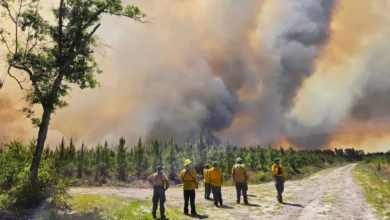
Recent data from the Global Forest Review indicates a significant shift in the trajectory of global conservation efforts, revealing that tropical primary forest loss fell by more than one-third between 2024 and 2025. This decline, while heralded as a victory for international climate policy and local governance, comes with a sobering caveat from the World Resources Institute (WRI). Despite the year-over-year improvement, the rate of destruction remains 46% higher than it was a decade ago, suggesting that while the immediate bleeding has been slowed, the world’s most critical carbon sinks remain in a state of long-term crisis. The reduction in loss is largely attributed to a decrease in extreme fire events compared to the record-breaking infernos of 2024, yet human-driven factors such as agricultural expansion continue to exert relentless pressure on these undisturbed ecosystems.
The Global Landscape of Forest Loss and Recovery
The 2025 Global Forest Review, co-produced by the World Resources Institute and the University of Maryland, highlights a complex patchwork of regional successes and systemic failures. Primary forests—those characterized by intact ecosystems relatively undisturbed by modern human activity—are essential for biodiversity and climate regulation. Their loss is often permanent, as the complex web of life they support cannot be easily replicated through reforestation or commercial plantations.
In South America, Brazil emerged as a primary driver of the global decline in deforestation. The country reported a 42% reduction in forest loss compared to the previous year. This shift is widely credited to a revitalized governmental task force that integrated efforts across civil society, academia, and local communities. Under current administrative policies, Brazil has pivoted back toward aggressive enforcement of the Forest Code and increased monitoring of the Amazon basin. However, Brazil still leads the world in terms of the total area of forest lost, underscoring the sheer scale of the challenge facing the Amazon.
Southeast Asia also showed signs of stabilization. In Indonesia and Malaysia, forest loss rates remained historically low compared to the early 2010s. Analysts point to improved governance, the formal recognition of Indigenous land rights, and stringent corporate commitments to "deforestation-free" supply chains. The Indonesian government’s permanent moratorium on clearing primary forests and peatlands has been a cornerstone of this progress, though environmental groups warn that rising palm oil prices could test the resilience of these protections.
Despite these gains, the international community remains far from meeting the 2030 targets established at COP26 in Glasgow, which aimed to halt and reverse forest loss entirely. Experts argue that the 2025 decline is a "fragile reprieve" rather than a permanent trend. Agricultural expansion, driven by global demand for beef, soy, and palm oil, remains the primary cause of permanent land-use change. Furthermore, the increasing frequency of climate-induced droughts means that even in years with lower fire activity, the underlying vulnerability of the forest increases.
Legislative Shifts and the Watering Down of EU Deforestation Laws
While ecological data shows a slight reprieve, the legislative landscape in Europe has faced significant upheaval. The European Union’s landmark anti-deforestation law (EUDR), designed to prevent products linked to forest destruction from entering the EU market, has recently been adjusted following intense industry lobbying.
In a move that drew sharp criticism from environmental NGOs, the European Commission decided to exclude leather imports from the scope of the regulation. Industry groups argued successfully that leather is a secondary by-product of the meat industry and that its market value is insufficient to drive the cattle farming that causes deforestation. Consequently, they argued that including leather would impose an undue bureaucratic burden without significantly reducing forest clearing. While imported beef remains strictly covered under the law, critics argue that this "leather loophole" undermines the integrity of the regulation and ignores the integrated nature of the global cattle trade.
Parallel to the EU’s legislative adjustments, the EU-Mercosur trade agreement provisionally came into force on May 1, 2025. This deal, which has been under negotiation for 25 years, creates one of the world’s largest free-trade zones between the EU and the Mercosur bloc (Argentina, Brazil, Paraguay, and Uruguay). Its implementation is provisional, pending a legal review by the European Court of Justice requested by members of the European Parliament who are concerned about the deal’s environmental safeguards. The agreement remains a flashpoint, as environmentalists fear it could incentivize further agricultural expansion in the Cerrado and Amazon regions to meet European demand.
In the United Kingdom, the government faces similar pressure. A group of Members of Parliament recently issued an open letter demanding the immediate implementation of long-overdue regulations to end UK imports linked to illegal deforestation. Although the framework for these rules was established in the 2021 Environment Act, the actual enforcement mechanisms have been delayed for four years. Reports suggest that during this period of regulatory limbo, the UK’s "forest footprint" has continued to expand, contributing to significant habitat loss in South America and Southeast Asia.
The Great Nicobar Project: A Case Study in Strategic Development vs. Conservation
The tension between economic development and environmental preservation is perhaps nowhere more visible than on Great Nicobar Island, the southernmost point of Indian territory. Often referred to as "India’s Galapagos," the island is currently the site of a proposed $10 billion infrastructure project that has sparked a national and international controversy.
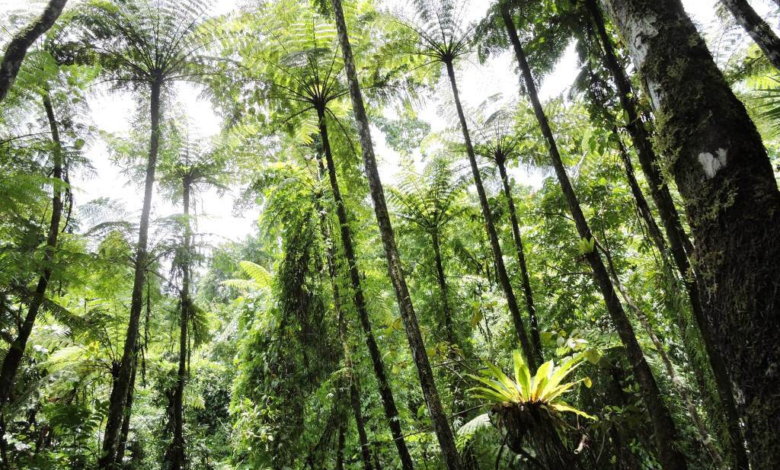
The Great Nicobar Island Project is a massive undertaking intended to bolster India’s strategic presence in the Indian Ocean. The plan includes:
- An international transshipment port at Galathea Bay, situated near the crucial Malacca Strait shipping lane.
- A greenfield international airport.
- A township and a dedicated power plant (gas and solar-based).
- Strategic defense installations.
To facilitate this project, the government has authorized the felling of nearly one million trees, affecting approximately 130 square kilometers of primary evergreen rainforest. The island is part of a UNESCO Biosphere Reserve and is home to nearly 1,800 species, many of which are endemic.
Political and Social Flashpoints
The project moved into the spotlight in April 2025, when Rahul Gandhi, the leader of India’s opposition, visited the island. In a widely shared video, Gandhi described the project as "the largest theft of Indian ecological property in history," arguing that the government had ignored the rights of the Indigenous Shompen and Nicobarese tribes. The Shompen, a particularly vulnerable tribal group, have lived in isolation on the island for millennia, and anthropologists warn that large-scale infrastructure and an influx of outside workers could lead to their cultural and physical extinction.
The Indian government has responded to these criticisms by emphasizing the project’s strategic necessity. Located near the entrance to the Malacca Strait, the transshipment port is seen as a vital component of India’s national security and its "Act East" policy. Officials claim that all environmental and tribal welfare safeguards have been met, citing compensatory afforestation plans on the Indian mainland as a way to offset the loss of Nicobar’s primary forests. However, ecologists argue that planting trees in a different climatic zone cannot replace the unique, ancient ecosystem of Great Nicobar.
Scientific Concerns and the "Gag Order"
The debate over Great Nicobar has been further complicated by allegations of suppressed scientific data. Media investigations have highlighted "gag orders" placed on government scientists and researchers, preventing them from speaking publicly about the project’s impact on biodiversity. Reports indicate that several critical maps—including those showing tribal lands and sensitive coral colonies—were either missing or altered in the project’s Environmental Impact Assessment (EIA).
Of particular concern is the impact on the Leatherback sea turtle. Great Nicobar is the most important nesting site in the northern Indian Ocean for these giant reptiles, which can grow up to 2.7 meters in length. Biologists like Satish Bhaskar, who spent decades documenting turtle nesting on the island, have identified Galathea Bay as an irreplaceable habitat. The construction of a massive port in this specific bay could effectively end the nesting cycle for the local Leatherback population.
Broader Implications for Global Climate Goals
The developments in 2025 serve as a microcosm of the global struggle to balance industrial growth with ecological limits. The reduction in tropical forest loss is a positive sign, but it is largely a result of fluctuating weather patterns rather than a fundamental shift in the global economic model.
The Role of Agriculture and Commodities
The "commodity-driven" nature of deforestation remains the most difficult challenge to address. As long as global markets prioritize cheap beef, leather, and palm oil, the economic incentive to clear land will persist. The watering down of the EU’s anti-deforestation laws suggests that even in regions with strong environmental mandates, industrial interests can successfully argue for exemptions that weaken the overall impact of conservation policy.
The Geopolitics of Conservation
The Great Nicobar project illustrates the rising conflict between "green" goals and national security. In a multipolar world, nations are increasingly prioritizing strategic infrastructure and energy security over long-term biodiversity targets. For India, the development of Great Nicobar is a matter of maritime sovereignty; for the world, it is the loss of a unique biological treasure.
Chronology of Recent Events
- 2021: UK passes the Environment Act, including forest-risk regulations that remain unimplemented.
- 2024: A record-breaking year for tropical forest fires, driven by El Niño conditions.
- January 2025: Members of the European Parliament refer the EU-Mercosur deal to the Court of Justice.
- February 2025: India’s National Green Tribunal upholds environmental clearances for the Great Nicobar project.
- April 2025: Global Forest Review reports a 36% drop in primary forest loss for the 2024-25 period.
- April 30, 2025: EU officially excludes leather from the EUDR following industry pressure.
- May 1, 2025: The EU-Mercosur trade deal provisionally enters into force.
Conclusion
The state of the world’s forests in 2025 is a study in contradictions. While governance in the Amazon and Southeast Asia has improved, leading to a measurable decline in primary forest loss, the legislative and strategic decisions being made in Brussels, London, and New Delhi suggest a continued willingness to sacrifice "unproductive" nature for "productive" commerce and security.
The 2030 goal to halt deforestation is less than five years away. To reach it, the international community must move beyond celebrating temporary dips in forest loss caused by weather patterns and address the systemic drivers of land-use change. Whether through more robust trade regulations like the EUDR or the protection of biodiversity hotspots like Great Nicobar, the coming years will determine if the world’s primary forests will remain as functional ecosystems or become relics of a lost natural heritage.