New Mexico is currently confronting an environmental crisis of unprecedented proportions, as the state grapples with the long-term aftermath of increasingly catastrophic wildfires that have devastated millions of acres of its unique high-desert and mountainous landscapes. While the immediate suppression of these blazes often dominates headlines, the subsequent recovery process has proven to be a daunting, multi-decadal challenge. Residents in fire-affected regions, particularly those impacted by the record-breaking Hermit’s Peak-Calf Canyon Fire, continue to navigate a landscape of charred remains, delayed disaster relief payments, and the persistent threat of post-fire flooding. These floods, which sweep through ashy burn scars, have repeatedly contaminated downstream drinking water sources, highlighting a critical vulnerability: the state’s forest ecosystems are failing to regenerate naturally. Without intervention, the loss of these forests threatens the very water infrastructure that sustains the Southwest. To address this, the state has launched the New Mexico Reforestation Center (NMRC), a massive collaborative effort designed to bridge a staggering "seedling gap" that currently spans hundreds of millions of trees.
The Scale of the Reforestation Crisis
The statistics defining New Mexico’s forest loss are sobering. Since the year 2000, wildfires have consumed approximately 7 million acres across the state. While fire is a natural component of many Western ecosystems, the intensity and frequency of modern "megafires" have fundamentally altered the landscape’s ability to recover. In high-severity burn areas, the seed banks in the soil are often incinerated, and the "mother trees" capable of naturally reseeding the ground are destroyed over vast distances.
The 2022 Hermit’s Peak-Calf Canyon Fire, the largest in New Mexico’s recorded history, serves as the primary catalyst for the state’s current urgency. This single fire event requires an estimated 17.6 million seedlings to begin the process of meaningful restoration. Across all existing burn scars in the state, experts estimate a total backlog of 385 million trees. At the current production capacity of New Mexico’s existing infrastructure, it would take half a century just to replant the Hermit’s Peak-Calf Canyon scar, let alone address the millions of other acres in need of attention.
Historically, New Mexico has relied on the John T. Harrington Forestry Research Center, which produces roughly 250,000 to 300,000 seedlings annually. This output is a fraction of what is required. To compensate, the state has frequently purchased seedlings from out-of-state nurseries, often as far away as Idaho. However, these seedlings frequently struggle to survive when transplanted into the harsh, arid climate of the Southwest. Transporting young trees over long distances subjects them to "planting shock," and because they are not grown from local seed stock adapted to New Mexico’s specific elevations and moisture levels, their mortality rates are high.
A Chronology of Escalating Wildfire Impact
The path to the creation of the New Mexico Reforestation Center is marked by a series of increasingly destructive fire seasons that redefined the state’s approach to land management.
In 2000, the Cerro Grande Fire burned 43,000 acres and destroyed hundreds of homes in Los Alamos, serving as an early warning of the risks posed by forest density and drought. This was followed in 2011 by the Las Conchas Fire, which at the time was the largest in state history, burning over 150,000 acres at an unprecedented speed. The Las Conchas Fire was particularly notable for its high-severity patches, which converted large swaths of coniferous forest into shrubland, showing that natural regeneration was no longer a guarantee.
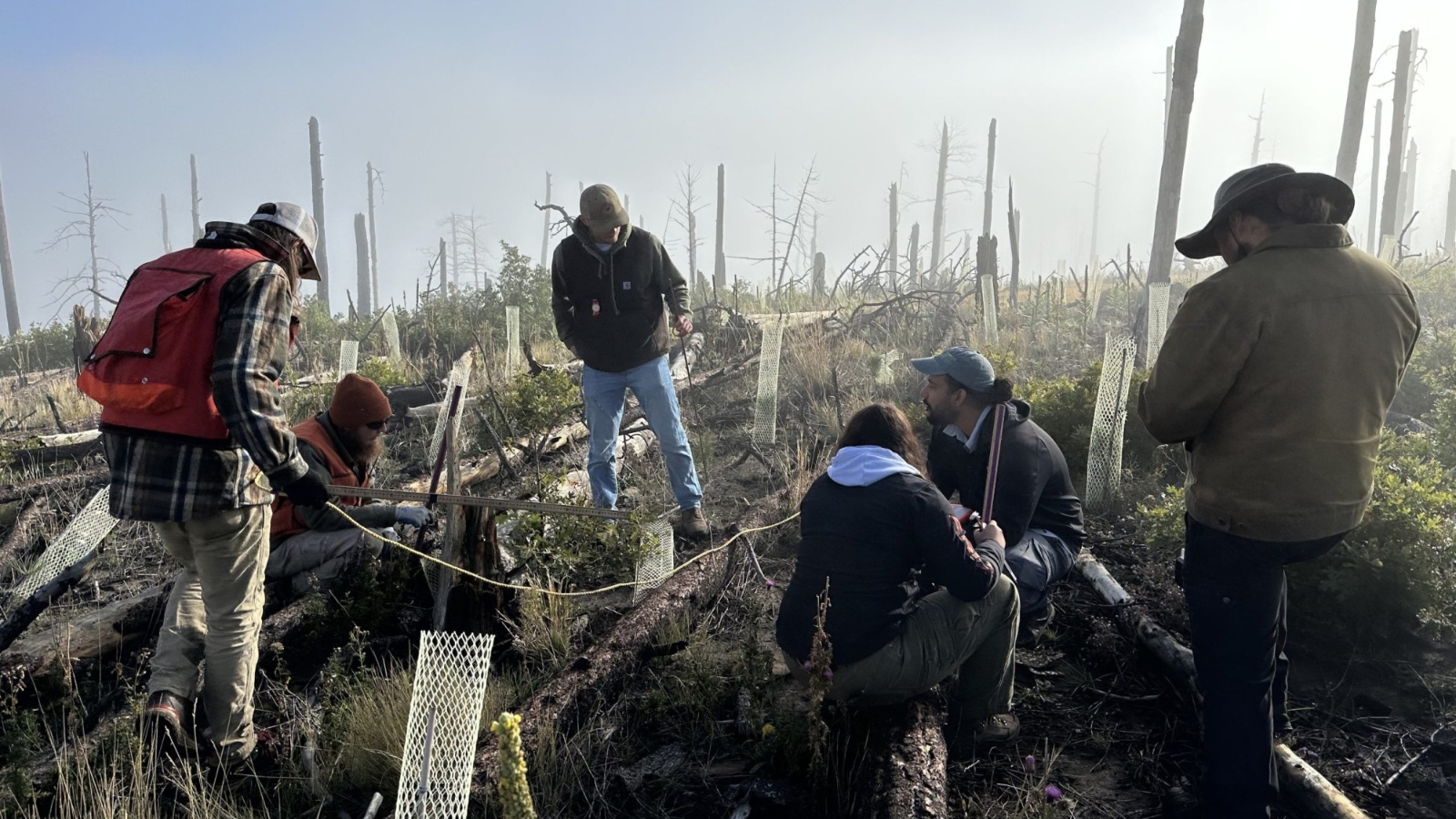
The situation reached a breaking point in 2022 with the Hermit’s Peak-Calf Canyon Fire. This blaze, which originated from two prescribed burns conducted by the U.S. Forest Service that escaped control, merged to scorch 341,230 acres. The social and environmental fallout was immense, leading to a federal disaster declaration and the realization that existing reforestation efforts were wholly inadequate for the "new normal" of climate-driven wildfire. In response, the New Mexico Reforestation Center was conceived in 2022 as a strategic partnership between the state Forestry Division and three major academic institutions: the University of New Mexico (UNM), New Mexico State University (NMSU), and New Mexico Highlands University (NMHU).
The New Mexico Reforestation Center: A Comprehensive Solution
The New Mexico Reforestation Center is not merely a nursery; it is designed as an integrated "seed-to-forest" pipeline. The center is currently breaking ground on a massive greenhouse facility in the northwestern part of the state, which will eventually span 155,000 square feet. This expansion is intended to more than triple the state’s current production capacity, with an ultimate goal of producing 5 million seedlings annually.
Director Jennifer Auchter, speaking on the mission of the center, emphasizes that the facility is a response to the unique environmental demands of the Southwest. The center’s work is divided among its university partners to cover every stage of the reforestation lifecycle:
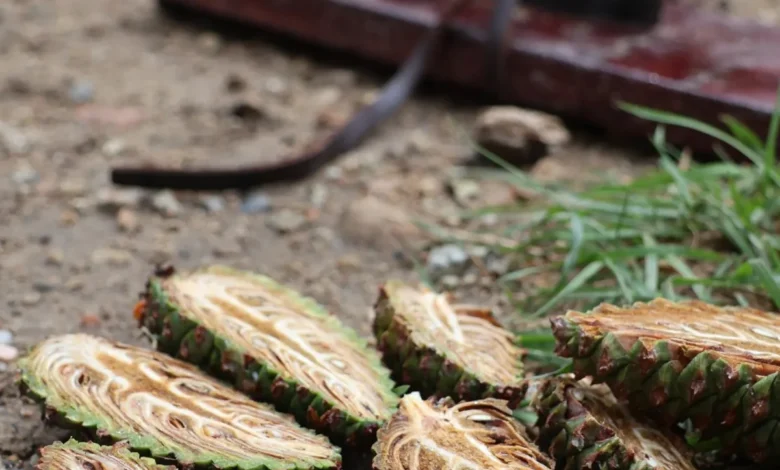
- Seed Collection and Processing (New Mexico Highlands University): NMHU oversees the arduous task of collecting native seeds from diverse elevations and microclimates across the state. This involves processing over 1,500 pounds of native seed. In a nod to local culture and resourcefulness, the facility even utilizes a repurposed chili roaster to extract seeds from pine cones and pods.
- Nursery Operations and Drought Conditioning (New Mexico State University): NMSU researchers are focused on the physiological health of the seedlings. They employ "drought conditioning" techniques, intentionally stressing young ponderosa pines and other species with limited irrigation. This prepares the plants for the arid conditions they will face upon planting, significantly increasing their chances of survival in a warming climate.
- Modeling and Monitoring (University of New Mexico): UNM provides the data-driven backbone of the operation. Researchers use advanced climate modeling to predict which sites will be most viable for specific species through the year 2100. This "right tree, right place" approach ensures that today’s planting efforts are not rendered obsolete by the climate shifts of the next century. Following planting, the university utilizes drones and on-the-ground monitoring to track survival rates and ecosystem health.
Forests as Vital Water Infrastructure
A central tenet of the NMRC’s mission is the recognition that New Mexico’s forests are its most critical water infrastructure. In the American Southwest, approximately 70 percent of the water used by municipalities and agriculture originates in forested watersheds. These forests capture and slowly release snowpack, which feeds the rivers and streams that sustain the region.
When a high-severity fire strips a mountainside of its vegetation, the soil becomes hydrophobic, or water-repellent. Without the root systems of trees to stabilize the earth and the canopy to break the fall of rain, even moderate precipitation can lead to catastrophic debris flows. These floods carry ash, heavy metals, and sediment into reservoirs and treatment plants. By prioritizing reforestation, the NMRC is effectively working to secure the state’s water future. Restabilizing burned hillsides is the only long-term solution to preventing the "second disaster" of post-fire flooding and water contamination.
Scientific Innovation and Climate Adaptation
The NMRC is departing from traditional reforestation methods to account for the realities of the 21st century. One innovative technique involves "nurse logs"—planting seedlings on the shady side of fallen timber to protect them from the intense high-altitude sun and to help retain moisture in the early years of growth. This method has shown particular success with sensitive species like aspen.
Furthermore, the center is looking beyond New Mexico’s borders. The "Four Corners" region—comprising New Mexico, Arizona, Utah, and Colorado—shares many of the same ecological challenges. Officials anticipate that the NMRC will eventually serve as a regional hub, providing climate-adapted seedlings to neighboring states that lack the infrastructure to meet their own reforestation needs. This collaborative approach is seen as essential for maintaining the ecological integrity of the broader Southwest.

Community Impact and the Human Element
Beyond the environmental and technical aspects, the reforestation effort is deeply tied to community recovery. The Hermit’s Peak-Calf Canyon Fire displaced thousands and destroyed livelihoods tied to the land. For many residents, seeing the forest return is a vital part of the healing process.
The NMRC has initiated educational programs to engage the next generation in this long-term mission. Recently, students from a charter school near Mora—a community heavily impacted by the 2022 fires—visited the seed collection facility. By participating in the reforestation process, from seed processing to eventual planting, these students are gaining a sense of agency over their environment. This local engagement is intended to foster a lifelong commitment to conservation and land stewardship.
Analysis of Long-Term Implications
The establishment of the New Mexico Reforestation Center represents a significant shift in environmental policy, moving from reactive fire suppression to proactive ecosystem management. However, the scale of the challenge remains immense. Even at a production rate of 5 million seedlings per year, it will take decades to address the existing backlog of 385 million trees.
The success of the NMRC will depend on sustained funding and the ability to scale labor-intensive processes like seed collection. It also highlights a growing trend in the Western United States: the "reforestation industry" is becoming a critical sector for climate adaptation. As wildfires continue to increase in size and severity across the globe, the lessons learned in New Mexico—specifically the integration of climate modeling with local genetic stock—will likely serve as a blueprint for other regions.
The center’s work also underscores the limitations of natural recovery in a warming world. The "decades to centuries" timeline for natural regeneration mentioned by Director Auchter is a stark reminder that without human intervention, many of the Southwest’s iconic forests could permanently transition into grasslands or shrublands. The NMRC is an ambitious attempt to hold the line against this ecological shift, ensuring that the forests of the future are prepared for the climate of 2100.
Related posts: