
Crossing The Line Pakistan S Strike Deep In Iran Territory
Pakistan’s Strike Deep in Iran: A Calculated Escalation and its Geopolitical Fallout
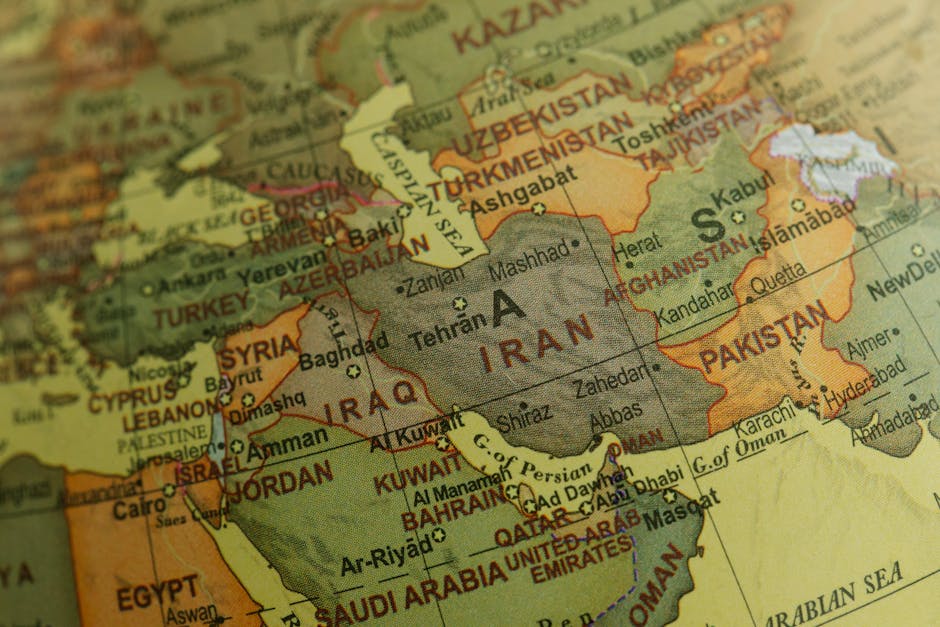
The late January 2024 aerial strikes conducted by Pakistan into Iranian territory, targeting alleged Baloch militant hideouts, represent a significant and alarming escalation in regional security dynamics. These cross-border incursions, unprecedented in their overt nature and scale, shattered decades of a precarious equilibrium and unleashed a cascade of geopolitical consequences, fundamentally altering the strategic calculus for both Islamabad and Tehran, as well as for their respective allies and regional adversaries. The stated objective of Pakistan was to dismantle the operational capabilities of the Baloch Liberation Front (BLF) and the Baloch Liberation Army (BLA), groups accused of perpetrating terrorist attacks within Pakistani Balochistan. However, the method of achieving this objective – a unilateral military operation deep within a sovereign nation – carries profound implications far beyond counter-terrorism operations. This article will delve into the motivations behind Pakistan’s audacious move, analyze the immediate and potential long-term ramifications, and explore the wider geopolitical context that shaped this critical juncture.
Pakistan’s decision to launch these strikes was not an impulsive act but rather the culmination of escalating security concerns and a perceived lack of effective cooperation from Tehran in addressing cross-border militancy. For years, Pakistan has voiced its frustration over alleged Iranian inaction against Baloch insurgent groups that operate from across the shared border. These groups, often espousing ethno-nationalist aspirations for an independent Balochistan, have been responsible for a string of violent attacks against Pakistani security forces and civilian targets. The Pakistani government has repeatedly accused Iran of providing sanctuary and support, whether intentional or through negligence, to these militant factions. The increasing tempo and sophistication of these attacks, particularly in the strategically vital Gwadar region and along the China-Pakistan Economic Corridor (CPEC) projects, likely created a sense of urgency and desperation within the Pakistani security establishment. The notion of "red lines" being crossed by militants operating with impunity from Iranian soil, coupled with a perceived unwillingness or inability of Iran to curb such activities, ultimately paved the way for a more assertive, albeit risky, Pakistani response. Furthermore, the domestic political context within Pakistan, with a government seeking to project strength and demonstrate decisive action on national security, cannot be discounted as a contributing factor.
The Iranian response was swift and equally assertive, underscoring the gravity of Pakistan’s actions. Tehran characterized the strikes as a violation of its sovereignty and territorial integrity, condemning them in the strongest terms. Iran retaliated with its own missile and drone strikes targeting alleged Jaish al-Adl militant sites in Pakistan’s Balochistan province. This tit-for-tat exchange immediately triggered fears of a wider regional conflict, drawing in other key players with vested interests in the stability of the Middle East and South Asia. The rapid escalation highlighted the fragile nature of regional security architecture and the potential for miscalculation to ignite a larger conflagration. For Iran, the strikes posed a significant challenge to its image as a regional power capable of defending its borders and deterring aggression. It also presented a delicate balancing act, as Iran sought to respond forcefully without provoking a full-scale war or alienating its existing allies. The immediate diplomatic fallout was palpable, with both nations recalling their ambassadors and engaging in heated rhetoric, significantly straining bilateral relations that, while often complex, had maintained a degree of cautious cooperation.
The geopolitical implications of Pakistan’s strikes are multifaceted and far-reaching. Firstly, it has introduced a new and destabilizing element into the already volatile regional security landscape. The precedent of a nation unilaterally crossing into another’s territory to conduct military operations, even against perceived terrorist threats, carries significant risks. It can embolden other states with similar grievances to adopt similar tactics, leading to a proliferation of cross-border conflicts. This could further fragment regional security, making it more difficult to address common threats effectively. Secondly, the strikes have placed the broader Iran-Pakistan relationship under immense strain. While both countries share a border and have historically engaged in trade and cultural exchanges, their relationship has often been characterized by mutual suspicion and strategic maneuvering, particularly concerning Afghanistan and the Baloch issue. This recent confrontation has likely exacerbated these underlying tensions, making future cooperation on issues like border management, counter-terrorism, and regional trade significantly more challenging.
The involvement of other regional and global powers adds another layer of complexity. China, a major investor in Pakistan through CPEC and a strategic partner for both Pakistan and, to a lesser extent, Iran, expressed concern over the escalation and called for restraint from both sides. Beijing’s primary interest lies in the stability of CPEC and the broader Belt and Road Initiative, which could be jeopardized by any sustained regional instability. India, Pakistan’s arch-rival, has been closely observing the developments. While New Delhi has its own complex relationship with Iran, it has also been a victim of cross-border terrorism emanating from Pakistan. India’s strategic calculus would likely involve assessing how this new dynamic impacts its own security environment and its regional strategic partnerships. The United States, with its significant presence and interests in the Middle East, has also called for de-escalation, a familiar refrain in a region prone to conflict. However, the US’s complex relationship with both Pakistan and Iran, coupled with its ongoing strategic competition with Iran, means its response is likely to be nuanced and carefully calibrated.
The strategic implications for the Baloch insurgency itself are also significant. While the strikes may have disrupted some operational capabilities, they have also potentially galvanized nationalist sentiment among Baloch communities on both sides of the border. The narrative of external aggression could be exploited by militant groups to bolster their support and recruit new members. The internationalization of the Baloch issue, however unintended, might also bring greater international scrutiny to the grievances of the Baloch people, potentially leading to increased pressure on both Pakistan and Iran to address the root causes of the insurgency. The strikes have undeniably elevated the visibility of the Baloch struggle on the international stage, forcing a re-evaluation of the efficacy of existing counter-insurgency strategies.
The long-term consequences of Pakistan’s deep strike into Iran are still unfolding. The immediate concern is the possibility of further retaliatory actions or a sustained period of heightened tensions. This could lead to increased military deployments along the shared border, disruptions to trade and economic activity, and a general climate of insecurity. Furthermore, the strikes have set a dangerous precedent that could embolden other states to pursue unilateral military solutions to their security concerns, thereby undermining international law and the principles of state sovereignty. The incident also raises critical questions about intelligence sharing and diplomatic engagement. The fact that such a significant military operation was launched without a clear indication of prior diplomatic efforts or international mediation suggests a breakdown in communication channels and a prioritization of unilateral action over collaborative problem-solving.
In conclusion, Pakistan’s decision to strike deep into Iranian territory was a high-stakes gambit driven by persistent security frustrations and a desire to project strength. While it may have temporarily achieved its stated objective of targeting militant groups, the act has irrevocably altered the regional geopolitical landscape. The subsequent Iranian retaliation has underscored the fragility of regional stability and the potential for miscalculation to lead to wider conflict. The long-term implications for bilateral relations, regional security, and the broader international order are profound. This event serves as a stark reminder of the complex interplay of national security interests, geopolitical rivalries, and the enduring challenge of addressing cross-border militancy in a volatile region. The future trajectory of relations between Pakistan and Iran, and indeed the stability of South and Southwest Asia, will be heavily influenced by how both nations, and the international community, navigate the fallout from this unprecedented military incursion. The emphasis on diplomatic engagement, intelligence sharing, and addressing the underlying socio-economic and political grievances in Balochistan will be crucial in preventing future escalations and fostering a more enduring regional peace.
