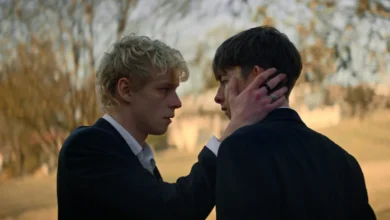
Legends Review: Netflix’s Gripping Dramatization of Undercover Customs Operations in the Thatcher Era and the Evolution of the War on Drugs

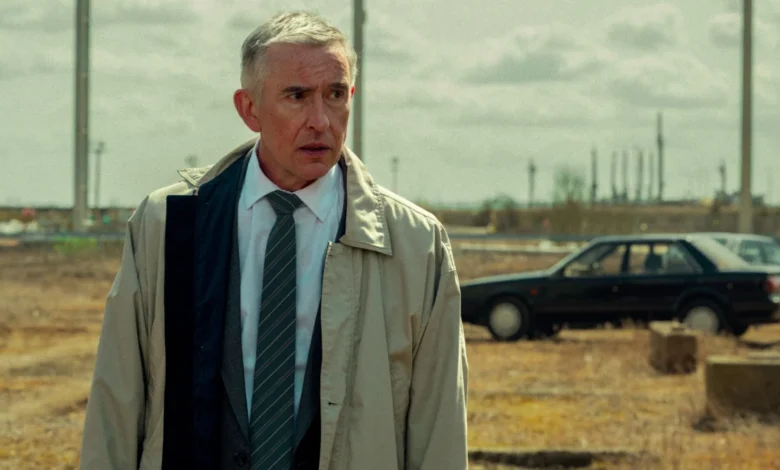
In the specialized vocabulary of undercover law enforcement, a “legend” is far more than a myth or a story; it is the meticulously constructed false identity an operative assumes to infiltrate a criminal organization. The integrity of this fabrication is a matter of life and death. As Don, a veteran British customs agent portrayed by Steve Coogan, explains to a room of hopeful recruits: “Your legend has to come from you, or it won’t work. Your legend has to be part of you, or it won’t work. And when legends don’t work, people die.” This high-stakes philosophy serves as the foundation for Legends, a compact and compelling six-part series now streaming on Netflix.
Created and written by Neil Forsyth, the creative force behind the acclaimed drama The Gold, Legends explores a pivotal moment in British law enforcement history. Set during the twilight of the Margaret Thatcher administration in the late 1980s, the series depicts the efforts of HM Customs and Excise to combat a burgeoning heroin epidemic that threatened to destabilize the social fabric of the United Kingdom. While the series is a dramatization, it is loosely based on a series of actual customs operations that successfully intercepted massive quantities of narcotics despite severe budgetary constraints and limited technological resources.
The Recruitment of the Unconventional
The narrative begins with a brisk, no-nonsense introduction to the mission’s architect. Don is tasked with assembling a team capable of infiltrating deep-seated heroin rings. Rather than selecting seasoned police officers or military veterans, Don looks inward toward the overlooked ranks of his own agency. He gathers a "ragtag" assembly of secretaries, airport security personnel, and administrative misfits—individuals whose primary qualification is their untapped potential and their relative anonymity.
The premiere episode demonstrates the show’s efficient pacing by whittling down a busload of applicants to a core group of four within the first quarter-hour. This selection process is preceded by an economical cold open that juxtaposes two overdose deaths: one in a derelict urban squat and another in a high-society setting. This contrast establishes the universal reach of the 1980s drug crisis and provides the political impetus for Thatcher’s government to take radical, if unconventional, action.
The final team consists of four distinct archetypes of the British working and middle classes:
- Guy (Tom Burke): A working-class Londoner whose ambitions have long been stifled by his circumstances. Burke, known for his role in Furiosa, delivers a gravel-voiced, nuanced performance as Don’s star pupil.
- Sophie (Charlotte Ritchie): A clerical specialist with an extraordinary aptitude for data analysis and document interpretation.
- Kate (Hayley Squires): A Northerner driven by a personal vendetta against the destruction drugs have wrought upon her community.
- Bailey (Aml Ameen): The son of immigrants whose professional advancement has been hindered by the pervasive systemic racism of the era.
Strategic Deployment and the Heroin Supply Chain
The series provides a detailed look at the logistics of the international drug trade, specifically focusing on the "Golden Crescent" supply chain. The second episode features a standout sequence tracing the journey of an opium crop from its harvest in the fields of Pakistan through processing in Turkey, and finally into the ports of the United Kingdom.
Don divides his team to tackle the two primary domestic hubs of heroin distribution: Liverpool and London. In Liverpool, the decimation of the shipping and industrial sectors had created a vacuum filled by narcotics and organized crime. Kate and Bailey are deployed here to recruit informants and plant sources to bring down local kingpin Declan Carter (Tom Hughes).
In London, the focus shifts to Green Lanes, a neighborhood where a Kurdish gang manages the importation of product. Guy is sent into this environment alone, aided only by a charming Greek ex-convict (Gerald Kyd) whom Don has leveraged out of prison to facilitate an introduction. Guy’s "legend" is that of a former legitimate businessman who turned to crime following a bitter divorce—a persona Guy treats as a separate entity, often speaking of "him" in the third person.
Historical Context: The 1980s Heroin Epidemic
To understand the stakes of Legends, one must consider the historical backdrop of the 1980s. During this decade, the United Kingdom experienced a massive surge in heroin use. In 1980, there were approximately 3,000 registered addicts in the UK; by the end of the decade, estimates suggested the actual number of users exceeded 100,000.
The Thatcher government responded with several initiatives, most notably the 1986 "Heroin: It’s Screwing You Up" public health campaign. However, the crisis was deeply intertwined with the economic policies of the era. The decline of traditional industries led to record-high unemployment in Northern England and Scotland, creating a desperate environment where the drug trade became a viable, albeit destructive, economy.
Legends captures this tension by highlighting how the undercover agents are not just fighting criminals, but are also navigating a landscape of social decay. The show contrasts the grit of the field operations with the polished halls of power, exemplified by Alex Jennings’ portrayal of a posh Home Secretary who is more concerned with the optics of a major party conference than the safety of the operatives.
A Chronology of Undercover Methodology
The series serves as a chronological bridge between the "cowboy" era of 1970s policing and the highly regulated surveillance state of the 21st century. The methods depicted in Legends are analog and perilous:
- 1987-1988: The height of the customs operations. Agents relied on payphones, physical tails, and "pocket-sized" cameras that were still bulky by modern standards.
- The Legend Building: Operatives spent weeks living in safe houses to "break in" their new identities, ensuring their backstories were foolproof.
- The Infiltration: Unlike modern operations that use heavy electronic surveillance, these agents relied almost entirely on psychological manipulation and interpersonal chemistry.
The show emphasizes that the success of these operations depended on the agents’ ability to remain "awakened rather than transformed." As Guy moves deeper into the Green Lanes operation, the narrative explores the psychological toll of maintaining a lie 24 hours a day, where a single slip in dialect or a forgotten detail of the "legend" could result in immediate execution.
Comparative Analysis and Cultural Impact
While many American series, such as The Wire, take a cynical view of the "War on Drugs" as a self-perpetuating quagmire that fuels mass incarceration, Legends maintains a more British, somewhat more optimistic perspective. It focuses on the individual agency and the "found potential" of its protagonists. The series suggests that while the systemic problem may be insurmountable, the tactical victories achieved by these amateur-turned-professional spies were significant.
The casting of Steve Coogan adds a layer of dark humor to the proceedings. Known for his comedic range, Coogan brings a weary, cynical wit to the role of Don. The chemistry between the agents in their makeshift headquarters provides a sense of camaraderie that lightens the otherwise heavy subject matter. This balance of tone—alternating between the deadly serious stakes of a drug deal and the bickering of a workplace comedy—makes the series uniquely accessible.
Implications for Modern Law Enforcement
The legacy of the operations depicted in Legends continues to influence how HM Revenue and Customs (the successor to the agency depicted) and the National Crime Agency (NCA) operate today. The shift from using seasoned officers to "civilian" specialists for certain types of undercover work began in this era. The series highlights the realization that the best people to infiltrate a community are often those who look and act like they belong to it, rather than those trained in a police academy.
Furthermore, the show addresses the "dirty work" of law enforcement—the moral compromises made when dealing with informants and the political pressures that force operations to conclude prematurely. The character of the Home Secretary serves as a reminder that law enforcement is often a tool of political messaging, where the "big bust" is timed for the evening news rather than for the maximum disruption of the criminal network.
Conclusion: The Endurance of the Legend
Legends concludes its six-episode run as a taut, high-stakes thriller that succeeds by focusing on the human element of the drug trade. By highlighting the stories of Guy, Sophie, Kate, and Bailey, the series transforms a historical footnote about 1980s customs seizures into a gripping exploration of identity and purpose.
The show’s final episodes see the team taking risks that involve adopting multiple aliases—as property developers, German tourists, and shady lawyers—and even venturing overseas. Through these maneuvers, Forsyth and directors Brady Hood and Julian Holmes maintain a sense of adventure that masks the underlying tragedy of the heroin epidemic. Ultimately, Legends is a tribute to the "understimulated misfits" who, for a brief moment in the late 20th century, stepped out of their clerical roles and into the shadows to change the course of a national crisis.
Related posts: