
Fuming French Farmers Pile Pressure On Paris
Fuming French Farmers Pile Pressure on Paris: A Nation on the Brink of Agricultural Crisis
The simmering discontent within France’s agricultural sector has erupted into widespread, and increasingly disruptive, protests, placing immense pressure on President Emmanuel Macron’s government. Farmers, angered by a confluence of economic hardships, regulatory burdens, and perceived indifference from policymakers, are employing tactics designed to cripple supply chains and force concessions. This escalating crisis is not merely a localized issue; it represents a fundamental challenge to the future of French agriculture, a cornerstone of the nation’s economy and cultural identity. The immediate catalysts for this wave of unrest are multifaceted, stemming from the relentless rise in the cost of production, particularly for fuel, fertilizer, and animal feed, coupled with stagnant or declining farmgate prices. Global market volatility, exacerbated by geopolitical events and the lingering effects of the COVID-19 pandemic, has further squeezed already thin profit margins.
The Common Agricultural Policy (CAP), the European Union’s primary agricultural policy instrument, also finds itself under scrutiny. While intended to support farmers and ensure food security, many within the French agricultural community argue that its current iteration, with its increasing emphasis on environmental regulations and green subsidies, places an undue financial and administrative burden on their operations. The "Green Deal" initiatives, aimed at promoting sustainable farming practices and reducing pesticide use, are lauded by environmentalists but viewed by many farmers as an imposition that compromises their ability to compete and maintain profitability. The complex web of regulations, often perceived as disconnected from the realities of daily farm management, fosters a sense of being misunderstood and unfairly targeted by urban-centric policymakers. This perception fuels resentment and strengthens the farmers’ resolve to be heard, unequivocally.
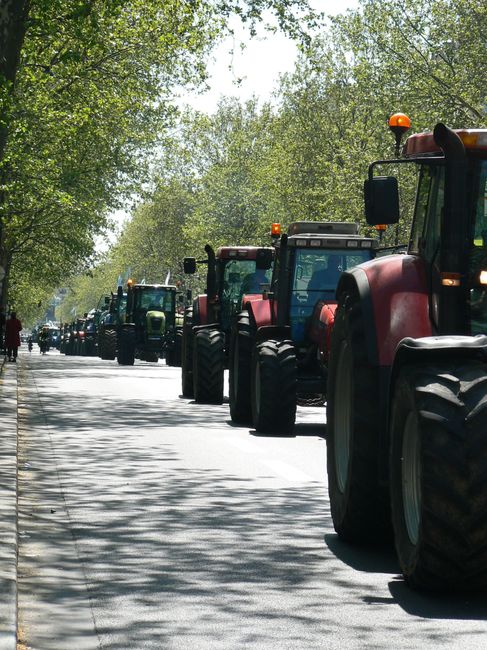
The protests have manifested in a variety of disruptive forms, most notably through tractor blockades of key arterial roads and highways across France. These blockades, often strategically placed at major distribution hubs and border crossings, have effectively halted the flow of goods, impacting supermarkets, restaurants, and other businesses dependent on agricultural produce. The visual impact of thousands of tractors converging on major transport arteries is powerful, designed to capture public attention and highlight the indispensable role of farmers in sustaining the nation’s food supply. Images of long queues of trucks, empty shelves in some retail outlets, and frustrated commuters have become ubiquitous in French media, underscoring the tangible consequences of the farmers’ actions. This strategic disruption is a deliberate tactic to exert maximum economic and social pressure, forcing the government to acknowledge the severity of their grievances.
Beyond highway blockades, farmers have also engaged in more direct actions, such as dumping produce in front of administrative buildings and supermarkets. This symbolic act of waste serves to illustrate the stark contrast between the value of their labor and the prices they receive, and the significant losses they incur when unable to sell their goods at a fair market rate. The visual spectacle of perfectly edible fruits, vegetables, and dairy products being strewn across public spaces is designed to elicit empathy and highlight the economic absurdity of their situation. It is a visceral reminder of the potential for food waste when agricultural production is misaligned with market demand and profitability. Furthermore, these actions are a direct challenge to retailers and processors, accused of benefiting disproportionately from the agricultural value chain while leaving farmers to bear the brunt of economic hardship.
The demands of the protesting farmers are wide-ranging, reflecting the complexity of the challenges they face. At the forefront is the call for immediate financial relief, including lower taxes on fuel and agricultural inputs, and more equitable pricing mechanisms that ensure a fair return on their investment and labor. They are advocating for a "fair price" that reflects the true cost of production, taking into account not only direct expenses but also the intangible value of their work, environmental stewardship, and the preservation of rural landscapes. The concept of "food sovereignty," the right of peoples to healthy and culturally appropriate food produced through ecologically sound and sustainable methods, and their right to define their own food and agriculture systems, is also gaining traction, with farmers asserting their desire to have greater control over their production and distribution.
Environmental regulations are another major point of contention. While many farmers acknowledge the need for sustainable practices, they argue that current policies are too prescriptive, costly to implement, and often fail to account for regional variations and the practicalities of different farming systems. They are demanding a more flexible and supportive approach to environmental transitions, with greater investment in research and development, and tailored solutions that enable them to adapt without jeopardizing their economic viability. The perception that they are being asked to shoulder the burden of environmental protection without adequate compensation or support is a significant driver of their frustration. They are calling for a partnership in environmental stewardship, rather than a diktat from afar.
The political dimension of the crisis is undeniable. President Macron, already facing a challenging domestic political landscape, finds himself under immense pressure to de-escalate the situation and provide tangible solutions. His government has responded with a series of announcements and pledges, promising aid packages, regulatory reviews, and consultations with agricultural representatives. However, these measures have largely been perceived as insufficient and too slow to address the immediate financial distress experienced by many farmers. The farmers’ unions, often divided on specific strategies, have united in their demand for concrete actions, not just words. The upcoming European Parliament elections and local municipal elections also loom large, adding a layer of political urgency to the government’s response, as they seek to avoid alienating a significant portion of the electorate.
The international dimension of the crisis is also significant. France is a major agricultural producer within the European Union, and its farming policies have ripple effects across the continent. The protests have resonated with farmers in other EU member states, who are facing similar challenges. This growing pan-European sentiment could lead to wider, coordinated actions, further amplifying the pressure on the EU institutions and national governments to address systemic issues within the agricultural sector. The free movement of goods within the EU, a cornerstone of the single market, is being tested by these localized disruptions, highlighting the interconnectedness of agricultural economies.
The long-term implications of this crisis are profound. If not adequately addressed, the ongoing economic pressures and regulatory burdens could lead to further farm closures, a decline in agricultural output, and a shift towards fewer, larger, and potentially less sustainable farms. This would have significant consequences for rural communities, food security, and the French cultural landscape. The aging demographic of French farmers, coupled with the difficulty of attracting new entrants to the profession due to the perceived economic precarity, exacerbates these concerns. The romanticized image of French agriculture is increasingly at odds with the harsh economic realities faced by those who practice it.
The government’s challenge is to strike a delicate balance: to support its farmers and ensure the future of its agricultural sector, while also meeting its environmental commitments and maintaining consumer affordability. This requires a multifaceted approach that goes beyond short-term financial aid and addresses the underlying structural issues within the agricultural value chain. It necessitates a genuine dialogue and collaboration between policymakers, farmers, consumers, and the wider food industry to forge a sustainable and equitable future for French agriculture. The current wave of protests is a clear signal that the status quo is no longer tenable and that fundamental change is urgently required to prevent a deeper and more damaging agricultural and societal sch3.
