
Sjostrom And Wiffen End Swim Worlds With A Splash
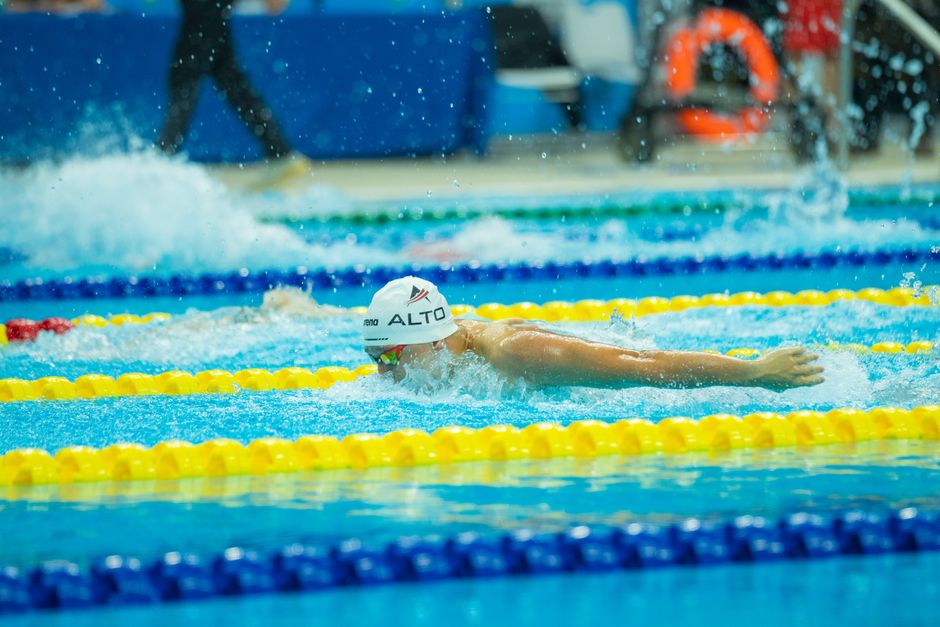
Sjostrom and Wiffen End Swim Worlds with a Splash: A Dominant Finish to a Thrilling Championship
The Fukuoka 2023 World Aquatics Championships concluded with a spectacular display of swimming prowess, as Sarah Sjöström and Bobby Wiffen cemented their legacies with dominant performances in their respective final events. Their victories were not just individual triumphs but also poignant moments that underscored the evolving landscape of competitive swimming, highlighting the enduring impact of seasoned champions and the emergence of new forces. Sjöström, the Swedish sprint queen, added another gold medal to her already overflowing cabinet, a testament to her longevity and unwavering dedication to the sport. Wiffen, the rising star from Ireland, continued his meteoric ascent, capturing the imagination of swimming fans worldwide with his audacious front-running style and a performance that promises to redefine middle-distance freestyle. Their final swims served as a fitting crescendo to a championship that delivered breathtaking races, unexpected upsets, and the undeniable thrill of elite athletic competition.
Sarah Sjöström’s final act in Fukuoka was a masterclass in her signature event, the 50-meter freestyle. Entering the race as the overwhelming favorite, she delivered a performance that was both expected and awe-inspiring. From the moment the starter’s gun fired, Sjöström was in a league of her own, her powerful underwater dolphin kicks giving her an immediate advantage. Her transition to the surface was seamless, and her stroke, honed over decades of elite competition, was a blur of efficiency and raw power. She pulled away from the field with apparent ease, her competitors struggling to match her blistering pace. The touch at the wall was decisive, a clear indication of her superiority. The roar of the crowd was a testament to the respect and admiration she commands globally. This victory was more than just another medal; it was a profound statement of her continued dominance in an era where new talent constantly emerges. Her ability to consistently perform at the highest level, year after year, is a phenomenon in itself. She has consistently adapted her training, her technique, and her mental approach to remain at the pinnacle of the sport, defying the natural progression of age and the emergence of younger, hungrier competitors. Her consistency across different strokes and distances, though most renowned for her freestyle speed, further cements her status as one of the greatest swimmers of all time. The 50m freestyle, in particular, demands an explosive combination of speed, power, and precise technique. Sjöström’s mastery of this event showcases a perfect synergy of these elements, a testament to years of meticulous practice and an innate understanding of the race’s dynamics. Her start, her underwater phase, her stroke rate, and her finish are all executed with unparalleled precision, leaving little room for error and even less for her rivals to exploit.
On the men’s side, Bobby Wiffen’s triumph in the 1500-meter freestyle was a watershed moment for Irish swimming and a clear signal that a new star has arrived on the global stage. Wiffen, known for his aggressive front-running strategy, did not disappoint. He took the lead early in the race and maintained a relentless pace, pushing the boundaries of human endurance. The race was a captivating battle of wills, with Wiffen facing immense pressure from the world’s best distance swimmers. Yet, he held firm, his powerful stroke and unwavering determination propelling him towards the wall. His victory was hard-fought and richly deserved, a culmination of years of dedication and sacrifice. This performance not only secured him a world title but also established him as a serious contender for Olympic gold in the future. His success is a source of national pride and an inspiration to aspiring athletes in Ireland, demonstrating that with talent, hard work, and the right support, even smaller nations can produce world-beating athletes. Wiffen’s strategy of leading from the front in a grueling 1500m race is a high-risk, high-reward approach. It requires exceptional aerobic capacity, mental fortitude, and the ability to maintain a blistering pace for an extended period. His success in executing this strategy against a field of seasoned distance specialists speaks volumes about his physical and psychological conditioning. It’s a testament to his belief in his own abilities and his willingness to push himself beyond perceived limits. The image of him swimming alone at the front of the pack, head down and relentless, will be etched in the memories of swimming fans for years to come.
The significance of Sjöström’s victory extends beyond the individual medal. As a multi-Olympic champion and a multiple world record holder, she has become a benchmark for excellence in women’s swimming. Her continued success at this stage of her career is remarkable and offers a valuable lesson to younger swimmers about the importance of dedication, adaptation, and a passion for the sport. She has navigated the challenges of maintaining peak performance across multiple Olympic cycles, evolving her training to overcome the inevitable physical changes that come with age and to counter the ever-increasing level of competition. Her mental resilience is as impressive as her physical prowess, allowing her to perform under immense pressure on the biggest stages. Her influence also extends to inspiring a new generation of female swimmers, particularly in Sweden, who see in her a tangible example of what is achievable through sheer hard work and unwavering commitment. She embodies the idea that age is but a number when coupled with relentless dedication and a burning desire to be the best.
Wiffen’s emergence represents a paradigm shift in men’s distance swimming. The 1500-meter freestyle has historically been dominated by swimmers from swimming powerhouses. Wiffen’s victory challenges this established order and highlights the increasing globalization of elite swimming. His journey from an emerging talent to a world champion is a compelling narrative of perseverance and strategic development. His coach and national federation’s commitment to nurturing his talent have clearly paid dividends, demonstrating the importance of robust support systems for athletes. The Irish public’s embrace of Wiffen’s success underscores the unifying power of sport and the pride that can be derived from national achievements on the international stage. His story is an inspiration not only to aspiring swimmers in Ireland but to athletes across all disciplines, proving that dedication and a clear vision can overcome geographical and historical disadvantages. His bold racing style, often seen as a gamble, has proven to be a winning formula, injecting an element of calculated risk into the typically conservative pacing of distance events. This has made his races must-watch spectacles, captivating audiences with their intensity and unpredictability.
Beyond these two headline performances, the Fukuoka World Aquatics Championships were a treasure trove of memorable moments. The close races, the unexpected upsets, and the sheer athleticism displayed by swimmers from around the globe provided a compelling narrative throughout the competition. The depth of talent across all strokes and distances was evident, with new national records being set and swimmers pushing the boundaries of human performance. The championship served as a crucial stepping stone for many athletes heading towards the Olympic Games, providing valuable race experience and insights into their current form and areas for improvement. The infrastructure and organization of the event also contributed to its success, with state-of-the-art facilities and a dedicated team of volunteers ensuring a smooth and enjoyable experience for athletes and spectators alike. The introduction of new technologies for broadcasting and data analysis further enhanced the spectator experience, offering deeper insights into the intricacies of swimming performance.
The tactical nuances of swimming at this elite level are often overlooked by casual observers. In the 50m freestyle, for instance, Sjöström’s success is a testament to her ability to maximize every millisecond. Her start is crucial, generating maximum velocity off the blocks and maintaining that speed through a powerful underwater phase. Her stroke mechanics are designed for maximum propulsion with minimal drag, each pull and kick a precisely timed effort to move her through the water as efficiently as possible. Her breathing pattern, or lack thereof for large portions of the race, is a strategic decision to maintain momentum. The finish is equally vital, a desperate lunge for the wall that can make the difference between gold and silver. In contrast, the 1500m freestyle, Wiffen’s domain, is an exercise in endurance, pacing, and mental fortitude. The front-running strategy, while bold, requires an exceptional understanding of one’s own capabilities and the ability to manage energy reserves over a sustained period. Wiffen’s success indicates an almost perfect execution of this strategy, maintaining a pace that his competitors, despite their best efforts, could not match. This involves not just physical conditioning but also the ability to block out the internal discomfort and external pressure, focusing solely on the task at hand. The psychology of distance swimming is as critical as the physiology; Wiffen’s mental toughness is clearly a significant asset.
The performances of Sjöström and Wiffen at the Fukuoka World Aquatics Championships were not isolated incidents of brilliance but rather the culmination of years of relentless training, strategic planning, and an unwavering commitment to their sport. Sjöström’s continued dominance at the age of 28, an age where many swimmers begin to contemplate retirement, speaks to her extraordinary dedication and her ability to adapt and evolve. She has consistently set the standard in sprint freestyle, and her ability to maintain that standard against younger, rising talents is a testament to her unparalleled work ethic and her deep understanding of the sport. Her longevity is a phenomenon in itself, and she has become a living legend whose performances are eagerly anticipated by fans worldwide. Wiffen’s emergence as a world-class distance swimmer, particularly his audacious front-running style, signals a new era in men’s middle-distance swimming. His bravery and relentless pace have captured the imagination of fans and have already begun to influence the strategies of his competitors. His success is a source of immense pride for Ireland and serves as a powerful inspiration to aspiring athletes in smaller nations, demonstrating that with dedication and talent, world-class success is achievable regardless of the sporting landscape of one’s home country. Their respective victories at the Fukuoka Championships were more than just personal triumphs; they were defining moments for their respective disciplines and inspiring displays of athletic excellence that will resonate throughout the swimming community for years to come. The championship itself was a showcase of the sport’s vibrant present and promising future, leaving fans eager for the next chapter in the captivating world of competitive swimming.