
No Farmers No Food Farmers Anger Spreads In Europe Governments Promise Help
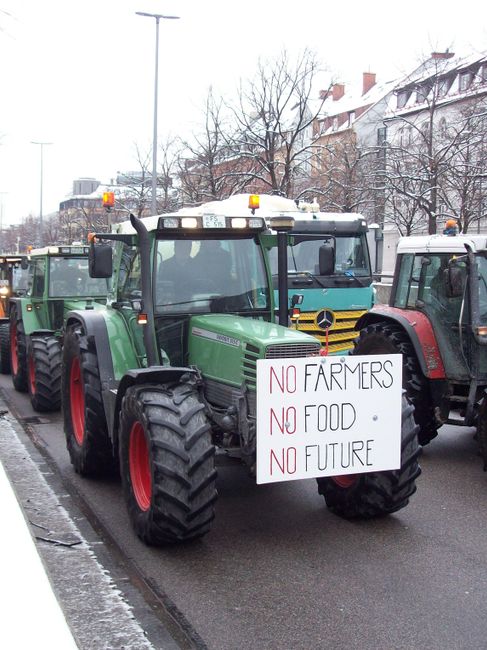
No Farmers, No Food: Farmers’ Anger Spreads in Europe as Governments Promise Help
The agricultural heartlands of Europe are pulsing with discontent. From the fertile plains of France to the rolling hills of Germany, and across to the meticulously cultivated fields of the Netherlands, a wave of farmer anger is escalating, fueled by a potent cocktail of economic pressures, environmental regulations, and perceived neglect by national and supranational authorities. The rallying cry, "No farmers, no food," echoes through protest camps, blockaded highways, and organized demonstrations, highlighting a fundamental disconnect between policymakers and the people who put food on European tables. This widespread unrest is forcing governments to confront the precarious state of their agricultural sectors and has spurred a flurry of promises of assistance, yet the underlying issues remain deeply entrenched.
At the core of the farmer’s grievances lies a persistent squeeze on their livelihoods. Decades of falling commodity prices, coupled with ever-increasing input costs – for fuel, fertilizer, seeds, and machinery – have eroded profit margins to the breaking point. Farmers argue they are often forced to sell their produce at prices below the cost of production, a situation exacerbated by the power imbalance with large retailers and processors who dictate terms. The Common Agricultural Policy (CAP), a cornerstone of EU agricultural policy, is frequently cited as failing to provide adequate financial support, with many farmers feeling that subsidies are not reaching those who need them most or are being diverted to larger, more industrialized operations. The CAP’s complex bureaucracy also adds to their burden, demanding extensive paperwork and compliance that diverts precious time and resources away from the farm itself.
Adding to the economic hardship are increasingly stringent environmental regulations. While acknowledging the need for sustainable practices, farmers feel that they are being disproportionately burdened by ambitious climate targets and biodiversity goals without sufficient financial or technical support. The proposed ban on certain pesticides, restrictions on fertilizer use, and the push for rewilding initiatives, while potentially beneficial for the environment in the long term, are seen by many farmers as immediate threats to their ability to produce food efficiently and economically. They argue that these measures are being implemented without adequate consideration for the practical realities of farming, the potential impact on yields, and the lack of viable alternatives being made readily available and affordable. This perceived imposition of environmentally driven policies without adequate compensation or support is a significant driver of anger, leading to accusations that farmers are being scapegoated for broader environmental challenges.
The geopolitical landscape has also played a crucial role in amplifying these frustrations. The war in Ukraine has disrupted global supply chains, leading to soaring energy and fertilizer prices, which are critical inputs for modern agriculture. While the EU has provided some compensation for these increased costs, many farmers feel that these measures are insufficient and temporary, failing to address the systemic vulnerabilities exposed by such global shocks. The influx of Ukrainian grain into the European market, sometimes at lower prices due to different regulatory standards and direct subsidies, has further depressed prices for EU farmers, creating a sense of unfair competition and undermining their domestic markets. This influx, while intended to bolster global food security, has had unintended consequences for European producers.
The visibility of this discontent has been dramatically amplified by increasingly organized and disruptive protests across the continent. Farmers are utilizing their tractors, a potent symbol of their profession, to blockade major roads, ports, and distribution centers, effectively halting the movement of goods and drawing significant public attention. These demonstrations are not merely isolated incidents but part of a coordinated, pan-European movement. Social media plays a vital role in connecting farmers across borders, sharing strategies, and mobilizing support, creating a sense of solidarity and shared purpose. The scale and intensity of these protests underscore the depth of the crisis and the urgency with which farmers believe it needs to be addressed. Images of tractors converging on capital cities, forming mile-long convoys, and engaging in symbolic acts of defiance have become commonplace, ensuring that the issue remains high on the political agenda.
In response to this escalating pressure, European governments and the European Commission have begun to pledge significant assistance. Faced with the specter of a hollowed-out agricultural sector and the potential for food shortages, policymakers are scrambling to offer solutions. These promises often include direct financial aid, subsidies for fuel and fertilizer costs, and accelerated implementation of support schemes designed to ease the burden of environmental regulations. There’s a newfound willingness to listen to farmer representatives, with urgent meetings and consultations becoming the norm. The rhetoric from political leaders has shifted, with acknowledgments of the vital role farmers play in food security, environmental stewardship, and rural economies.
Specific measures being discussed and implemented vary by country but often include temporary reductions in fuel taxes for agricultural machinery, direct payments to offset increased input costs, and funding for investments in more sustainable farming technologies. The European Commission has also signaled a willingness to review and potentially amend aspects of the CAP and the Green Deal, the EU’s ambitious environmental strategy, to make them more adaptable to the current economic realities faced by farmers. Proposals are being made to simplify bureaucratic processes, providing more immediate access to existing funds and exploring new avenues for financial support. The urgency of the situation has led to a quicker, more responsive approach from some governmental bodies, a stark contrast to the often protracted policy-making processes.
However, a significant degree of skepticism and caution pervades the farming community regarding these promises. Decades of unmet expectations and perceived policy failures have instilled a deep distrust in governmental assurances. Farmers are acutely aware that many of the offered solutions are temporary fixes, failing to address the fundamental structural issues that plague the sector. They are demanding long-term, sustainable solutions that guarantee fair prices, predictable regulations, and genuine support for their transition to more environmentally friendly practices. The fear is that the current wave of assistance is merely a temporary palliative, designed to quell the immediate unrest without committing to the systemic changes required for the long-term viability of European agriculture.
The call for a fundamental re-evaluation of the relationship between agriculture, the environment, and society is becoming increasingly louder. Farmers are advocating for policies that recognize their essential role, ensure fair competition within the food supply chain, and provide robust, consistent support for their efforts to produce high-quality, sustainable food. This includes calls for greater transparency in pricing, stronger enforcement of regulations against unfair trading practices by supermarkets, and more substantial investment in agricultural research and development to provide practical, affordable solutions for environmental challenges. The "No farmers, no food" slogan is not just a protest chant; it’s a stark reminder of the foundational importance of agriculture to societal well-being and a demand for policies that reflect this reality. The ongoing protests and the government responses highlight a critical juncture for European agriculture, a moment of reckoning that could redefine the future of food production on the continent. The coming months will be crucial in determining whether the current promises translate into meaningful, lasting change or if the farmers’ anger will continue to simmer, threatening the very sustenance of Europe.
