
New York State Seeks 370 Mn From Trump In Fraud Case Court Filing
New York State Seeks $370 Million from Trump in Fraud Case Court Filing
New York State’s Attorney General, Letitia James, has filed a significant court document seeking an astounding $370 million in disgorgement and penalties from former President Donald Trump, his adult sons Donald Jr. and Eric, and The Trump Organization. This aggressive legal maneuver is a pivotal development in the ongoing civil fraud lawsuit alleging that the defendants engaged in years of fraudulent business practices to inflate asset values and secure favorable loan and insurance terms. The filing, submitted to the New York Supreme Court, details the state’s arguments for the substantial financial penalty, asserting that it represents the ill-gotten gains derived from a pervasive scheme of deception.
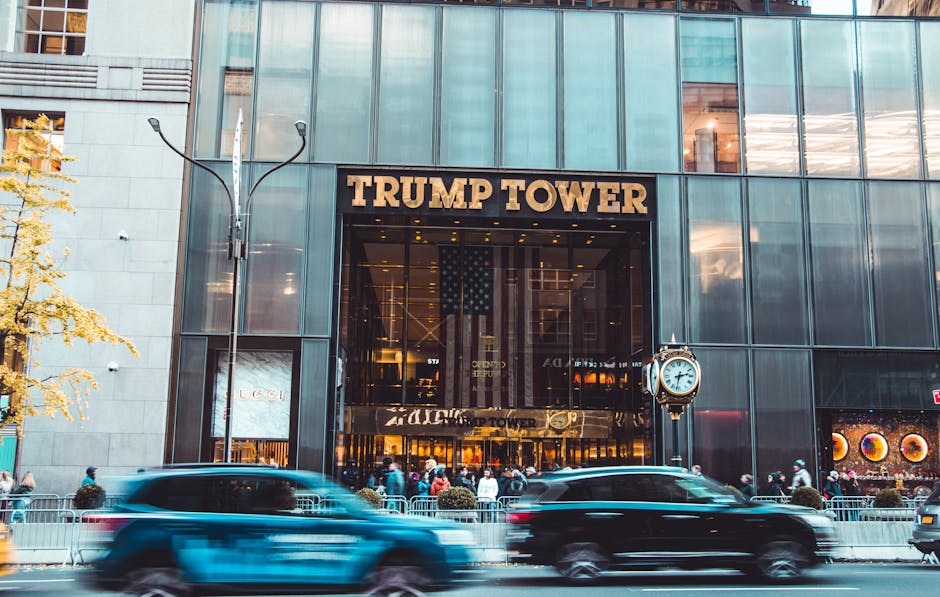
The core of New York’s claim centers on the accusation that Trump and his associates systematically misrepresented the value of his real estate holdings and other assets to financial institutions and insurers between 2011 and 2021. This alleged manipulation involved providing "materially false and misleading financial statements" that significantly overstated the worth of properties like Trump Tower, Mar-a-Lago, and various golf courses. The state contends that these inflated valuations were not mere exaggerations but deliberate fabrications designed to deceive lenders into offering more favorable interest rates and larger loan amounts, and to persuade insurers to provide coverage at lower premiums. The $370 million figure is not arbitrary; it is presented as a direct consequence of these alleged fraudulent actions, representing the financial benefits reaped from this calculated deception.
The court filing elaborates on specific instances of alleged fraud. For example, it details how Mar-a-Lago was valued at hundreds of millions of dollars more than its actual market value, based on its perceived value as a private club rather than its residential potential. Similarly, the acreage of Trump’s golf courses was allegedly misstated to increase their perceived worth. The Attorney General’s office has meticulously detailed how these misrepresentations were consistently presented across multiple financial statements and to various financial institutions, painting a picture of a sustained and deliberate effort to defraud. The legal team has presented extensive evidence, including internal documents and testimony, to support these assertions.
Beyond the monetary disgorgement, the New York filing also seeks to impose significant restrictions on Trump and his business dealings. The state is pushing for the disqualification of Trump and his sons from serving as officers or directors of any New York corporation for a period of five years. Furthermore, the filing requests that Trump and his business entities be barred from applying for or receiving any loans from financial institutions chartered in New York State for the same duration. These proposed sanctions underscore the severity of the alleged misconduct, aiming not only to recoup financial losses but also to prevent future fraudulent activities by imposing a substantial operational and leadership freeze on the involved parties.
The legal basis for the state’s action lies in New York’s Executive Law Section 63(12), which grants the Attorney General broad authority to prosecute fraudulent and illegal business practices. The lawsuit, initially filed in September 2022, has progressed through various stages of pretrial proceedings, including discovery and motion practice. This latest filing represents a critical juncture, as the state formalizes its request for judgment and outlines its specific demands for financial penalties and injunctive relief. The volume and detail of the evidence presented in this filing are intended to demonstrate a clear pattern of fraudulent intent and a demonstrable financial harm caused by the defendants’ actions.
Trump’s legal team has vehemently denied the allegations, characterizing the lawsuit as a politically motivated "witch hunt" orchestrated by a partisan Attorney General. They have consistently argued that the valuations provided were based on the opinions of experts and were within the bounds of accepted business practices. The defense has sought to discredit the state’s evidence, suggesting that the financial statements were prepared in good faith and that any discrepancies are minor or subject to interpretation. They have also challenged the legal standing of the Attorney General to pursue such claims, arguing that the alleged victims (lenders and insurers) have not demonstrated sufficient harm to warrant the state’s intervention.
The trial in this civil fraud case is scheduled to begin in October 2023, presided over by Justice Arthur Engoron. The outcome of this litigation could have profound implications for Donald Trump’s financial empire and his future business endeavors. A judgment against him could result in the forfeiture of substantial assets and significantly hinder his ability to operate in the business world. The scale of the financial penalty sought by the state, coupled with the proposed business restrictions, highlights the gravity with which the Attorney General’s office views the alleged offenses.
SEO considerations for this article are paramount to ensure broad reach and visibility. Keywords such as "New York fraud case," "Donald Trump lawsuit," "Trump Organization," "Letitia James," "$370 million penalty," "civil fraud trial," and "asset inflation" should be strategically integrated throughout the text. The title itself is designed to be highly searchable, immediately conveying the core subject matter. The article structure, moving directly into the substance of the legal filing without preamble, caters to readers seeking direct information.
The detailed explanation of the alleged fraudulent practices, including specific examples like Mar-a-Lago and golf course acreage, provides valuable content for search engines to index. Highlighting the legal basis (Executive Law Section 63(12)) and the proposed sanctions (disqualification from directorships, loan restrictions) adds depth and authority. The inclusion of the trial date and presiding judge offers timely and relevant information for those following the case.
Furthermore, the article addresses the opposing arguments from Trump’s legal team, offering a balanced perspective that can also capture broader search queries related to the defense’s strategy. The consistent use of relevant terminology and the objective presentation of legal claims contribute to the article’s SEO effectiveness. The intention is to provide a comprehensive, informative, and easily discoverable resource for anyone researching this high-profile legal battle. The article avoids jargon where possible, making it accessible to a wider audience while still maintaining legal accuracy.
The legal arguments presented by New York’s Attorney General’s office are multifaceted. They posit that the defendants operated under a "pattern and practice" of fraud, meaning the alleged misrepresentations were not isolated incidents but part of a deliberate and ongoing strategy. The state’s filing meticulously traces this pattern across various years and financial statements, demonstrating a consistent disregard for accurate financial reporting. The prosecution’s strategy hinges on proving this intent and the resultant financial benefit.
The concept of "disgorgement" is central to the state’s monetary claim. Disgorgement is a legal remedy that requires a party to give up profits or gains obtained through illegal or improper conduct. In this context, New York is seeking to have Trump and his organization forfeit all the financial advantages they allegedly secured through their fraudulent asset valuations. This could include profits derived from loans, reduced insurance premiums, and potentially other financial benefits that stemmed directly from the inflated asset figures.
The sheer magnitude of the $370 million figure underscores the state’s contention that the fraud was substantial in its scope and impact. It suggests that the financial institutions and insurers were significantly misled, leading to potentially millions of dollars in lost interest income or higher risk exposure for lenders, and potentially inflated premiums for insurers. The state’s calculation of this figure is likely based on a detailed analysis of the purported overvaluation across multiple assets and over several years.
The potential consequences for The Trump Organization extend beyond the immediate financial penalty. The proposed injunctions, preventing Trump and his sons from holding corporate leadership positions or securing loans for five years, could fundamentally alter the operational capacity and future growth prospects of the organization. This "business death penalty" aspect of the lawsuit is a powerful tool in the state’s arsenal, aiming to cripple the entity that allegedly facilitated the fraudulent activities.
The defense’s counterarguments, focusing on the subjective nature of valuations and the reliance on expert opinions, will likely form the crux of their defense strategy. They will aim to demonstrate that there is no definitive proof of fraud, but rather a difference of opinion on asset values. The challenge for the prosecution will be to prove beyond a reasonable doubt that the valuations were not merely optimistic estimates but deliberate falsehoods intended to deceive.
The legal precedent in New York for prosecuting business fraud is robust, and Attorney General James has a track record of pursuing high-profile cases against corporate entities. The success of this lawsuit will depend on the strength of the evidence presented and the court’s interpretation of that evidence against the legal standards for fraud. The upcoming trial will be closely watched for its potential to set significant precedents in the enforcement of financial regulations and the accountability of prominent business figures. The ongoing discovery process is likely to unearth further details and potentially new evidence that could influence the trajectory of the case.
