
Al Attiyah And Quintanilla Dominate Dakar Dunes To Win Stage 5
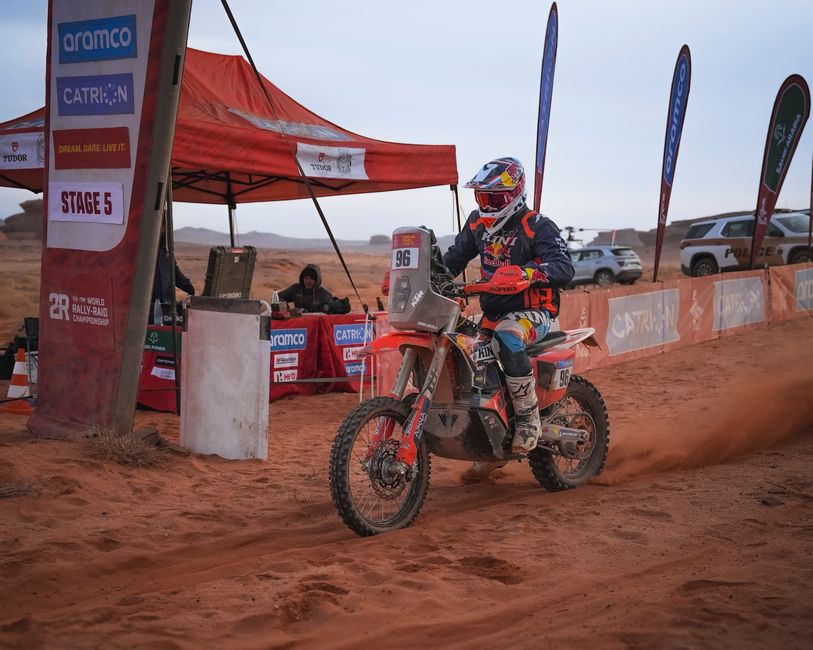
Al-Attiyah and Quintanilla Dominate Dakar Dunes to Win Stage 5
Nasser Al-Attiyah, piloting his Toyota Hilux Overdrive, and Pablo Quintanilla, aboard his Monster Energy Honda CRF450 Rally, delivered commanding performances to claim victory in Stage 5 of the Dakar Rally, conquering the treacherous dunes and solidifying their leadership in their respective categories. The arduous 473-kilometer special stage, running from Riyadh to Al Duwadimi, presented a formidable challenge for all competitors, testing their navigation skills, endurance, and nerve against the unforgiving Saudi Arabian desert. Al-Attiyah, already a dominant force in the car category, extended his overall lead with a masterclass in dune driving, while Quintanilla, known for his aggressive yet calculated approach, proved his mettle against a strong field of motorcycle rivals to extend his own championship aspirations. The day’s proceedings were marked by dramatic shifts in standings, mechanical woes for some, and the relentless pursuit of perfection by the eventual stage winners.
In the car category, the partnership of Al-Attiyah and French co-driver Mathieu Baumel has become a benchmark for consistency and speed. Stage 5 was no exception. From the outset, the Qatari driver demonstrated an uncanny ability to read the shifting sands, navigating complex dune crossings and open desert stretches with precision. His rivals, including the formidable Sébastien Loeb and his co-driver Isabelle Galichet in the Prodrive Hunter, battled valiantly, but Al-Attiyah’s pace was simply too much to match. The stage’s profile, heavily featuring sandy tracks and large dunes, played directly into the strengths of the Toyota Hilux, a vehicle renowned for its reliability and performance in such terrain. Al-Attiyah’s driving was characterized by smooth acceleration and braking, minimizing wheel spin and maximizing traction, crucial elements for conserving tire wear and maintaining momentum. Baumel’s role as co-driver was equally vital, his accurate pace notes guiding Al-Attiyah through the labyrinthine desert landscape, avoiding potential pitfalls and ensuring the most efficient route. The margin of victory, while not a blowout, was significant enough to underscore Al-Attiyah’s dominance and his intent to secure a record-extending fifth Dakar title. This victory wasn’t just about speed; it was a testament to the meticulous preparation of the Toyota team and Al-Attiyah’s unwavering focus. The strategy employed by Al-Attiyah and Baumel focused on minimizing risks while maximizing their inherent speed advantage. They expertly managed their pace, knowing when to push and when to conserve, a hallmark of experienced Dakar champions. The dunes, often described as the ultimate equalizer, failed to trip up the seasoned pairing, who seemed to glide over them with effortless grace. This stage further cemented their reputation as the team to beat in the car category.
For Pablo Quintanilla, the motorcycle category presented its own set of challenges and opportunities. The Chilean rider, nicknamed "The Fastest One," showcased his exceptional off-road riding skills, particularly in the demanding dune sections. Stage 5 was a crucial test for the rally raid veteran, and he responded with a performance that underlined his championship credentials. The long, sandy stretches demanded not only speed but also stamina and a keen sense of navigation, especially as the sun beat down relentlessly. Quintanilla’s experience in navigating such conditions, honed over years of competition, was evident in his smooth lines and efficient throttle control. He managed to maintain a consistent pace throughout the stage, fending off strong challenges from other top contenders. The motorcycle category at the Dakar is notoriously competitive, with a tight pack of riders capable of winning any given stage. Quintanilla’s ability to rise to the occasion and deliver a winning performance speaks volumes about his skill and the reliability of his Honda machine. The strategy for Quintanilla, as with most motorcycle riders, involved meticulous route planning, astute risk assessment, and the ability to adapt to unforeseen circumstances. The inherent vulnerability of a solo rider on a motorcycle means that every decision carries significant weight. Quintanilla’s victory on Stage 5 was not just about raw speed; it was about strategic brilliance, physical endurance, and the mental fortitude required to excel in such a demanding environment. He has consistently demonstrated these qualities, making him a formidable force in the race. The dunes, which can often be unforgiving, became his stage, and he performed with a level of expertise that set him apart.
The Dakar Rally is renowned for its unpredictable nature, and Stage 5 was a prime example of how fortunes can change rapidly. While Al-Attiyah and Quintanilla celebrated their victories, other prominent competitors faced significant setbacks. In the car category, the Prodrive Hunter of Sébastien Loeb, initially a strong contender for the stage win, encountered unforeseen difficulties that cost them valuable time. Navigational errors or mechanical issues can quickly derail even the most promising campaigns, and this stage served as a stark reminder of that reality. Loeb, known for his tenacity, will undoubtedly be looking to rebound in the coming stages, but Al-Attiyah’s commanding lead now presents a significant psychological hurdle. The sheer pace at which Al-Attiyah and Baumel operated meant that any mistakes by their rivals were amplified, creating a growing gap. The technical nature of some of the dune crossings meant that even minor misjudgments could lead to getting stuck or damaging the vehicle, costing precious minutes. The ability of Al-Attiyah to navigate these sections cleanly and efficiently was a critical factor in his victory. His experience with the Toyota platform in these challenging environments is unparalleled, allowing him to extract the maximum performance from the vehicle.
Similarly, in the motorcycle category, the competition remained fierce, with several riders pushing the limits. While Quintanilla emerged victorious, the margins were tight, and the fight for podium positions remained intense. The demanding nature of the stage meant that rider fatigue and mechanical issues were constant threats. The strategic decision-making, from choosing the optimal tire pressure to managing fuel consumption, played a critical role. Quintanilla’s ability to execute his strategy flawlessly, coupled with his riding prowess, allowed him to cross the finish line first. The Dakar Rally is a marathon, not a sprint, and consistency over the two weeks of racing is paramount. Quintanilla’s stage win demonstrates his capability to perform at the highest level when it counts, but the coming days will test his resolve and endurance further. The cumulative effect of each stage, including the time lost or gained, shapes the overall standings. Quintanilla’s dominant performance on this particular stage has provided him with a crucial advantage, both in terms of time and morale. The psychological impact of winning a demanding stage can be immense, bolstering confidence and fueling the drive to maintain the momentum.
The Dakar Rally is more than just a race; it’s an epic test of human endurance, technological innovation, and the unyielding spirit of adventure. Stage 5, with its challenging dunes and unforgiving terrain, once again proved to be a defining moment in this year’s edition. Nasser Al-Attiyah and Pablo Quintanilla, through their exceptional skill, strategic acumen, and unwavering determination, etched their names into the history books of this legendary event. Their dominance on this stage not only extended their leads but also sent a clear message to their competitors: the fight for the Dakar crown will be a fiercely contested one, with these two champions setting a formidable pace. The continuous evolution of vehicle technology and rider training plays a significant role in the outcome of stages like this. Al-Attiyah’s success with the Toyota Hilux is a testament to the engineering prowess of the team, while Quintanilla’s victory on his Honda CRF450 Rally highlights the advancements in motorcycle design and rider preparation. The constant push for marginal gains in performance and reliability is what separates the champions from the rest. The dunes of Saudi Arabia, with their deceptive beauty and inherent dangers, have once again served as the ultimate proving ground, and in Stage 5, Al-Attiyah and Quintanilla proved themselves to be the masters of this demanding domain. The strategic approach to each stage is multifaceted, involving not just speed but also the management of resources, tire wear, and crucially, avoiding any mechanical failures or navigational blunders. For Al-Attiyah, the precision of his driving and the accuracy of Baumel’s notes were a symphony of execution. For Quintanilla, it was a demonstration of raw talent, honed by years of experience, navigating the unpredictable landscape with remarkable composure. The rally continues, and while this stage belongs to them, the Dakar is far from over, promising more twists, turns, and epic battles in the days to come. The meticulous planning by the navigation teams, the on-the-fly adjustments made by the drivers and riders, and the resilience of the support crews all contribute to these hard-fought victories. The physical and mental toll of such an event is immense, and the ability to consistently perform at a high level under immense pressure is what defines a Dakar champion. Stage 5, therefore, represents not just a single day’s triumph, but a crucial step in a much larger, more arduous journey. The data gathered from this stage, both by the teams and the organizers, will undoubtedly inform strategies for the remaining legs of the rally, further intensifying the competition. The narrative of the Dakar is constantly being written, and Stage 5 has provided two compelling chapters, showcasing the pinnacle of off-road motorsport.
