Iran Accuses US of Seeking ‘Surrender’ Amidst Volatile Peace Talks and Escalating Regional Tensions in May 2026

The already volatile Middle East crisis witnessed a day of high-stakes diplomatic maneuvers and renewed military clashes on Wednesday, May 6, 2026. Iran’s top negotiator, Mohammad Bagher Ghalibaf, delivered a stark message, accusing Washington of orchestrating a multi-pronged strategy to force Tehran’s "surrender," specifically citing a debilitating naval blockade, relentless economic pressure, and pervasive media manipulation. This accusation came as the United States, under President Donald Trump, simultaneously signaled cautious optimism for a peace deal while maintaining a hardline stance, threatening intensified military action if a swift resolution is not achieved. The day’s events underscored the deeply entrenched distrust between the adversaries, further complicated by escalating skirmishes in the critical Strait of Hormuz and a sudden surge in Israeli military operations in Lebanon.
Tehran’s Defiance and the Weight of Sanctions
Mohammad Bagher Ghalibaf, the influential speaker of the Iranian parliament and a pivotal figure in Tehran’s negotiating team, expressed Iran’s firm resolve in a voice message published on his official Telegram channel. He asserted that "The enemy, in its new design, is seeking, through a naval blockade, economic pressure and media manipulation, to destroy the country’s cohesion in order to force us to surrender." This statement highlights Iran’s perception of Washington’s overarching strategy: to cripple the nation’s economy and morale to extract political and nuclear concessions. The "new design" implies a renewed or intensified effort by the US following recent military engagements and diplomatic initiatives.

The naval blockade, a key component of this alleged "surrender" strategy, has already exacted a significant economic toll. The US military confirmed that over 50 cargo ships, including vital oil tankers, have been either turned back or compelled to return to port due to the ongoing enforcement of sanctions on Iranian shipping. This maritime interdiction severely restricts Iran’s ability to export its primary commodity, oil, and import essential goods, tightening the economic noose on the nation. Illustrating this enforcement, the US Central Command (Centcom) on Wednesday deployed a navy jet to disable the Iranian-flagged unladen oil tanker Hasna in the Gulf of Oman. According to Centcom, the vessel was attempting to sail towards an Iranian port despite receiving repeated warnings. US forces fired several rounds from the F/A-18 Super Hornet’s 20mm cannon, successfully disabling the tanker’s rudder and preventing its transit. This aggressive action, while framed by the US as upholding international sanctions, is viewed by Tehran as an act of economic warfare designed to coerce its leadership.
Adding to Tehran’s skepticism regarding US intentions, Ebrahim Rezaei, spokesperson for the Iranian parliament’s national security and foreign policy commission, publicly dismissed recent reports from the American news website Axios suggesting a near-imminent one-page memorandum of understanding to end the war. Rezaei branded the reported US proposal an "American wishlist" and "not a reality," indicating a fundamental disconnect between the perceived objectives of the two nations. In a fiery statement on X (formerly Twitter), he declared, "Americans will not gain in a lost war what they failed to achieve in face-to-face negotiations. Iran has its finger on the trigger and is ready; if they do not surrender and grant the necessary concessions, or if they or their lapdogs attempt any mischief, we will respond with a harsh and regrettable response." This strong rhetoric from a senior parliamentary figure indicates a deep resistance within Iran’s leadership to perceived US demands for capitulation. Iran’s foreign ministry spokesperson, Esmail Baghaei, echoed this sentiment, confirming that while the US proposal was under review, it contained "excessive and unrealistic demands that have been strongly rejected by Iranian officials in recent days." Crucially, Baghaei clarified that the Iranian negotiating team was primarily focused on the "termination of the war" and that the "nuclear issue is not currently being discussed," a significant divergence from long-standing US demands.
Trump’s Unpredictable Path: Peace Prospects and Renewed Threats
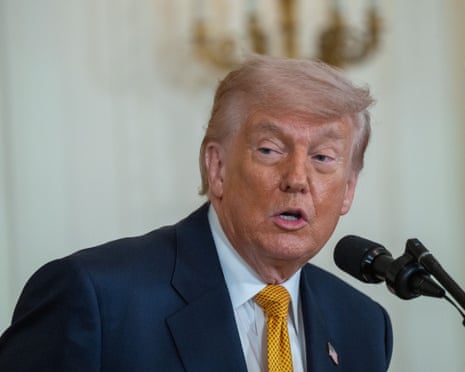
US President Donald Trump’s diplomatic approach on Wednesday was marked by its characteristic unpredictability, blending hopeful rhetoric with stern warnings. On one hand, he conveyed a notable sense of optimism, telling reporters in the Oval Office that a deal with Iran to end the war was "very possible" following "very good talks" over the preceding 24 hours. Repeating his familiar assertion that Iran "badly wants to make a deal" and that the US had "won" the war after allegedly decimating Tehran’s military capabilities, Trump stated, "We’ll see whether or not they are agreeing. And if they don’t agree, they’ll end up agreeing shortly thereafter. That’s the way it is." Later, during a tele-rally for a Republican governor candidate, Trump reiterated his expectation that the war "will be over quickly," emphasizing the US objective to prevent Iran from acquiring nuclear weapons. He also vaguely claimed that Iran had agreed to "never have a nuclear weapon ‘among other things’," a claim that has not been independently confirmed by Tehran.
However, this hopeful tone was sharply contrasted with explicit threats. In a post on Truth Social, Trump warned that if Iran did not "agree to give what has been agreed to," the US would resume its bombing campaign "at a much higher level and intensity than it was before." This contradictory approach, swinging between promises of peace and threats of overwhelming force, has become a defining feature of the Trump administration’s engagement with Iran.
The president’s policy on the strategic Strait of Hormuz also underwent an abrupt reversal. Just days after launching "Project Freedom," a "humanitarian gesture" aimed at guiding stranded commercial vessels out of the Gulf and weakening Iran’s perceived chokehold on the critical waterway, Trump announced a pause. He attributed the decision to "Great Progress" towards a "Complete and Final Agreement" with Iran, as well as requests from Pakistan and other countries, and the "tremendous Military Success" achieved during "Operation Epic Fury." However, an NBC News report, citing two US officials, revealed a more immediate and pragmatic reason behind the pause: a significant backlash from key Gulf allies. Saudi Arabia, reportedly angered by the unilateral announcement of "Project Freedom" without prior consultation, suspended the US military’s ability to use its Prince Sultan airbase and airspace for the operation. This withdrawal of crucial logistical support effectively forced the US to halt the mission to restore military access and mend relations, exposing the vulnerabilities of US regional alliances. Despite the pause in "Project Freedom," Trump affirmed that the US naval blockade of Iranian ports would remain in full effect, a measure that has profoundly impacted numerous vessels and continues to exert severe economic pressure on Tehran.
Renewed Conflict in Vital Waterways and the Levant
The Strait of Hormuz, a choke point through which a significant portion of the world’s seaborne oil passes, remained a dangerous flashpoint. Beyond the US action against the Hasna, French shipping giant CMA CGM confirmed that one of its vessels, the CMA CGM San Antonio, was targeted in an attack while transiting the Strait on Tuesday. The incident resulted in injuries among crew members and damage to the ship, with the injured evacuated for medical care. This attack, occurring on the same day Trump paused "Project Freedom," underscored the persistent dangers faced by commercial shipping in the waterway. Earlier, the Iranian Islamic Revolutionary Guard Corps (IRGC) navy had issued a statement suggesting that safe and stable transit through the Strait could be possible "following the end of threats from aggressors," implicitly linking freedom of navigation to the cessation of US military pressure.
In a move indicating broader international concern, French President Emmanuel Macron, following a meeting with Iranian President Masoud Pezeshkian, urged "all parties to lift the blockades" in the Strait of Hormuz "without delay and without conditions" to restore full freedom of navigation. He also condemned "unjustified strikes against Emirati civilian infrastructure and several ships," which Iran denied, despite reports from the UAE defense ministry of multiple missile and drone interceptions over recent days, including 15 Iranian missiles and four drones intercepted the day prior. Macron emphasized that a return to calm in the Strait would facilitate broader negotiations on nuclear and ballistic issues, as well as the regional security situation, and indicated his intention to discuss the matter directly with President Trump. Reinforcing this international concern, France’s Charles de Gaulle aircraft carrier group was observed moving into the Red Sea and Gulf of Aden, signaling preparations for a potential future multinational mission to secure freedom of navigation.
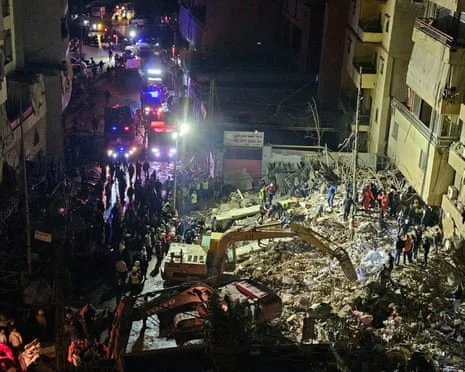
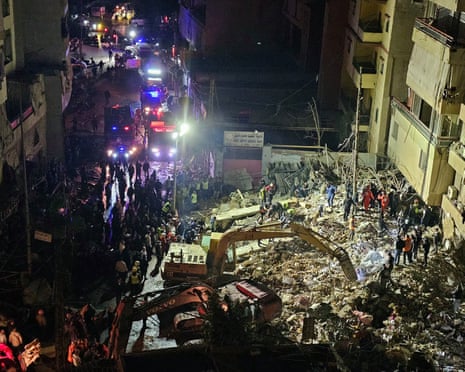
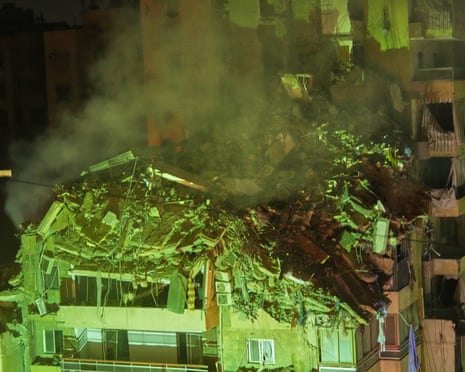
The Middle East also witnessed a significant escalation on the Israel-Lebanon border. For the first time in weeks since the April 17 ceasefire, Israeli military forces carried out strikes in Beirut’s southern suburbs, a known stronghold of Hezbollah. Israeli Prime Minister Benjamin Netanyahu confirmed that the IDF was targeting a senior commander of Hezbollah’s elite Radwan force, later identified by an Agence France-Presse source close to Hezbollah as Malek Ballout, the operations commander. The Lebanese National News Agency reported that "Israeli warplanes launched an attack, targeting Ghobeiri" in the southern suburbs, with images showing buildings covered in rubble. A Lebanese security source indicated that Radwan leaders were reportedly holding a meeting in the struck apartment. These strikes resulted in at least 11 other deaths across southern and eastern Lebanon, according to the Lebanese health ministry, and prompted the Israeli military to intercept a suspicious aerial target launched from Lebanon towards northern Israel overnight. Despite the existing ceasefire, Israel has continued extensive air and artillery attacks and raids in southern Lebanon, claiming to target Hezbollah, while Hezbollah maintains it has retaliated against these "violations" of the truce. Lebanese parliament speaker Nabih Berri emphasized the critical need for robust guarantees in any agreement with Israel, citing Tel Aviv’s perceived continued ceasefire violations. IDF chief of the general staff, Eyal Zamir, declared the military "prepared to launch a new offensive against Iran if needed" and stated that troops had "no restrictions as to using force," claiming over 2,000 Hezbollah operatives had been killed since the war began.
On the humanitarian front, the United Nations called on Israel to immediately release two activists, Spanish national Saif Abu Keshek and Brazilian Thiago Avila, who were detained from a Gaza aid flotilla in international waters near Crete last Thursday. The UN human rights office spokesperson, Thameen Al-Kheetan, demanded an investigation into "disturbing accounts of severe mistreatment" of the activists, who have been on a six-day hunger strike. Al-Kheetan stressed that "It is not a crime to show solidarity and attempt to bring humanitarian aid to the Palestinian population in Gaza, who are in dire need of it," and reiterated urgent calls for an end to Israel’s blockade on Gaza, demanding the unimpeded entry of sufficient humanitarian assistance into the besieged strip.
Broader Diplomatic Engagements and Economic Undercurrents
Amidst these regional flare-ups, diplomatic efforts continued on other fronts. Iranian Foreign Minister Abbas Araghchi met with China’s top diplomat, Wang Yi, in Beijing. This visit marked Araghchi’s first trip to China since the war began, underscoring Beijing’s crucial role as a significant economic partner for Tehran. China typically purchases over 80% of Iran’s oil exports, making its stance vital. US Secretary of State Marco Rubio had previously expressed hope that China would use its influence to press Tehran on reopening the Strait of Hormuz. China’s deep economic leverage and strategic interests in regional stability position it as a potential, albeit cautious, mediator in the broader conflict.
Meanwhile, the United Arab Emirates publicly rejected Iran’s earlier assertions that Abu Dhabi’s cooperation with the US threatened Iran’s security. The UAE stated emphatically that its international and defense partnerships were a "purely sovereign matter," affirming its "full sovereign, legal, diplomatic and military rights to address any threat, allegation or hostile act." This exchange highlights the delicate balance of power and the complex web of alliances in the Gulf, where regional states navigate their relationships with both the US and Iran.
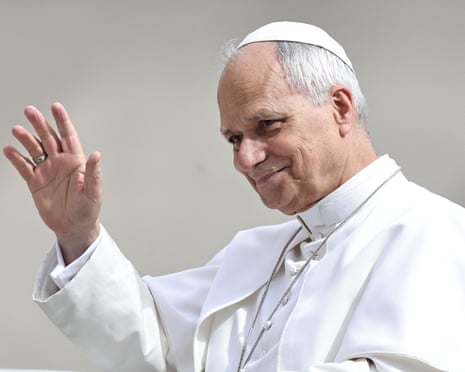
Economically, the fluctuating prospects for peace and the ongoing maritime incidents had a tangible impact on global markets. Oil prices remained volatile, with Brent crude briefly falling below $100 a barrel for the first time since April 22 before hovering around $108. This sensitivity reflects persistent market anxieties over potential supply disruptions in the Strait of Hormuz and the broader stability of the region, which directly influences global energy security. Separately, the Spanish prime minister, Pedro Sánchez, asked the European Commission to activate its blocking statute to prevent compliance with US sanctions on the International Criminal Court (ICC) over its investigation into Israel’s actions in Gaza, signaling a growing rift within the international community regarding accountability for wartime actions. Even the Vatican weighed in, with Pope Leo surprising 13 priests from southern Lebanon during a video call from Rome, offering prayers and hope for peace along the tense border.
Analysis: The Costly Quagmire of Contradictory Policies
As Julian Borger aptly noted, President Trump’s "policy whiplash" is indicative of an administration "flailing around inside this trap" of its own making. The "hard facts" confronting the Trump administration are formidable: Iran’s demonstrated resilience despite immense pressure, its capacity to disrupt global shipping through the Strait of Hormuz, and the self-inflicted economic harm to the US economy stemming from prolonged regional instability. The abrupt policy shifts – from aggressive rhetoric and bombing threats to calls for peace and humanitarian gestures – suggest a struggle to find a viable exit from a conflict that has become increasingly costly and complex.
The reported US proposal, hinting at a 12 or 15-year moratorium on uranium enrichment, would represent a compromise compared to earlier 20-year demands, but it is a significant departure from the 2015 multilateral nuclear deal (JCPOA) that Trump unilaterally abandoned in 2018. That accord, widely regarded as successful by international inspectors, had ensured Iran possessed no highly enriched uranium under a stringent monitoring regime. Any "gains" from a new deal would come at an "awful price," as Borger emphasizes, citing a tragic human toll of over 5,000 deaths, including numerous civilians and 120 primary school children in Minab, alongside countless casualties in Lebanon. The economic and environmental costs of this conflict are also projected to be immense and long-lasting.
Furthermore, the relentless military pressure and economic sanctions appear to have, paradoxically, entrenched hardliners and military factions within the Iranian regime, rather than fostering moderation or collapse. The long-term implications for regional stability, global energy markets, and international relations remain profoundly uncertain. While the prospect of a peace plan offers a glimmer of hope, its fragility, coupled with the heavy human and material toll already exacted, leads to the unsettling conclusion that this conflict, regardless of its immediate resolution, may ultimately be remembered as one of history’s most pointless. The day’s events underscore a region caught in a dangerous cycle of confrontation and diplomacy, where every tentative step towards resolution seems to be met with a new eruption of violence or a fresh wave of political brinkmanship, leaving the path to genuine peace deeply obscured.