
Tag Uefa Champions League
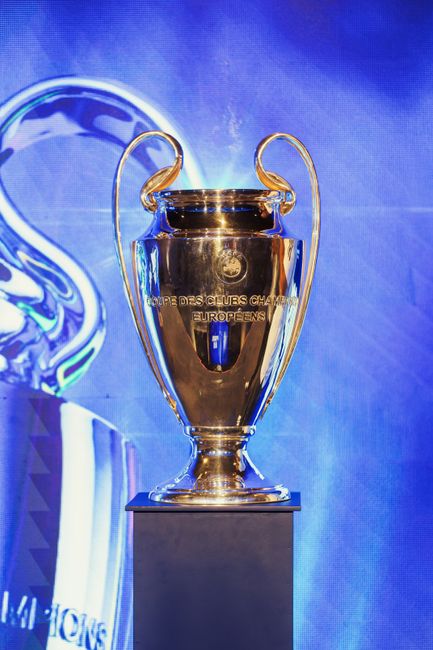
UEFA Champions League: The Pinnacle of European Club Football, Its History, Format, and Enduring Legacy
The UEFA Champions League, formerly known as the European Cup, stands as the most prestigious club football competition in the world. Its annual climax captivates billions, showcasing the elite talent and tactical brilliance of Europe’s finest footballing institutions. This article delves into the competition’s rich history, its intricate format, and the indelible mark it has left on the sport. Understanding the UEFA Champions League requires exploring its origins, the evolution of its structure, and the iconic moments that have cemented its status as the ultimate prize in club football.
The genesis of the UEFA Champions League can be traced back to the early 1950s. The desire for a continental club competition, pitting national champions against each other, gained momentum. L’Équipe, a prominent French sports newspaper, played a pivotal role in advocating for such a tournament. In 1955, UEFA, the governing body of European football, sanctioned the creation of the European Champion Clubs’ Cup, or simply the European Cup. The inaugural tournament took place in the 1955-56 season, with 16 clubs participating. Real Madrid, a dominant force in the early years, emerged as the first-ever champion, defeating Reims in the final. This marked the beginning of a tradition that would see legendary clubs etch their names into footballing folklore. The initial format was a straightforward knockout competition, solely for the league champions of each participating nation, emphasizing its exclusivity and the challenge of achieving domestic dominance to even qualify.
Over the decades, the competition underwent significant transformations to enhance its appeal and incorporate more clubs. The 1992-93 season marked a watershed moment with the rebranding to the UEFA Champions League and the introduction of a group stage. This innovation dramatically increased the number of matches and broadened the competition’s reach. Initially, there was one group stage, followed by a knockout phase. However, the format has continued to evolve. For many years, two group stages were implemented, with the top teams progressing to a knockout round of 16. Currently, the competition features a single, larger group stage comprising 32 teams, from which the top two in each group advance to a two-legged knockout format, culminating in a single-leg final. This evolving structure has aimed to balance the inclusion of more clubs with the preservation of the competition’s elite status. The current format, with its clear pathway from group stages to the final, ensures a consistent narrative arc throughout the season, building anticipation for the ultimate showdown.
The qualification process for the UEFA Champions League is a complex yet meticulously designed system that ensures only the most deserving clubs participate. The allocation of automatic group stage places and preliminary qualifying rounds is determined by UEFA’s coefficient ranking, which is based on the historical performance of clubs from each national association over the previous five seasons. Typically, the top European leagues – England, Spain, Germany, Italy, and France – are guaranteed multiple automatic berths. Leagues ranked lower in the coefficient system often have to navigate several qualifying rounds, which can be a grueling test of endurance and skill. These preliminary rounds provide a pathway for clubs from smaller associations to potentially reach the lucrative group stage, offering significant financial and sporting rewards. The intricate system of seeding and draw procedures further ensures fairness and competitive balance, preventing the strongest teams from meeting too early in the competition.
The UEFA Champions League format is divided into two main phases: the group stage and the knockout stage. The group stage involves 32 teams drawn into eight groups of four. Each team plays the other three teams in their group twice, once at home and once away. Points are awarded for wins (3 points) and draws (1 point), with no points awarded for losses. The top two teams from each group advance to the knockout stage, while the third-placed team drops into the UEFA Europa League. Ties in the group stage are broken by several criteria, including head-to-head record, goal difference, and goals scored, ensuring a fair resolution. The knockout stage begins with the round of 16, where group winners are drawn against group runners-up, with the caveat that teams from the same national association cannot be drawn against each other at this stage. The subsequent rounds – quarter-finals and semi-finals – are also played over two legs, home and away. The away goals rule was a significant factor for many years, meaning a team scoring more goals away from home than their opponent would have an advantage in a tied aggregate score. However, this rule was abolished in 2021, simplifying tie-breaking procedures and fostering a more attacking mindset throughout the knockout phases.
The financial implications of the UEFA Champions League are astronomical, making it a vital revenue stream for participating clubs and UEFA. Broadcasting rights are the largest contributor, with global viewership translating into multi-billion dollar deals. Sponsorships, merchandise sales, and ticket revenues further bolster the competition’s financial power. The prize money distributed to clubs is substantial, with significant sums awarded for reaching each stage, winning matches, and ultimately lifting the trophy. Beyond direct prize money, participation in the Champions League grants clubs immense exposure, attracting global talent, increasing sponsorship value, and ultimately enhancing their overall commercial appeal. This financial muscle is a significant reason why clubs invest heavily in their squads and infrastructure, striving to achieve Champions League qualification year after year. The financial ecosystem surrounding the competition creates a virtuous cycle, fueling further investment and maintaining its position at the apex of club football.
The UEFA Champions League has produced countless iconic moments and legendary players. From Zinedine Zidane’s volley in the 2002 final to Lionel Messi’s dazzling solo runs and Cristiano Ronaldo’s prolific goal-scoring records, the competition has been a stage for individual brilliance. Teams like Real Madrid, with their record number of titles, AC Milan, Bayern Munich, and Liverpool have all enjoyed periods of dominance, leaving an indelible mark on the competition’s history. The dramatic comebacks, last-minute winners, and penalty shootout heroics have become ingrained in footballing memory. These unforgettable narratives contribute to the enduring appeal and emotional resonance of the UEFA Champions League for fans worldwide. The sheer unpredictability of knockout football, combined with the pressure of playing for the biggest prize, often leads to moments of pure sporting theater that transcend the sport itself.
The cultural impact of the UEFA Champions League extends far beyond the realm of sport. Its anthem, a majestic classical piece by Tony Britten, has become instantly recognizable and evokes a sense of grandeur and anticipation. The competition unites fans from diverse backgrounds, fostering a sense of shared passion and tribal loyalty. It influences fashion, popular culture, and even the economic landscape of host cities. The tactical innovations and playing styles showcased in the Champions League often filter down to lower leagues and domestic competitions, shaping the evolution of the sport. The global reach of the competition means that a successful performance can elevate a club’s international profile exponentially, attracting a worldwide fanbase and opening up new commercial opportunities. The narratives of underdog stories and epic triumphs within the Champions League often become cultural touchstones, discussed and celebrated for years to come.
Looking ahead, the UEFA Champions League continues to adapt and evolve. Discussions about potential format changes, including expanded participation or a controversial European Super League, have been prominent. However, the core essence of the competition – the pinnacle of European club football, a test of skill, strategy, and resilience – remains steadfast. UEFA’s commitment to maintaining the integrity and competitive balance of the tournament will be crucial in shaping its future. The ongoing quest for continental glory ensures that the UEFA Champions League will remain a compelling spectacle for generations of football fans to come. The continued innovation in broadcast technology and fan engagement strategies will likely further enhance the accessibility and immersive experience of the competition, ensuring its relevance in an ever-changing media landscape. The drive for innovation while preserving tradition is the delicate balance UEFA must strike to ensure the UEFA Champions League remains the undisputed king of club football.
