The Plastic Aftermath: New Orleans Struggles with Record-Breaking Mardi Gras Waste as Tradition Collides with Environmental Reality

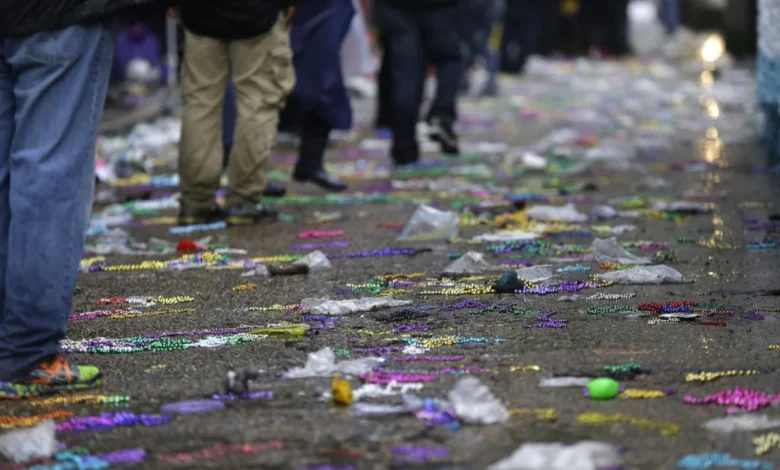
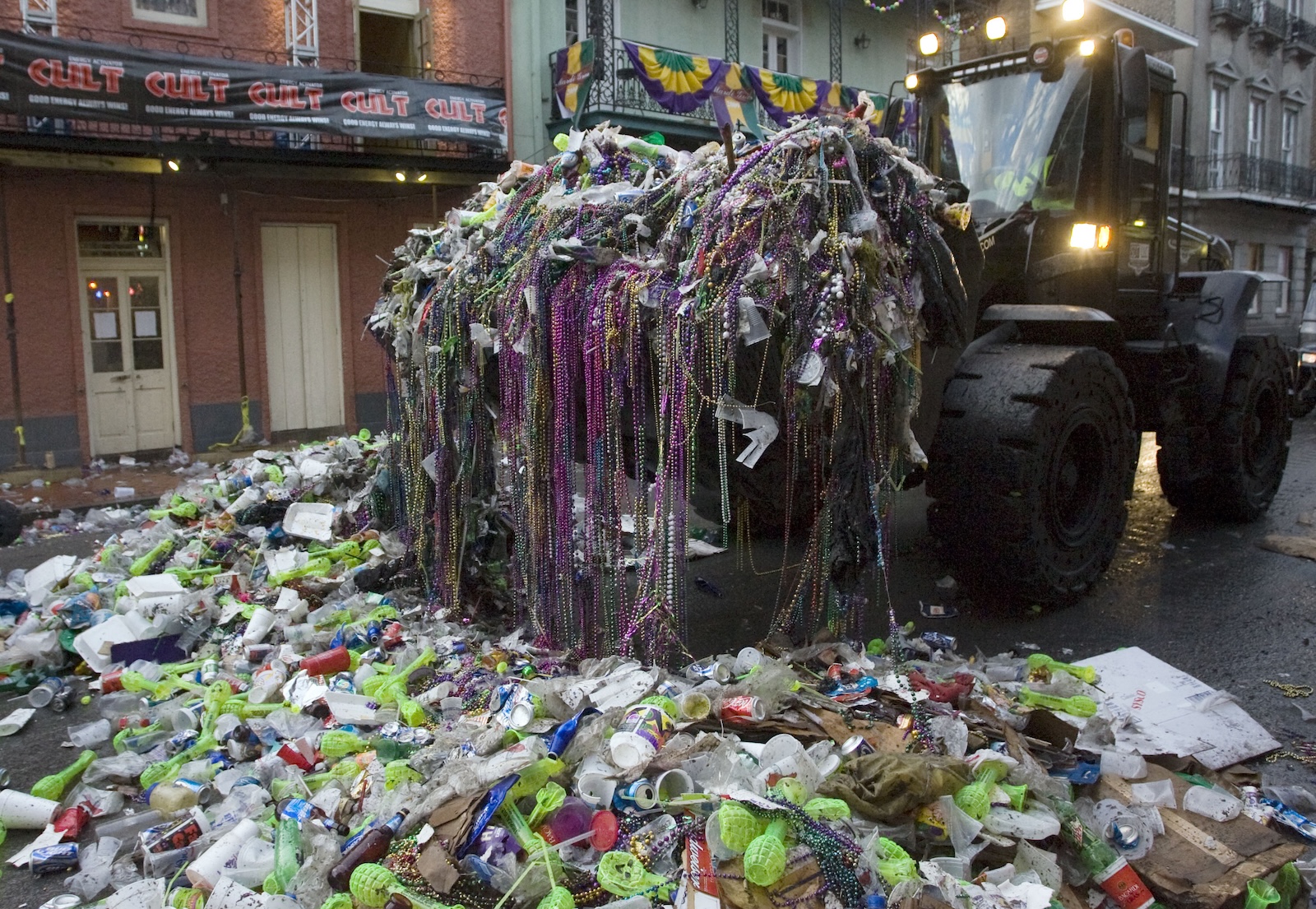
The festive spirit of Mardi Gras, characterized by its vibrant parades and the traditional showering of "throws" upon eager crowds, has left New Orleans facing an unprecedented environmental and logistical crisis. In the aftermath of the most recent Carnival season, the city’s Department of Sanitation reported a staggering 1,363 tons of refuse collected along parade routes over a five-week period. This figure represents a 24 percent increase from the previous year and marks the highest volume of waste ever recorded in the city’s history. To put the magnitude into perspective, the tonnage is equivalent to the weight of approximately 741 mid-sized automobiles or the displacement of the historic Steamboat Natchez. Despite a decade of public awareness campaigns and grassroots sustainability efforts, the "Big Easy" is generating more garbage than ever, threatening the city’s fragile infrastructure and the health of its surrounding ecosystems.
The 2018 Catalyst: A City’s Wake-Up Call
The current waste crisis is framed by a pivotal moment in 2018 that forever changed how New Orleans views its Carnival traditions. During a massive operation to clean the city’s notoriously clogged drainage system, cleaning crews extracted 46 tons of Mardi Gras beads from a single five-block stretch of catch basins. The discovery was a physical manifestation of decades of neglect. Dani Galloway, the city’s Public Works director at the time, famously remarked that once such a number was revealed, there was "no going back" for the city’s management of parade-related waste.
The 2018 discovery highlighted a critical vulnerability: New Orleans is a bowl-shaped city situated largely below sea level, relying on a complex network of nearly 1,500 miles of pipes and massive pumping stations to prevent catastrophic flooding. When plastic beads, mud, and organic debris obstruct these drains, the city’s ability to manage even moderate rainfall is severely compromised. In the years following the "bead-gate" discovery, the city implemented "gutter buddies"—temporary filtration screens placed over catch basins—to prevent beads from entering the subterranean system. However, recent data suggests that while these measures help, they are insufficient to handle the sheer volume of debris now being produced.
A Decoupling of Attendance and Tonnage
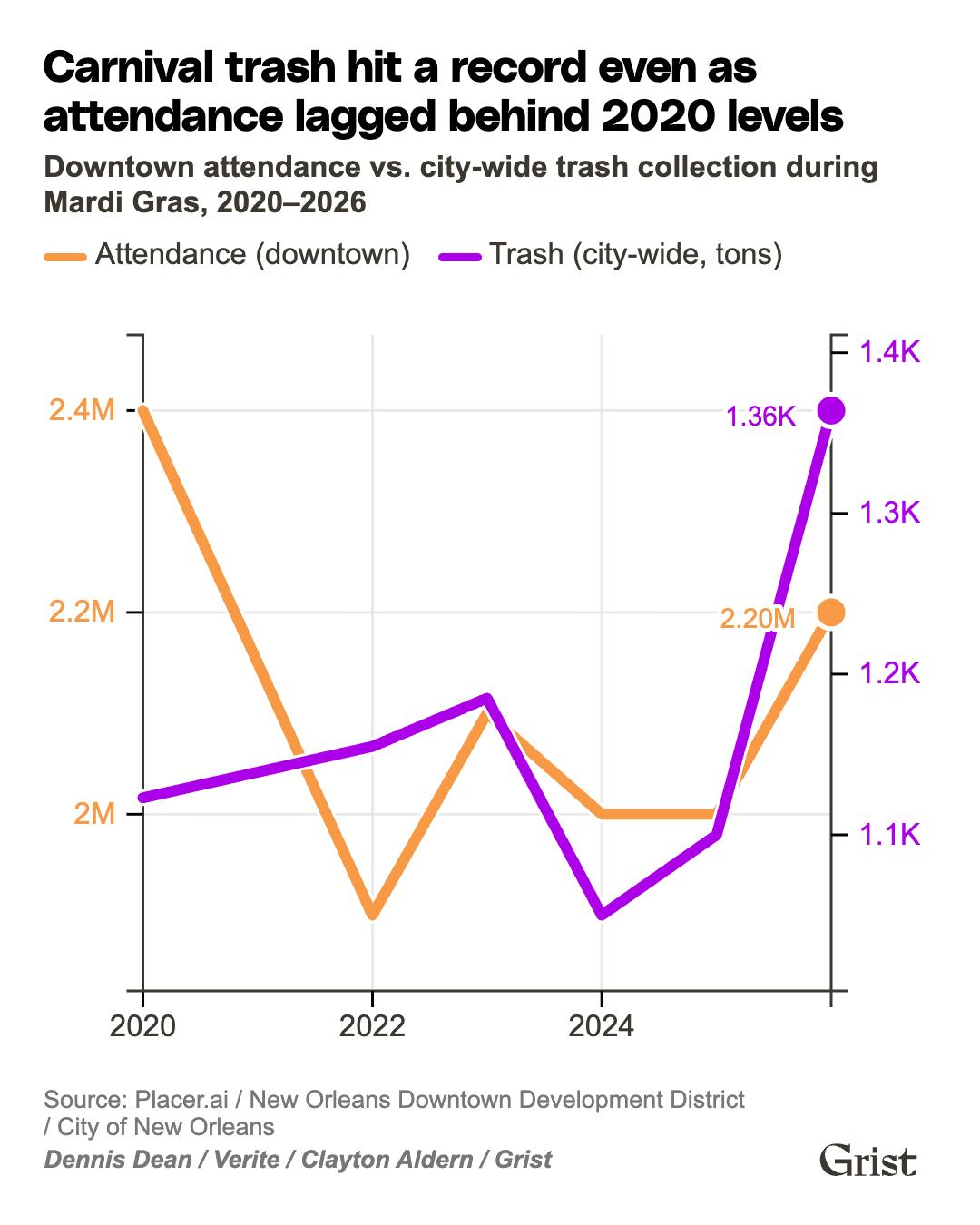
City officials initially attributed the 2026 waste spike to a surge in tourism. According to data from the Downtown Development District, approximately 2.2 million visitors flocked to the city during the Carnival season, a 10 percent increase over the previous year. Sanitation Director Matt Torri suggested to the City Council that the increase in rubbish was directly proportional to these larger crowds. However, an in-depth analysis of annual attendance versus trash collection records suggests a more complex reality.
Historical data reveals that there is no direct, linear relationship between the number of revelers and the amount of trash left behind. For instance, the 2020 Carnival season saw a higher attendance of 2.4 million people, yet it produced 241 fewer tons of garbage than the 2026 season. Throughout the early 2010s, trash levels remained relatively stable at around 880 tons. A significant shift occurred in 2017 when the tonnage surpassed 1,320 and has rarely dipped below the 1,000-ton threshold since, with the notable exception of 2021 when parades were canceled due to the COVID-19 pandemic. This trend suggests that the nature of consumption and disposal during Mardi Gras has evolved, with individual attendees leaving behind more waste per capita than in previous decades.
The Evolution of the "Throw" and its Toxic Legacy
The tradition of "throws"—items tossed from floats to the public—dates back to the 1870s. Originally, these items were made of glass, metal, or wood. By the 1960s and 70s, cheap, mass-produced plastic beads imported from China became the industry standard. Today, these trinkets are often laden with hazardous materials. Environmental studies, including those by the Ecology Center, have found that many Mardi Gras beads contain unsafe levels of lead, bromine, and other toxic chemicals.
As these beads are crushed underfoot or by parade vehicles, they break down into microplastics. These particles eventually wash into the city’s canals and outfalls, ultimately reaching Lake Pontchartrain and the Gulf of Mexico. In response, some krewes (the organizations that stage the parades) have begun a slow transition toward "sustainable throws." These include items with higher utility and lower environmental impact, such as branded socks, wooden spoons, metal cups, and seed packets. Despite this shift among elite krewes, the market remains flooded with inexpensive plastic necklaces, which many attendees treat as disposable commodities, often discarding them moments after they are caught.
The "Krewe of Chad" and the Rise of Disposable Infrastructure
While the beads remain a significant concern, experts like Brett Davis, founder of the nonprofit Grounds Krewe, argue that the recent increase in tonnage is driven by a change in spectator behavior. The modern Mardi Gras experience has transitioned from a standing-room-only street party to a high-production encampment. Revelers are increasingly setting up elaborate "home bases" along the neutral grounds (street medians) and sidewalks.
These encampments often include:
- Large-scale scaffolding and viewing platforms.
- Heavy upholstered furniture, including old sofas and recliners.
- Portable generators and outdoor grills.
- Industrial-sized coolers and wagonloads of food and beverage supplies.
- Tents, tarps, and folding chairs.
The phenomenon of "territorial" parade-going has led to the derogatory nickname "The Krewe of Chad," referring to individuals who rope off public spaces days in advance. When the parades end, a significant portion of this gear—much of it broken or deemed too cumbersome to transport—is simply abandoned. A single discarded sofa can add 150 to 300 pounds to the trash tally, far outweighing thousands of individual plastic beads. This shift toward "disposable infrastructure" has placed an immense physical burden on sanitation workers, who must manually haul away heavy furniture in the early hours of Ash Wednesday.
Economic Constraints and the Enforcement Gap
The city’s ability to manage this growing waste stream is currently hampered by a severe fiscal crisis. New Orleans is currently navigating a $220 million budget deficit, leading to layoffs and reduced services across multiple departments. Consequently, the enforcement of parade-route ordinances has become "spotty," according to City Council President JP Morrell.
The city has clear rules regarding parade encampments: items cannot be set up more than four hours before a parade, and structures like viewing stands and enclosed tents are technically prohibited. In 2024, a temporary crackdown involving the seizure of unauthorized gear showed promise in curbing waste. However, enforcement was scaled back in subsequent years. The city also prioritized security resources following a tragic New Year’s Day terror attack in the French Quarter, leaving fewer personnel available to police "neutral ground" violations.
Furthermore, the city’s support for recycling initiatives has dwindled. While groups like Grounds Krewe managed to divert 28 tons of aluminum and plastic from landfills this year through volunteer efforts, the city government withdrew a planned $200,000 investment in recycling infrastructure due to budget cuts. Davis noted that even if that funding had been maintained, it would likely have been insufficient to offset the massive 24 percent spike in total waste.
Implications and the Path Forward
The record-breaking trash levels of the most recent Carnival season serve as a stark reminder of the tension between cultural preservation and environmental sustainability. The sheer volume of waste poses three primary threats to New Orleans:
- Infrastructure Failure: The continued accumulation of debris in the drainage system increases the risk of localized flooding, which can lead to property damage and business disruption in a city already vulnerable to sea-level rise.
- Environmental Contamination: The leaching of lead and other chemicals from discarded beads into the local water table and Lake Pontchartrain poses a long-term risk to regional biodiversity and public health.
- Economic Burden: The cost of post-Carnival cleanup, which requires thousands of man-hours and specialized equipment, drains municipal resources that could otherwise be used for essential services or infrastructure repair.
As New Orleans looks toward future celebrations, the consensus among conservationists and some city leaders is that a two-pronged approach is necessary. First, there must be a cultural shift among attendees to move away from the "disposable" mindset, particularly regarding heavy gear and furniture. Second, the city must find a way to fund and sustain robust enforcement of existing ordinances to prevent public spaces from becoming de facto landfills.
The 1,363 tons of waste collected this year is more than just a statistic; it is a weight that the city of New Orleans can no longer afford to carry. Without a significant change in policy and public behavior, the very traditions that define the city’s identity may continue to undermine its physical and environmental survival.
Related posts: