
China And Us Hold Rival Military Drills In Disputed South China Sea
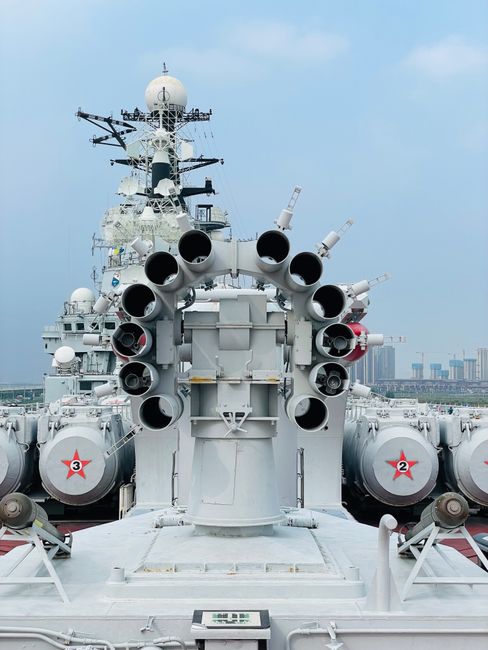
China and US Hold Rival Military Drills in Disputed South China Sea
The South China Sea, a vital artery of global commerce and a geostrategic chokepoint, has once again become the epicenter of escalating military tensions between the People’s Republic of China and the United States. In a series of closely timed and strategically significant military exercises, both superpowers have demonstrably asserted their presence and capabilities in the already contested waters, raising alarm bells across the Indo-Pacific region and beyond. These rival drills are not isolated events but rather a culmination of years of increasing friction, fueled by competing territorial claims, naval posturing, and diverging visions for regional security architecture.
China’s military drills, conducted by the People’s Liberation Army (PLA), have been characterized by their scale and proximity to disputed features within the South China Sea. These exercises often involve multiple branches of the PLA, including the navy, air force, and rocket force, simulating scenarios such as amphibious assaults, anti-submarine warfare, and air defense operations. Beijing’s stated objective for these drills is to "safeguard national sovereignty and territorial integrity" and to "deter external interference" in its claims over the Spratly Islands, Paracel Islands, and the Scarborough Shoal. The timing and location of these drills are meticulously chosen to send a clear message to regional players and the international community that China views the South China Sea as its exclusive domain, a stance increasingly reinforced by its rapid military modernization and island-building activities. Recent exercises have notably featured the deployment of advanced naval assets, including aircraft carriers, destroyers, and submarines, alongside sophisticated air power, underscoring the PLA’s growing operational capacity and its ambition to project power far beyond its shores. The integration of land-based missile systems, capable of targeting naval vessels, further amplifies the strategic implications of these drills, signaling China’s intent to create an anti-access/area denial (A2/AD) bubble within the region.
In response, the United States, through its Indo-Pacific Command (INDOPACOM), has maintained a robust and consistent presence in the South China Sea, employing its own suite of military exercises designed to uphold freedom of navigation and overflight, as well as to reassure its allies. U.S. naval operations, often conducted under the banner of "Freedom of Navigation Operations" (FONOPs), involve sailing warships and flying aircraft through waters claimed by China, challenging what Washington views as excessive maritime claims that violate international law. These exercises frequently involve joint operations with allied navies, including those from Japan, Australia, and the Philippines, demonstrating a united front against what is perceived as Chinese assertiveness. U.S. drills commonly focus on interoperability, readiness, and the projection of overwhelming force, showcasing its Carrier Strike Groups, amphibious assault ships, and advanced fighter jets. The emphasis is on maintaining the existing international order and deterring any unilateral attempts to alter the status quo. The U.S. often frames its activities as a defense of international norms and a commitment to a "free and open Indo-Pacific," directly countering China’s narrative of regional primacy. These exercises are not merely symbolic; they are tangible demonstrations of military power and a commitment to allied security, aimed at reassuring regional partners who feel increasingly threatened by China’s actions.
The strategic implications of these rival drills are profound and far-reaching. For China, the exercises serve as a powerful tool for internal consolidation of support, bolstering nationalist sentiment by projecting an image of strength and resolve in defense of national interests. Externally, they are designed to intimidate regional claimants, signal to the United States its growing military prowess, and ultimately to test the resolve of the U.S. and its allies. By demonstrating its ability to conduct complex operations in contested waters, China seeks to gradually shift the de facto balance of power in its favor, normalizing its military presence and reinforcing its claims through sustained, tangible action. The exercises also serve as a crucial testing ground for new military technologies and operational doctrines, accelerating the PLA’s modernization and its ability to execute a wider range of combat scenarios.
For the United States and its allies, the drills are a critical component of a broader strategy of deterrence and reassurance. The consistent naval and air presence, coupled with joint exercises, aims to signal that any attempt by China to unilaterally alter the status quo will be met with a coordinated and robust response. These exercises are crucial for maintaining the credibility of U.S. security commitments to its regional partners, particularly those with overlapping claims in the South China Sea. They also serve to underscore the importance of international law, particularly the United Nations Convention on the Law of the Sea (UNCLOS), in governing maritime behavior. The U.S. sees its presence as vital to preventing a Sino-centric regional order and preserving the open and inclusive nature of the Indo-Pacific. Moreover, these drills are designed to test and refine the interoperability of U.S. forces with those of its allies, ensuring a seamless and effective response in the event of a crisis.
The South China Sea’s strategic importance cannot be overstated. It is one of the world’s busiest shipping lanes, through which trillions of dollars in trade pass annually, connecting East Asia with global markets. The sea is also believed to hold significant reserves of oil and natural gas, further fueling the competing territorial claims. The militarization of the region, exemplified by China’s construction of artificial islands equipped with military facilities, has raised serious concerns about freedom of navigation and the potential for conflict. The ongoing rival military drills exacerbate these concerns, increasing the risk of accidental escalation. A miscalculation or a collision between military assets could quickly spiral into a larger confrontation, with devastating consequences for regional and global stability.
The dynamics of these drills are intricately linked to broader geopolitical rivalries. The U.S.-China competition is not confined to the South China Sea; it encompasses trade, technology, ideology, and global influence. The military exercises in the South China Sea are therefore a visible manifestation of this wider strategic competition, a theater where both powers flex their muscles and test each other’s resolve. China’s assertiveness in the South China Sea is also seen as a key component of its "maritime silk road" initiative, aimed at securing its economic interests and expanding its geopolitical influence. The U.S., in turn, views its engagement in the region as essential for maintaining a balance of power and preventing the emergence of a single dominant actor.
The international community watches these developments with bated breath. While some nations have remained neutral, others have expressed their support for freedom of navigation and a rules-based international order, implicitly siding with the U.S. position. The ASEAN bloc, a key regional organization, is divided, with some member states having direct territorial disputes with China and others seeking to maintain a delicate balance. The ongoing military posturing makes it increasingly difficult for these nations to navigate the complex geopolitical landscape and maintain their own national interests. The potential for these rival drills to escalate into a broader conflict remains a significant concern, underscoring the urgent need for de-escalation and dialogue. The lack of effective communication channels and trust between Beijing and Washington further compounds the risk, making every maneuver and exercise a potential flashpoint. The sustained focus on military solutions, while understandable from a deterrence perspective, risks overshadowing diplomatic efforts that could offer a more sustainable path towards regional stability. The economic interdependence between China and the U.S. also presents a complex dilemma, as a significant conflict in the South China Sea would have catastrophic global economic repercussions. Nevertheless, the perceived existential security interests in the region continue to drive the military-centric approach, creating a precarious equilibrium characterized by persistent tension and the ever-present threat of escalation. The long-term implications of this ongoing military rivalry in the South China Sea will undoubtedly shape the future of the Indo-Pacific and the global geopolitical order for decades to come.
