Maine Passes Landmark Moratorium on Large-Scale Data Centers Amid Growing Energy and Infrastructure Concerns


In a legislative move that marks a significant turning point for the American technology infrastructure landscape, Maine has become the first state in the nation to enact a moratorium on the development of large-scale data centers. The decision comes as lawmakers across the United States grapple with the explosive growth of digital infrastructure, fueled largely by the rapid advancement of artificial intelligence and the increasing reliance on cloud computing. This legislative pause is designed to allow state regulators and environmental experts to catch up with a sector that has historically expanded faster than the frameworks intended to govern it.
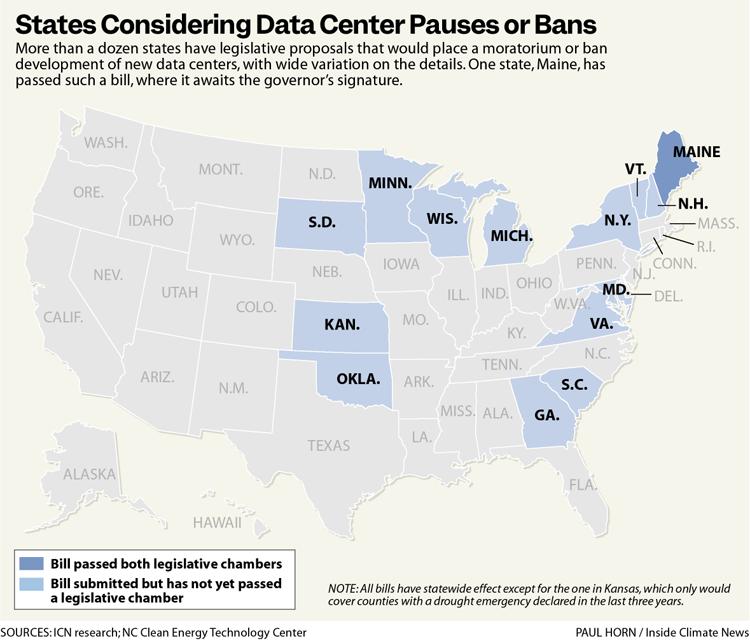
The Maine House and Senate recently finalized the passage of LD 307, a bill that effectively halts the approval of any new data center projects with an electricity demand of 20 megawatts or more. This prohibition, which extends to both state and local government approvals, is slated to remain in effect until at least October 2027. The legislation now sits on the desk of Governor Janet Mills. While the Governor has not yet issued a formal statement regarding her intent to sign or veto the bill, the strong support in both chambers—79-62 in the House and 21-13 in the Senate—signals a significant appetite for regulatory oversight in the Pine Tree State.
A Timeline of Legislative Action and State Precedent
The journey of LD 307 through the Maine State House reflects a growing national anxiety over "hyperscale" developments. Introduced earlier this year, the bill was championed by Representative Melanie Sachs, a Democrat who argued that Maine needed to act preemptively to avoid the infrastructure crises seen in other tech hubs like Northern Virginia and parts of Texas.
Throughout the spring of 2024, the bill underwent rigorous debate. Proponents argued that the state’s current regulatory framework was ill-equipped to handle the unique demands of data centers, which operate 24/7 and consume vast quantities of electricity and water for cooling. Opponents, largely within the Republican caucus, countered that a moratorium sends a negative signal to global investors and could stifle economic diversification in a state that has seen a decline in traditional industries like paper milling.
Despite these objections, the bill moved through the committee phase and secured passage this week. The timeline established by LD 307 mandates the creation of a special council of experts tasked with evaluating the long-term impacts of data centers on Maine’s natural resources and utility rates. This council is expected to deliver its findings and policy recommendations to the legislature well before the moratorium’s expiration in 2027.
The Technical Threshold: Why 20 Megawatts Matters
The decision to set the moratorium threshold at 20 megawatts is a calculated one. In the world of data centers, 20 megawatts represents the dividing line between local enterprise facilities and massive industrial-scale operations. To put this figure in perspective, a 20-megawatt data center can consume as much electricity as roughly 16,000 average American homes.
By targeting facilities of this size, Maine lawmakers are specifically aiming to regulate "hyperscalers"—the massive complexes operated by tech giants such as Amazon Web Services, Google, and Microsoft. While Maine currently hosts about ten smaller data centers, none currently reach the hyperscale level. Lawmakers argued that by drawing a line at 20 megawatts, they are protecting the state’s energy grid from sudden, massive loads that could destabilize the system or lead to price spikes for residential consumers.
The Strained Power Grid and the "Double Demand" Comparison
One of the primary drivers behind the moratorium is the looming challenge of energy capacity. According to data from the Federal Energy Regulatory Commission (FERC), U.S. data centers accounted for more than 50 gigawatts of electricity demand as of last year. This figure is staggering when compared to regional grids; it is approximately double the peak demand of the entire New England power grid, which serves six states, including Maine.
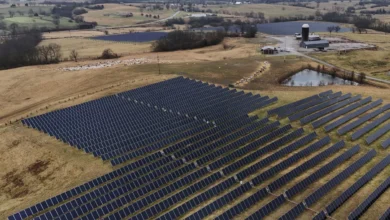
The New England grid, managed by ISO-NE, is currently in a delicate state of transition as it moves toward renewable energy sources. The integration of massive, consistent power draws from data centers complicates this transition. If a single large data center were to come online, it could potentially consume the entire output of a medium-sized offshore wind farm or several large-scale solar arrays, leaving little "green" energy for the rest of the public.
Furthermore, the infrastructure required to deliver this power—including new high-voltage transmission lines and substations—often carries a price tag in the hundreds of millions of dollars. Under current utility structures, these costs are frequently passed on to the general ratepayer rather than being borne solely by the developer, a point of contention that LD 307 aims to address.
Partisan Friction: Economic Growth vs. Regulatory Caution
The debate over LD 307 highlighted a sharp partisan divide in Augusta. Democrats, who hold the majority in both chambers, framed the bill as a necessary "breathing room" measure. Representative Melanie Sachs emphasized that the goal is not to ban data centers permanently but to ensure that Maine’s regulatory framework "can meet the moment." She pointed to other states as "cautionary tales," where rapid data center expansion has led to water shortages and a resurgence in coal-fired power generation to meet demand.
In contrast, Republican lawmakers expressed concern that the moratorium would act as a "closed for business" sign. State Senator Matt Harrington noted that the bill could jeopardize specific projects already under discussion in communities like Sanford and Jay. Harrington argued that data centers represent billions of dollars in potential investment and could provide a modern use for defunct industrial sites.
The situation in the town of Jay is particularly sensitive. The community has been looking for ways to redevelop the site of a former paper mill, an endeavor that could be complicated by the 20-megawatt limit. Governor Mills had reportedly requested an exemption for the Jay project, but the final version of the bill passed without such a carve-out, leaving the fate of that specific redevelopment in limbo.
Environmental and Community Pushback
Environmental advocacy groups, including Maine Conservation Voters, have emerged as strong supporters of the moratorium. Sarah Woodbury, the organization’s legislative director, noted that community opposition often stems from the "intrusive" nature of these developments. Beyond energy use, data centers require millions of gallons of water daily for evaporative cooling systems, a significant concern in an era of fluctuating climate patterns.

There is also a growing public unease regarding the social implications of the AI boom. While data centers are expensive to build, they are highly automated and typically employ fewer than 50 to 100 permanent staff members once operational. This "low-job, high-impact" profile makes them a difficult sell for local residents who see their landscapes changed by massive windowless warehouses but see little direct employment benefit.
A National Movement: From Statehouses to the U.S. Capitol
Maine may be the first to pass such a moratorium, but it is far from alone. At least 13 other states are currently considering similar legislation or resolutions. Analysts are closely watching Minnesota and Illinois, where similar backlashes are brewing. In Illinois, despite the state previously offering generous tax incentives for data centers, lawmakers are now facing pressure to account for the massive water consumption these facilities require from the Great Lakes region.
The conversation has even reached the federal level. U.S. Senator Bernie Sanders (I-VT) and Representative Alexandria Ocasio-Cortez (D-NY) have proposed a national moratorium on AI-specific data centers. Their proposal argues that the environmental cost of training large language models is currently unaccounted for and that the federal government must intervene to prevent a "climate catastrophe" driven by tech industry energy needs.
Economic Realities and the "Good Jobs" Debate
The economic impact of data centers is a subject of intense scrutiny by watchdog groups like Good Jobs First. Anthony Elmo, a researcher for the organization, cautions that the "billions of dollars in investment" often cited by developers do not always translate into local prosperity. Much of that capital is spent on high-end servers and specialized equipment manufactured elsewhere, while the local economic footprint remains limited to construction jobs and utility taxes.
Elmo suggests that the politics of data centers are evolving into a non-partisan issue of local control. "We are seeing opposition from both sides of the aisle when a specific project is proposed next to a residential neighborhood or a sensitive ecological zone," Elmo stated. He believes the trend of state-level restrictions will continue as long as developers struggle to answer fundamental questions about water usage and grid stability.
Looking Ahead: Implications for the AI Revolution
The outcome in Maine will likely serve as a blueprint for other states. If Governor Mills signs the bill, it will empower the special council to set some of the most stringent data center regulations in the country. These could include requirements for data centers to provide their own "behind-the-meter" renewable energy or to utilize closed-loop cooling systems that consume zero water.
As the AI revolution continues to accelerate, the tension between technological progress and resource conservation will only intensify. Maine’s decision to pause and reflect suggests that the era of unregulated data center expansion may be coming to an end, replaced by a new paradigm where the "cloud" is forced to reckon with its very physical, and very heavy, footprint on the earth. For now, the tech industry and environmentalists alike will be watching the Governor’s desk in Augusta, waiting to see if Maine’s bold experiment in regulatory caution becomes the law of the land.
Related posts: