The Paradox of AI in Indigenous Stewardship Balancing Environmental Protection with the Extractive Demands of Digital Infrastructure

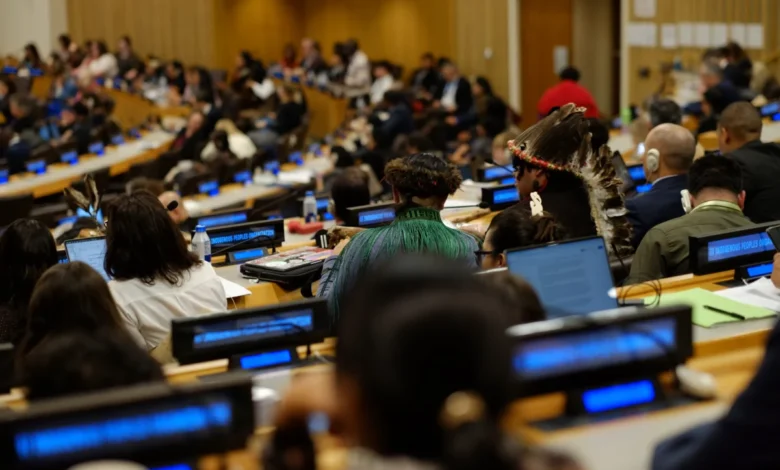
Indigenous leaders and environmental advocates at the United Nations Permanent Forum on Indigenous Issues (UNPFII) are currently grappling with a profound technological contradiction. While artificial intelligence (AI) offers unprecedented tools for monitoring biodiversity, detecting illegal logging, and predicting climate-driven disasters, the physical infrastructure required to sustain these systems—massive data centers and the energy grids that power them—is increasingly encroaching upon Indigenous territories. This tension marks a new chapter in the long-standing struggle for land sovereignty, as communities attempt to utilize high-tech shields against environmental degradation while simultaneously resisting the extractive industries that provide the raw materials for those very technologies.
A comprehensive study recently presented by Hindou Oumarou Ibrahim, a member of the Mbororo people of Chad and former chair of the UNPFII, serves as the focal point for this global discussion. The report outlines a landscape where AI acts as both a protector and a predator. Ibrahim argues that while Indigenous peoples have successfully managed the world’s most intact ecosystems for millennia without the aid of algorithms, modern threats have scaled to a point where technology has become a necessary ally. However, the study warns that the proliferation of AI-driven tools is fueling a surge in "digital extractivism," characterized by the overexploitation of water for cooling data centers, the mining of critical minerals on ancestral lands, and the potential for new forms of land-grabbing.
The Evolution of Indigenous Environmental Monitoring
The integration of advanced technology into Indigenous land management did not happen overnight. Over the last two decades, a chronological shift has occurred, moving from ground-based participatory mapping to the sophisticated use of satellite-derived data and predictive modeling. In the early 2000s, many communities began using basic GPS units to document land boundaries and cultural sites. By the 2010s, the use of drones became common for real-time surveillance of remote areas. Today, the frontier is AI, which can process vast datasets—far beyond the capacity of human monitors—to identify patterns of illegal activity or environmental stress.
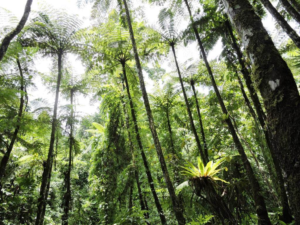
In the Katukina/Kaxinawá Indigenous Reserve in Brazil’s Acre state, this evolution is evident. The reserve has historically been a target for illegal loggers and land speculators. Today, 21 Indigenous agroforestry agents utilize an AI tool developed through a partnership between Microsoft and the Brazilian nonprofit Imazon. This system analyzes satellite imagery to forecast deforestation risks with high accuracy, allowing agents to intervene before the first trees are felled. Siã Shanenawa, an agent in the reserve, notes that the ability to detect human encroachment, hunting, and fire proximity in real-time has fundamentally altered the security landscape for his people.
Similar advancements are being documented in the Arctic. In Nunavut, Inuit communities are blending ancestral ecological knowledge with time-series analyses and predictive AI. As climate change shifts the migration patterns of fish and marine mammals, these models help hunters and fishers identify new, sustainable locations, ensuring food security in a rapidly changing environment. Meanwhile, in Chad, Mbororo pastoralists are using AI to analyze satellite data to secure transhumance corridors, predicting severe droughts and ensuring that livestock can reach water sources without sparking conflict with sedentary farming communities.
The Material Reality of the Virtual World
Despite these benefits, the physical footprint of the AI revolution is creating a secondary crisis. AI is often marketed as a "cloud-based" or "virtual" solution, but its operation depends on a massive, resource-heavy physical infrastructure. Data centers, the warehouses of servers that process AI algorithms, are among the most energy- and water-intensive buildings in existence.

Supporting data from the International Energy Agency (IEA) suggests that data centers currently account for approximately 1% to 1.5% of global electricity use. However, with the explosion of generative AI, this figure is projected to skyrocket. A single query to a large language model (LLM) can require ten times the electricity of a standard Google search. Furthermore, these centers require millions of gallons of water daily for cooling. In drought-prone regions, this creates a direct competition between tech corporations and local communities.
In Thailand’s Chonburi and Rayong provinces, local farmers have voiced formal opposition to the expansion of data center hubs. These regions already suffer from chronic water shortages and industrial pollution. The introduction of high-capacity data centers threatens to drain local aquifers and discharge wastewater back into the environment, potentially contaminating the very ecosystems that Indigenous and local communities rely on for their livelihoods. Similar conflicts have emerged in Querétaro, Mexico, and even in rural Pennsylvania, where the sudden influx of data centers has strained local power grids and led to rising utility costs for residents.
The extraction of critical minerals—lithium, cobalt, and copper—required for the hardware and batteries that power the AI ecosystem further complicates the narrative. Much of the world’s untapped mineral wealth lies beneath or near Indigenous lands. The "green energy transition," which is inextricably linked to the AI boom, has led to a surge in mining permits that often bypass the requirement for Free, Prior, and Informed Consent (FPIC).
Digital Sovereignty and the Risk of Knowledge Appropriation
Beyond the environmental impact, the UNPFII has raised alarms regarding "digital rights" and the potential for AI to facilitate the theft of traditional knowledge. Hindou Oumarou Ibrahim’s study highlights that the use of drones and high-resolution satellite mapping without community oversight can expose the locations of sacred sites or ecologically sensitive areas. This data, if accessed by bad actors, can be used to facilitate illegal mining or "bioprospecting," where corporations patent genetic resources found on Indigenous lands without sharing the benefits.
Lars Ailo Bongo, a professor at UiT The Arctic University in Norway and lead at the Sámi AI Lab, points to a lack of "AI inclusivity." He argues that current AI models are often trained on Western datasets that do not reflect Sámi views, norms, or languages. While there is an "opportunity space" to use AI for language revitalization and governance, the Sámi are hindered by a lack of funding to hire Indigenous developers. This creates a dependency on external tech companies that may not prioritize Sámi data sovereignty.
"Technology on its own doesn’t protect forests—people do," says Cameron Ellis, field science director at Rainforest Foundation US. Ellis emphasizes that for AI to be a legitimate tool for stewardship, it must be grounded in community governance. If the data generated by AI is not controlled by the communities it describes, it risks becoming another tool for surveillance and dispossession.
Official Responses and the Call for Global Standards
The consensus among Indigenous leaders at the UN is that the current trajectory of AI development is unsustainable and risks repeating the colonial patterns of the past. Kate Finn, executive director of the Tallgrass Institute and a citizen of the Osage Nation, argues that the global investment community must align its strategies with Indigenous rights. She asserts that the "consistent ask" from Indigenous peoples is the respect of FPIC before any data center or mining operation begins on their land.

Governments are also being called upon to implement stricter regulations. Recommendations from the UNPFII study include:
- Mandatory Environmental Impact Assessments: Data centers must be evaluated not just for their carbon footprint, but for their localized impact on water tables and energy access.
- Data Sovereignty Frameworks: Legal protections must be established to ensure that Indigenous communities own and control the data collected from their territories.
- Funding for Indigenous Tech: Rather than relying on corporate "partnerships" where Indigenous groups are minority stakeholders, states should provide direct funding for Indigenous-led AI laboratories.
Analysis of Implications: A New Frontier of Resistance
The paradox of AI represents a fundamental challenge to the global climate strategy. On one hand, the world needs the environmental data and stewardship that AI can provide to meet Paris Agreement targets. On the other hand, the "solution" is currently built on a foundation of extraction that targets the very people who protect 80% of the world’s remaining biodiversity.
If the tech industry continues its current path, it may face a global backlash from Indigenous movements similar to the protests against oil pipelines and large-scale hydroelectric dams. The concept of "Green Colonialism"—where environmental goals are pursued at the expense of Indigenous rights—is now being joined by "Digital Colonialism."
To resolve this paradox, a shift in AI design is required. This would involve moving away from "brute force" AI—which requires ever-larger datasets and more power—toward "frugal AI" or "edge computing" models that can operate locally with minimal energy and water requirements. Furthermore, the tech industry must accept that some areas should be "off-limits" for resource extraction, regardless of the demand for AI hardware.
As Ibrahim concluded in her address to the UN, AI becomes harmful the moment it is imposed. For AI to truly serve as an ally to the planet, it must be stripped of its extractive baggage and placed firmly in the hands of those who have proven their ability to care for the Earth for generations. The future of global conservation may well depend on whether the "smart" technology of the 21st century can finally learn to respect the ancient wisdom of the world’s original stewards.
Related posts: