EU Threatens to Withdraw Funding from Venice Biennale Over Russian Participation in 2026 Exhibition

The European Union has escalated its diplomatic pressure on the organizers of the Venice Biennale, signaling a landmark decision to potentially withdraw significant financial support in response to the inclusion of a Russian national pavilion in the upcoming 2026 exhibition. This move represents the most severe institutional challenge to the world’s oldest and most prestigious contemporary art biennial since the onset of the full-scale invasion of Ukraine in early 2022. The decision by the EU to weaponize its cultural funding highlights a growing rift between the traditional autonomy of international art institutions and the geopolitical realities of modern European diplomacy.
The controversy centers on the announcement that the Russian Federation intends to mount its first official pavilion at the Giardini della Biennale since its self-imposed hiatus following the start of the conflict. The EU, which has historically been a key financial backer of the event through various cultural grants and initiatives, has expressed profound moral and political objections to providing a global platform for a state currently under extensive international sanctions.
The Escalation of EU Diplomatic Pressure
The European Union’s position was formalized this week through a series of high-level statements led by Kaja Kallas, the EU’s foreign policy chief. Speaking at a press conference that primarily focused on the continuation of military and humanitarian aid to Kyiv, Kallas framed the issue not merely as a matter of cultural programming, but as one of fundamental moral consistency.
“While Russia bombs museums, destroys churches, and seeks to erase Ukrainian culture, it should not be allowed to exhibit its own on a stage of this magnitude,” Kallas stated. “Russia’s return to the Venice Biennale is morally wrong, and the EU intends to cut its funding.”
The financial implications for the Venice Biennale are substantial. The EU reportedly contributes approximately €2 million to each edition of the exhibition, often directed through the Creative Europe program or specific regional development funds. While the Biennale operates on a massive budget supported by the Italian government, ticket sales, and private philanthropy, the loss of EU funding would signal a catastrophic breakdown in the institutional relationship between the event and the European leadership.
A History of Tension: The Pavilion System Under Strain
The Venice Biennale, founded in 1895, operates on a unique "National Pavilion" system. Unlike other art fairs or biennials, the Venice event allows individual nations to own or lease permanent structures within the Giardini (gardens) and the Arsenale (former shipyards). These pavilions are essentially diplomatic outposts, where each nation selects its own artists and curators.
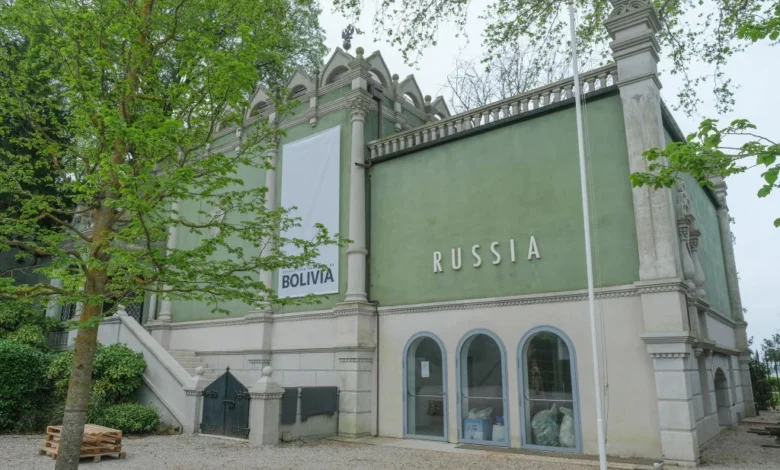
Russia’s presence in Venice dates back to 1914, when its pavilion was designed by the renowned architect Alexey Shchusev. In 2022, following the invasion of Ukraine, the Russian pavilion remained empty after its appointed artists, Alexandra Sukhareva and Kirill Savchenkov, and curator Raimundas Malašauskas resigned in protest. For the 2024 edition, the pavilion was notably loaned to the Plurinational State of Bolivia, a move that avoided a direct Russian presence while maintaining the physical structure’s activity.
The 2026 return marks a shift toward the normalization of Russian state presence in European cultural life—a move that EU leaders and many in the international art community are desperate to prevent. The Biennale’s board, however, has consistently pointed to its foundational statutes. The organization maintains that it cannot legally exclude any state that is recognized by the Italian government, as the Biennale is an independent foundation that operates within the framework of Italian law and international diplomatic recognition.
Chronology of the 2026 Controversy
The path to the current funding crisis has been marked by several key developments over the past six months:
- May 2024: Rumors begin to circulate within the diplomatic circles of Venice regarding Russia’s intent to reclaim its pavilion for the 61st International Art Exhibition.
- August 2024: An open letter signed by over 100 high-profile artists and curators from the main exhibition’s "Foreigners Everywhere" roster calls for the exclusion of "war-mongering regimes." The letter specifically names Russia, Israel, and the United States, sparking a firestorm of debate regarding the "politicization" of the Biennale.
- September 2024: The Italian Ministry of Culture reaffirms that the Biennale is a space for "dialogue," indirectly supporting the Biennale’s stance that it will not bar recognized nations.
- October 2024: Finland and Latvia announce a diplomatic boycott. High-ranking officials from both nations state they will refuse to attend the 2026 opening ceremonies if the Russian pavilion is operational.
- November 2024: Kaja Kallas delivers the EU’s formal threat to withdraw the €2 million grant, elevating the issue from a cultural debate to a budgetary ultimatum.
Supporting Data and Financial Impact
The Venice Biennale is a massive economic engine for the region. The 2022 edition saw over 800,000 visitors, a record-breaking number that underscored the event’s recovery from the COVID-19 pandemic. The 2024 edition is on track to match those figures.
The EU’s €2 million contribution, while a fraction of the overall operating budget (which can exceed €20 million per edition), carries significant symbolic and practical weight. EU funding often covers:
- Educational Programs: Workshops and seminars for European students and young artists.
- Accessibility Initiatives: Programs designed to make the historic venues more accessible to visitors with disabilities.
- Digital Archiving: The digitization of the Biennale’s vast historical records.
The withdrawal of these funds would likely force the Biennale to seek alternative private sponsorship, potentially increasing the commercialization of the event—a trend that critics have already lamented for decades.
International Reactions and Boycotts
The EU’s stance has emboldened several member states to take individual action. Latvia’s Foreign Minister recently told reporters that the Biennale provides "legitimacy through a major European cultural platform," arguing that allowing Russia to participate undermines the efficacy of economic sanctions.
Finland has taken a similar hardline stance. "Our presence at the opening is a gesture of cultural solidarity," a Finnish spokesperson said. "We cannot stand in solidarity with a platform that treats an aggressor state as a peer in the cultural community."
Conversely, the "Art Not War" movement, which authored the open letter demanding the exclusion of Russia, Israel, and the US, has criticized the EU for what they perceive as selective outrage. While the EU is focusing on Russia, these activists argue that the Biennale should be a space free from all "complicit regimes." This puts the Biennale organizers in an impossible position: if they exclude one nation based on political grounds, they set a precedent that could lead to the collapse of the national pavilion system entirely.
Ukraine’s Multi-Pronged Strategy
Ukraine has taken a sophisticated approach to the 2026 edition. While its artists and ministers have called for Russia’s total ejection, they are also working within legal and diplomatic frameworks to make the Russian pavilion untenable.
Ukrainian Foreign Minister Andrii Sybiha confirmed that Ukraine has sanctioned five key individuals associated with the planning of the Russian pavilion. Furthermore, Ukraine is lobbying the Italian government to deny visas to the Russian artists and curators selected for the show. "We very much hope that we will be heard… and expect that visas will not be issued," Sybiha stated.
In contrast to the diplomatic maneuvering, Ukrainian artist Zhanna Khadyrova, who is slated to represent her country in 2026, has stated she will not focus on protest. "We will focus on our message and spend all our stress to make our pavilion as good as possible," Khadyrova told Radio Free Europe. "This is our fight." Her approach reflects a desire to let Ukrainian art speak for itself as a counter-narrative to Russian state propaganda.
Implications for the Future of Global Art Events
The EU’s threat to cut funding marks a pivotal moment in the "culture wars" of the 21st century. It raises fundamental questions about the neutrality of art:
- Institutional Autonomy: Should a cultural foundation like the Biennale be forced to mirror the foreign policy of its donors?
- Diplomatic Status: If the Giardini is treated as diplomatic soil, does the host nation (Italy) have the right to intervene in who occupies the pavilions?
- The Precedent of Exclusion: In the past, the Biennale has excluded nations—most notably South Africa during the apartheid era (from 1968 to 1993). However, those decisions were often made in alignment with UN-level consensus, which is currently absent regarding a total cultural ban on Russia.
As the 2026 Biennale approaches, the pressure on the board of directors and the Italian government will only intensify. If the EU follows through on its threat, it may trigger a domino effect of corporate sponsors withdrawing their support to avoid being associated with the controversy. For now, the Venice Biennale remains at a crossroads, caught between its legacy as a sanctuary for global artistic dialogue and the harsh realities of a fractured European continent.