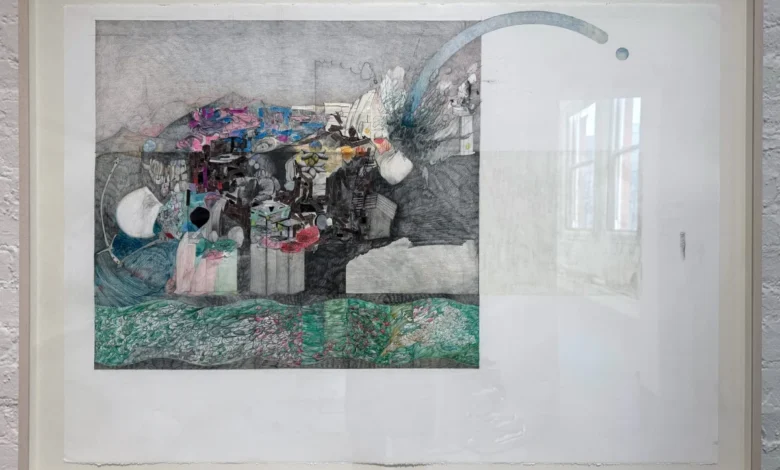
The 2026 iteration of Greater New York at MoMA PS1 serves as a sprawling, complex testament to the impossibility of capturing the full breadth of the New York City art world in a single exhibition. With a roster of more than 50 artists and an array of 150 works, the survey attempts to distill the essence of a city that is inherently unwieldy, aggravating, and beautiful. This recurring exhibition, which has served as a cornerstone of the institution since its inception in 2000, continues to grapple with the evolving identity of the five boroughs, offering a snapshot of creative production that ranges from the deeply personal to the overtly political.
The Institutional Legacy of Greater New York
Since the first survey was launched at the turn of the millennium, Greater New York has functioned as a bellwether for the city’s creative health. Historically occurring roughly every five years—with some variations due to global events such as the COVID-19 pandemic—the exhibition is designed to highlight emerging talent and under-recognized voices. The 2026 edition arrives at a time of significant transition for the city, marked by the lingering effects of the housing crisis, the rapid gentrification of once-affordable neighborhoods, and a heightened awareness of surveillance and labor rights.

MoMA PS1, located in Long Island City, Queens, has long positioned itself as the more experimental, community-oriented sibling to the Museum of Modern Art in Manhattan. By utilizing the entirety of the former schoolhouse building, the curators of Greater New York 2026 have created an environment that mirrors the density and sensory overload of the city itself. The exhibition spans multiple floors, utilizing hallways, cramped alcoves, and large-scale galleries to house a diverse range of media, including papier-mâché, aluminum foil, 16mm film, and digital video.
Highlights of Artistic Success and Urban Resonance
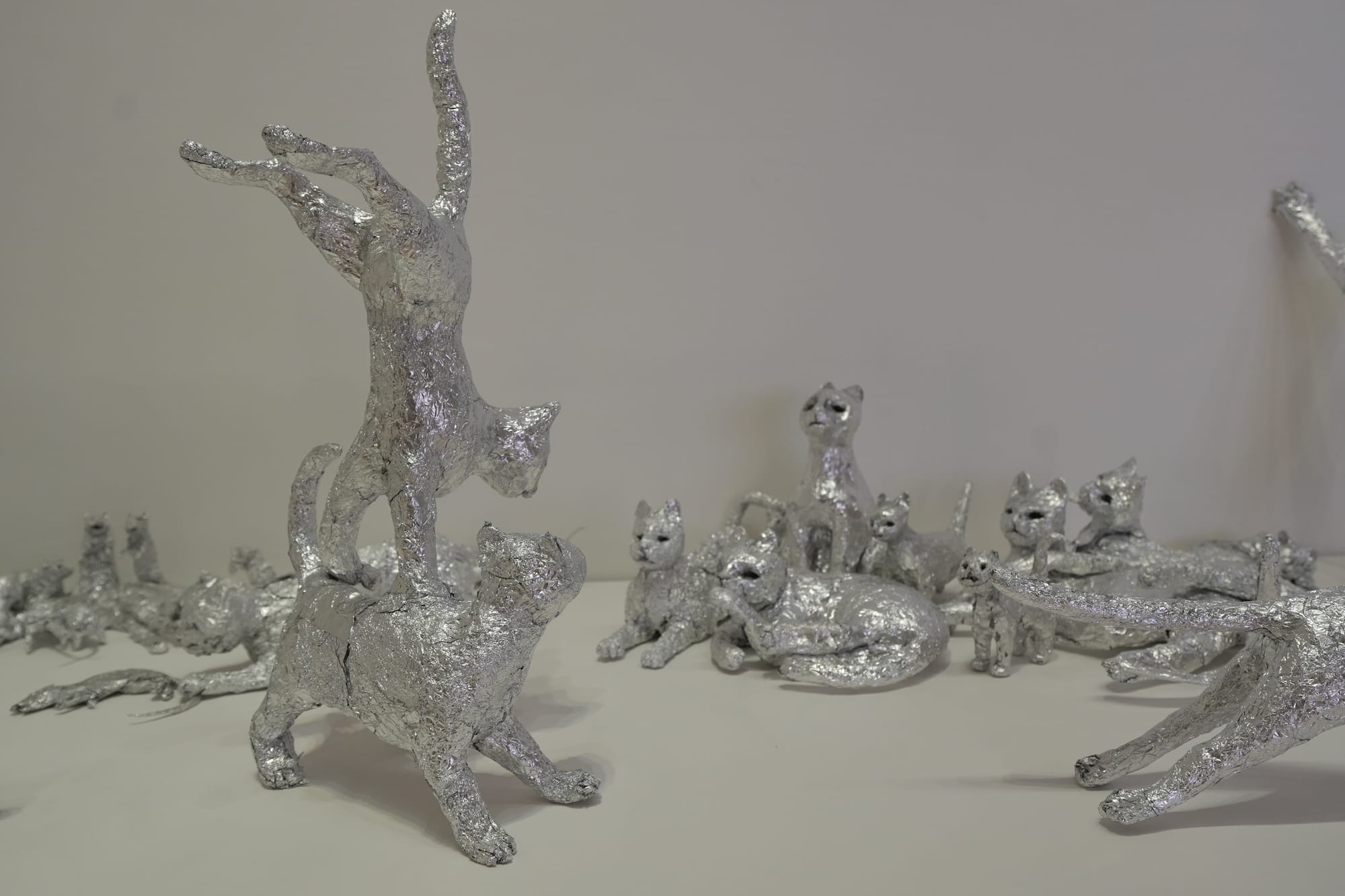
Among the most celebrated contributions to the 2026 survey is the work of Dean Millien. His installation, "The Cats and the Rats," features sculptures fashioned entirely from aluminum foil. Millien’s practice, which began in early childhood as a response to the loss of his toys, has evolved into a sophisticated, cinematic exploration of the organisms that share the urban environment. Critics have noted that these works serve as allegories for human interaction—fighting, playing, and surviving. The choice of material, ubiquitous in New York delis and households, lends the work a tactile familiarity that bridges the gap between high art and everyday life.
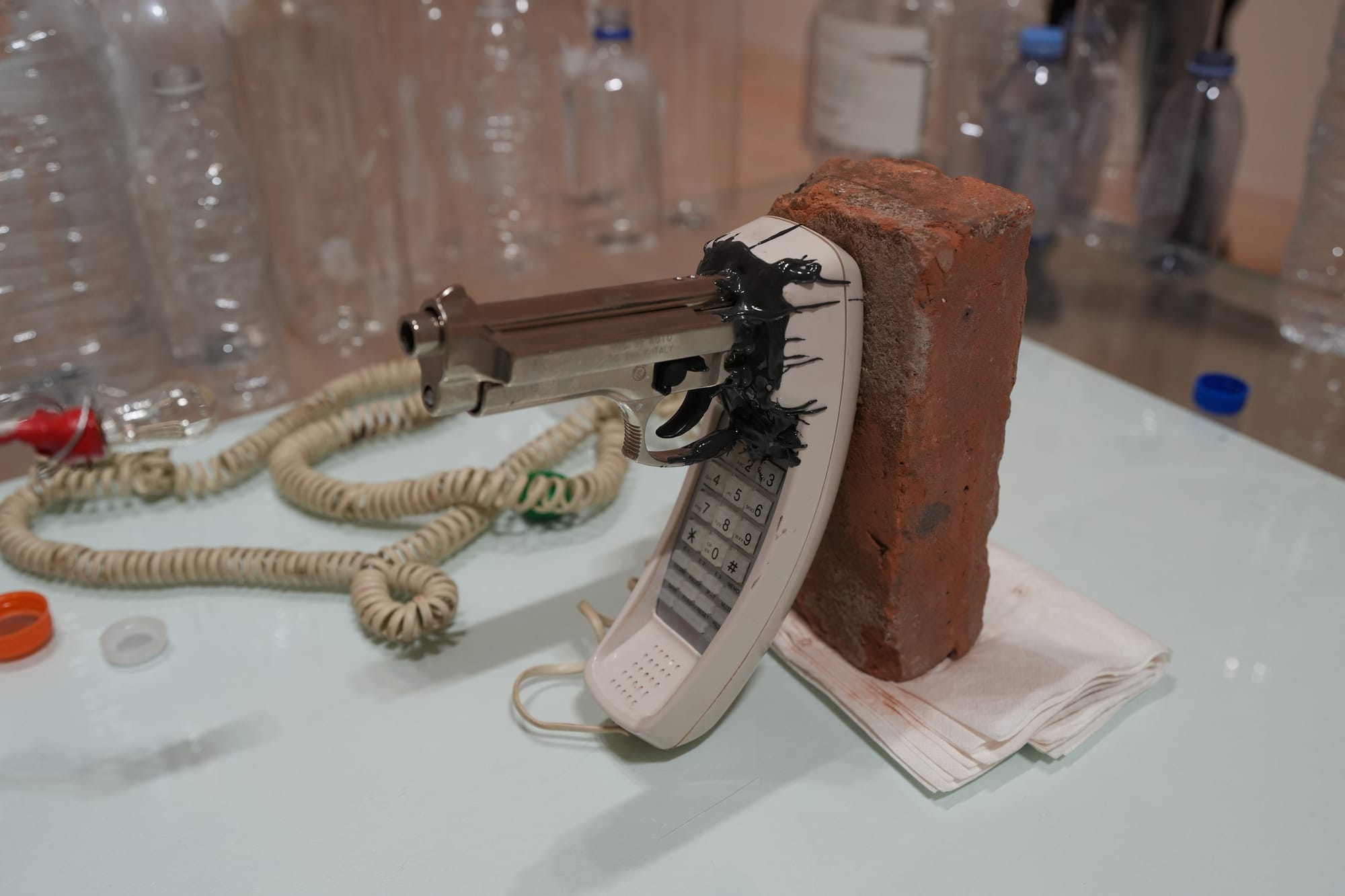
Similarly resonant is the work of Red Canary Song, a grassroots collective of Asian massage workers and sex workers. Their multimedia installation, "Touch the Heart," utilizes sculpture, audio interviews, and data visualization to archive the realities of migrant labor. By bringing marginalized voices into the institutional space of MoMA PS1, the collective challenges the stigmatization of unprotected labor. The installation’s environmental curation has been praised for making complex socio-political issues accessible to a general audience, though some observers noted that the sheer volume of literature provided could benefit from further streamlining.
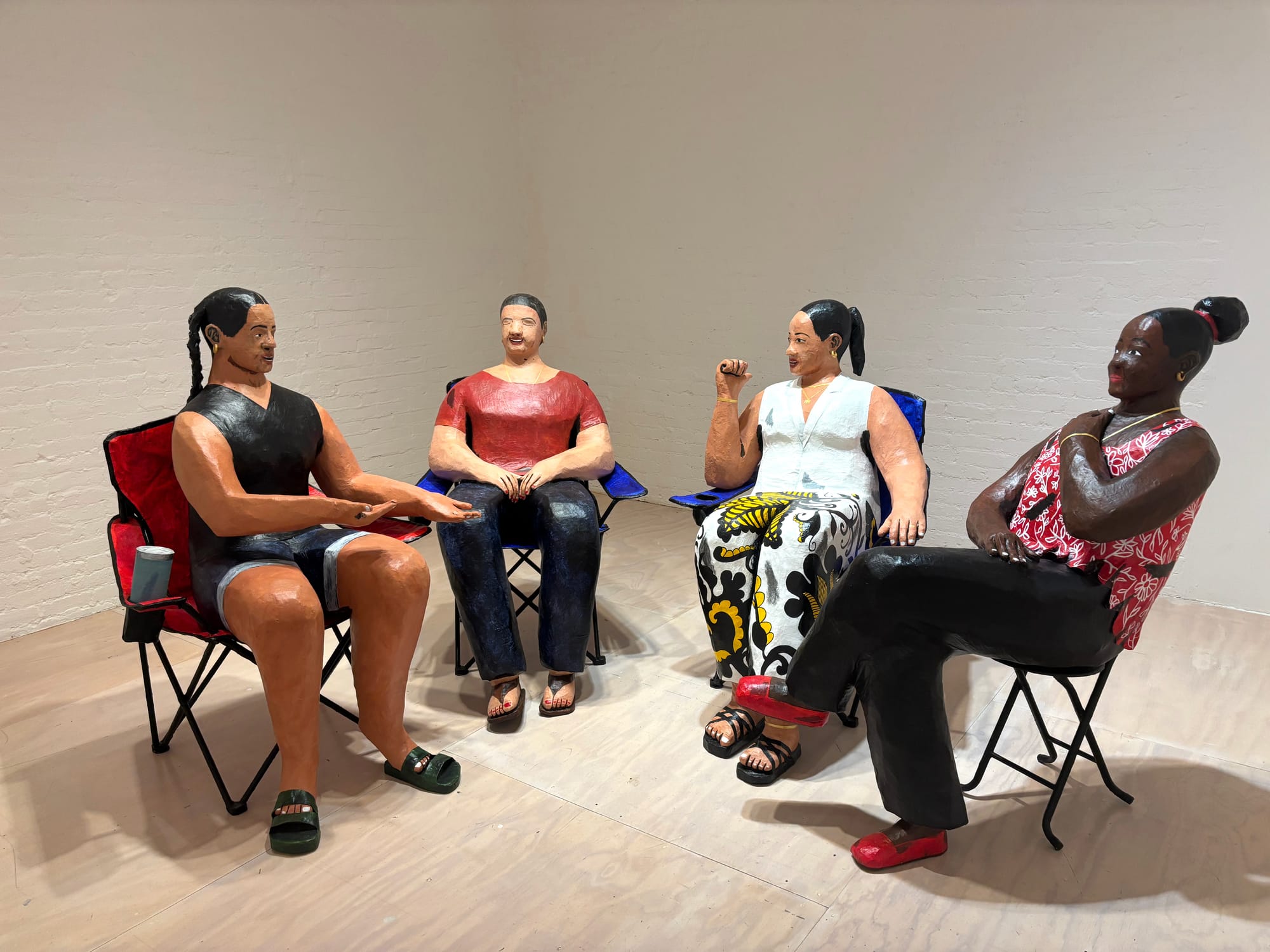
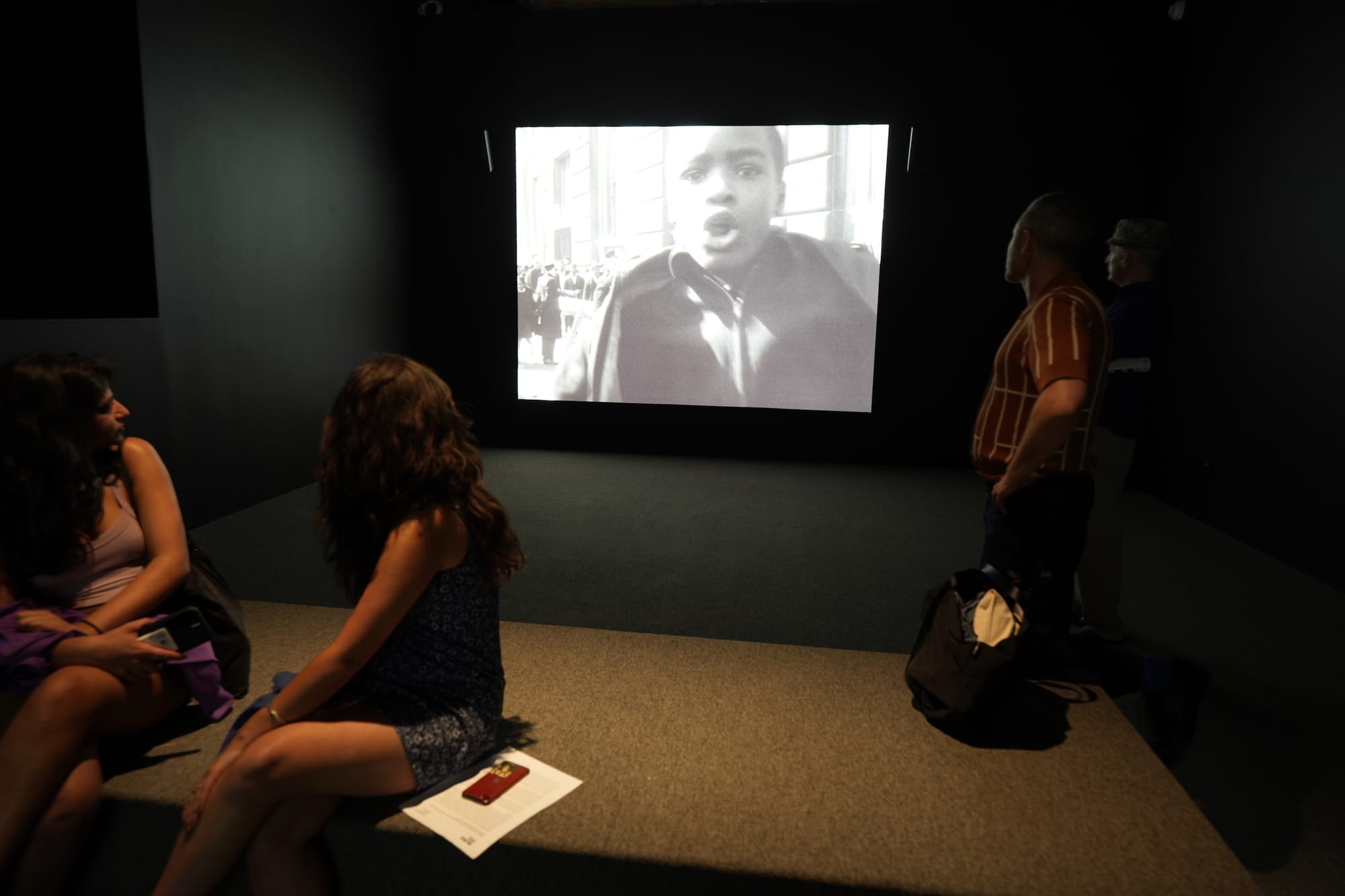
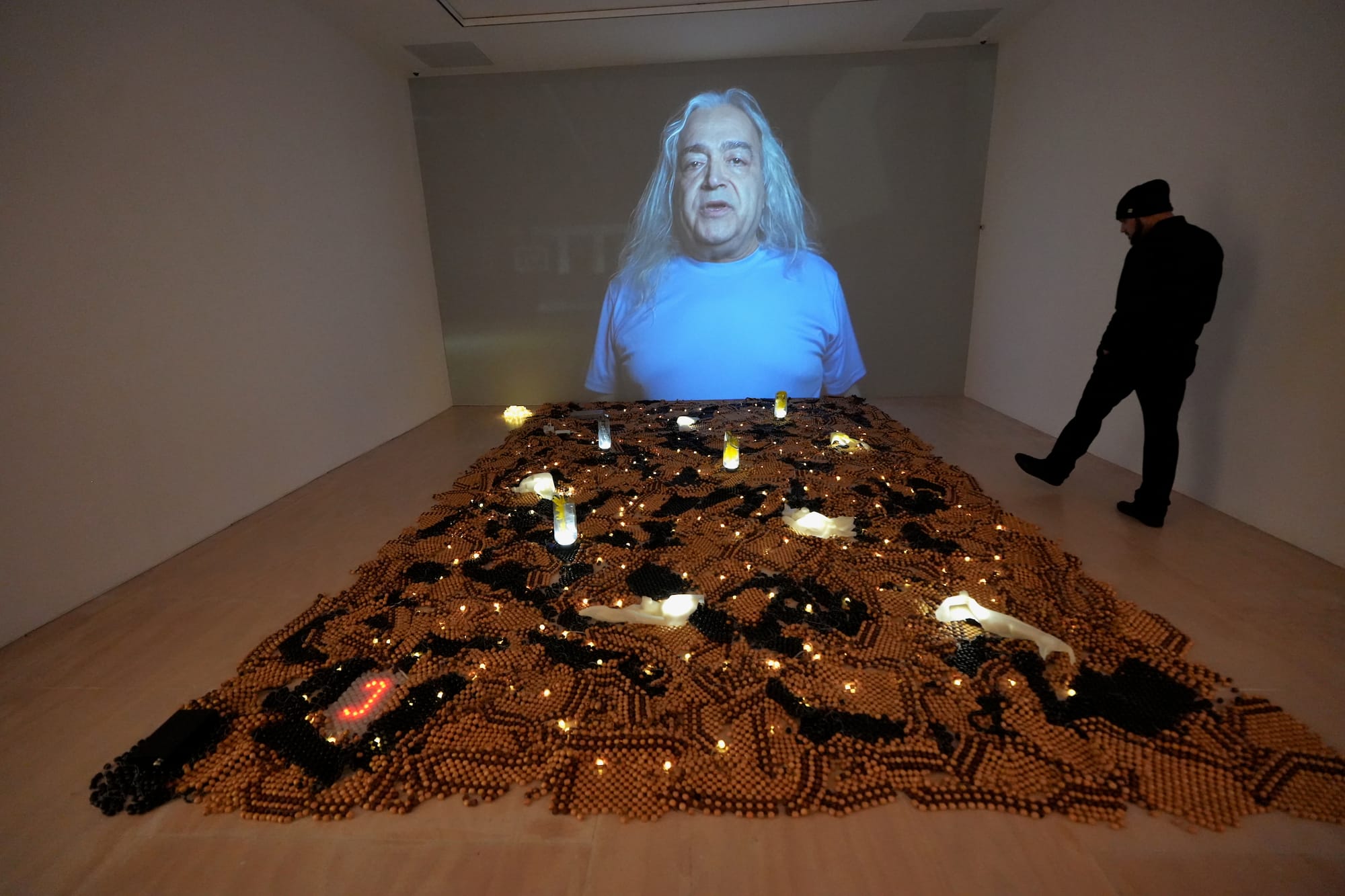
In the realm of historical reflection, Kameron Neal’s "Down the Barrel (of a Lens)" stands as a haunting highlight. Created during Neal’s residency at the NYC Department of Records and Information Services, the two-channel video installation utilizes over 3,600 minutes of NYPD surveillance footage from 1960 to 1980. The work captures a pivotal era of protest, featuring the Black Panthers, the Young Lords, and anti-war demonstrators. By focusing on the police’s gaze, Neal highlights the cyclical nature of civil unrest and the persistent presence of the surveillance state in New York’s public life.
Navigating the Texture of the City
The exhibition also succeeds when it leans into the specific visual vernacular of the city. Kenneth Tam’s installation, "I’M STAYING HOPEFUL AND STRONG (For Bilal and Salah)," uses taxi seat covers and 3D-printed objects to explore the decline of the taxi medallion as a symbol of the American dream. Tam’s work deconstructs masculinity and labor, featuring video of taxi drivers performing modern dance—a poignant juxtaposition of grueling urban work and delicate artistic expression.
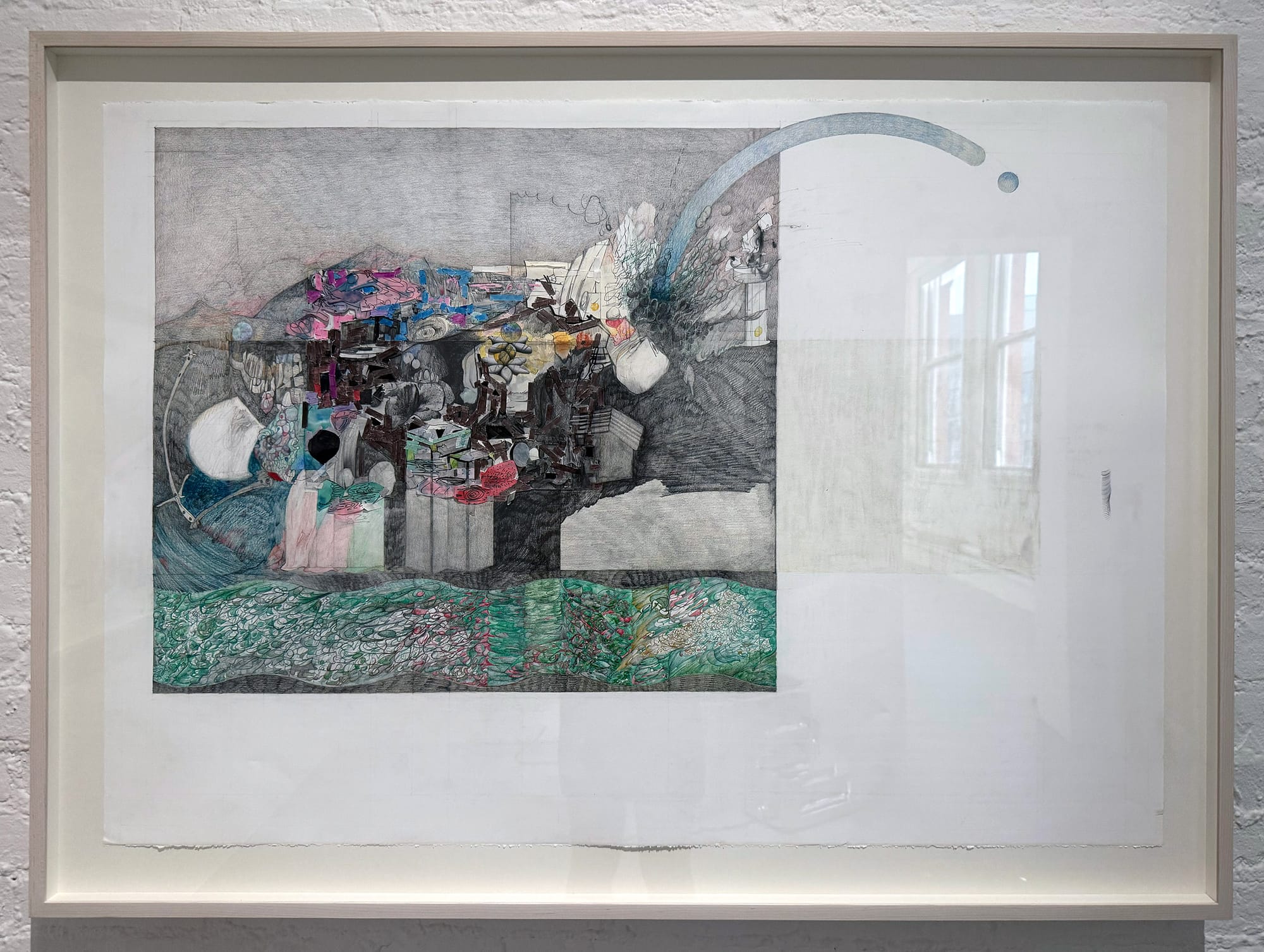
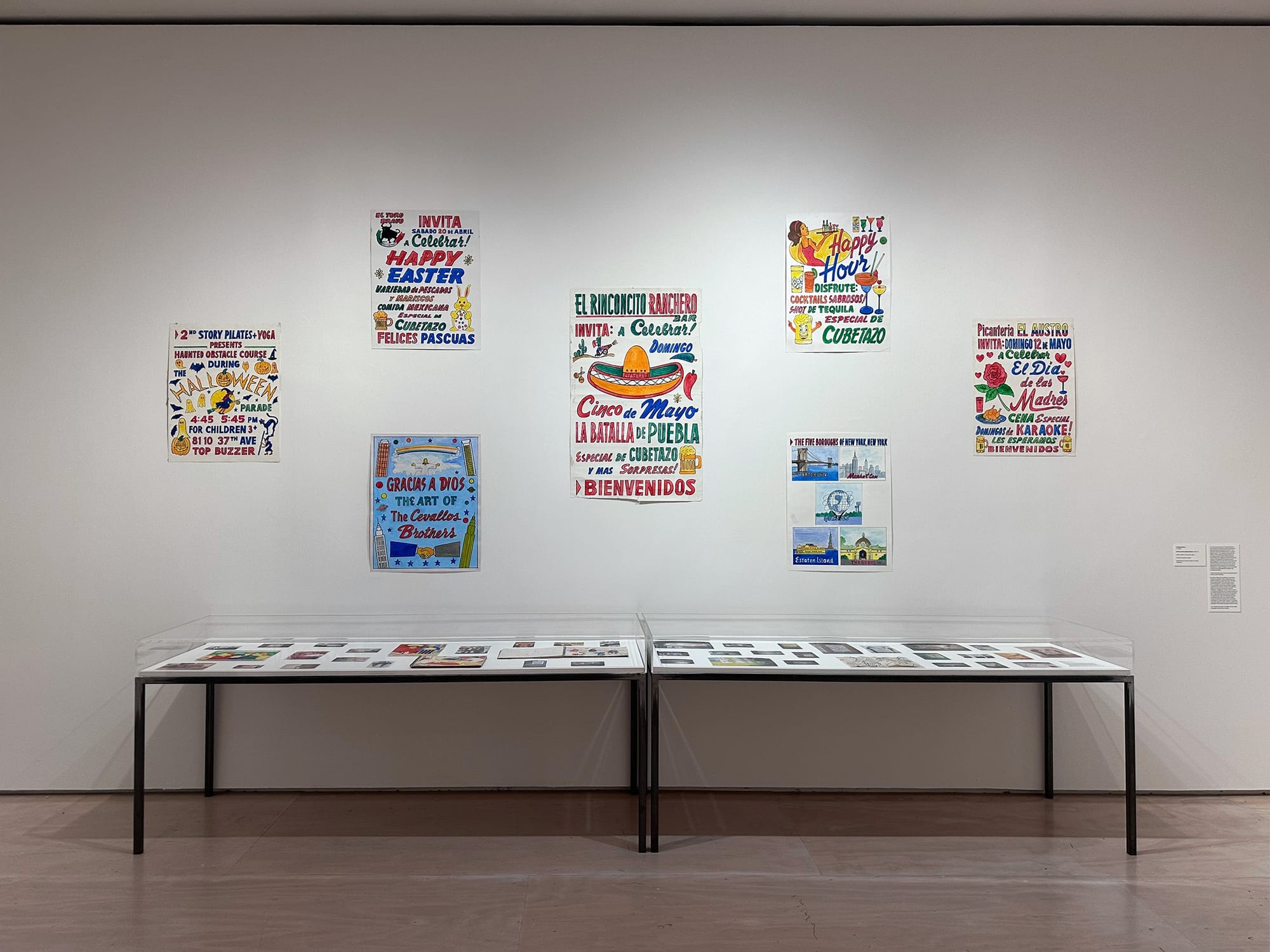
The Cevallos Brothers bring the "source material" of the city directly into the museum. Their hand-painted signs and ephemera reflect the specific visual language of ethnic enclaves and local commerce. By including these works in a formal survey, the curators acknowledge that the art of New York is not found solely in studios but on the lamp posts, shop windows, and walls of its neighborhoods.
Areas of Critical Ambivalence
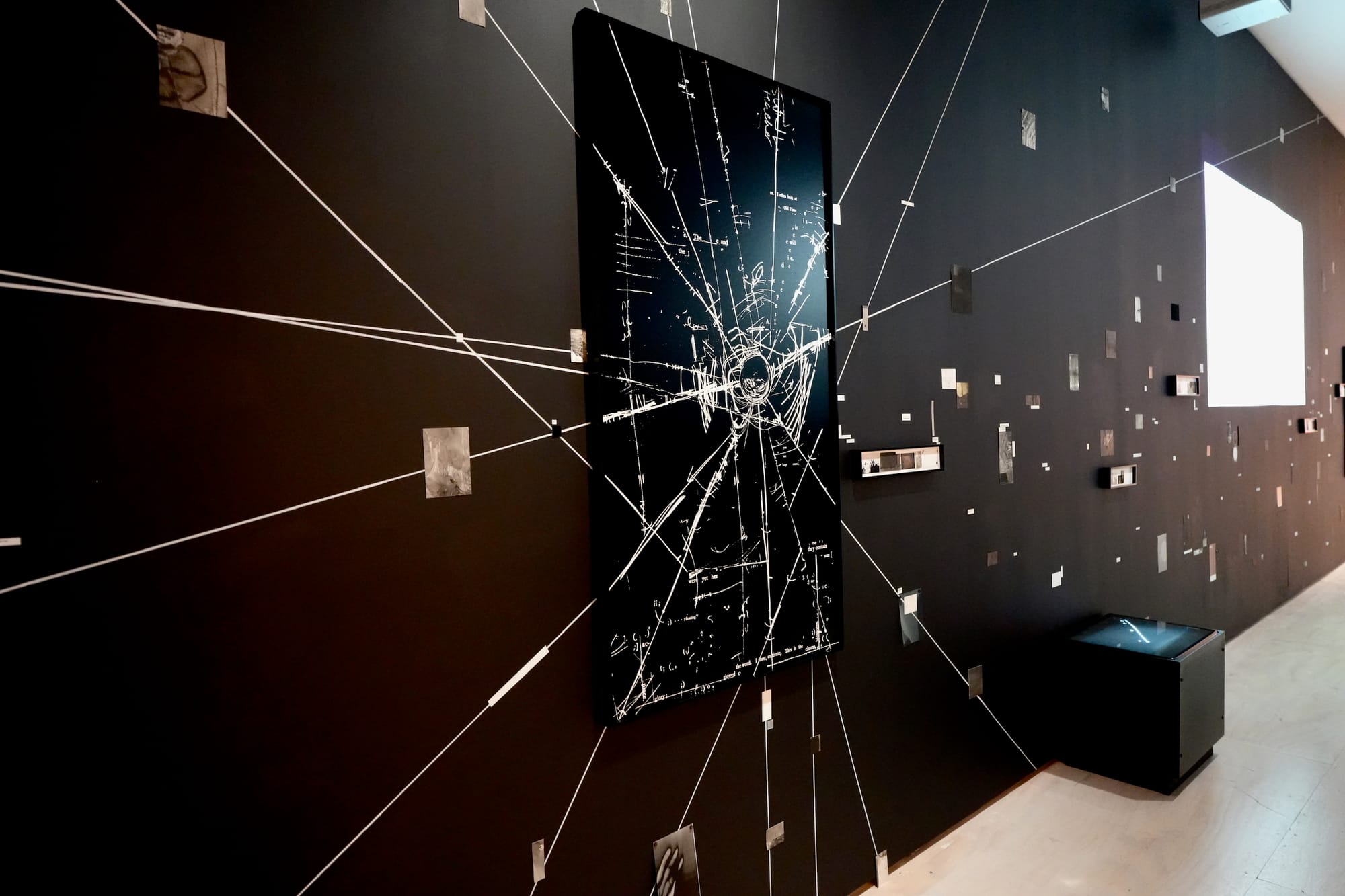
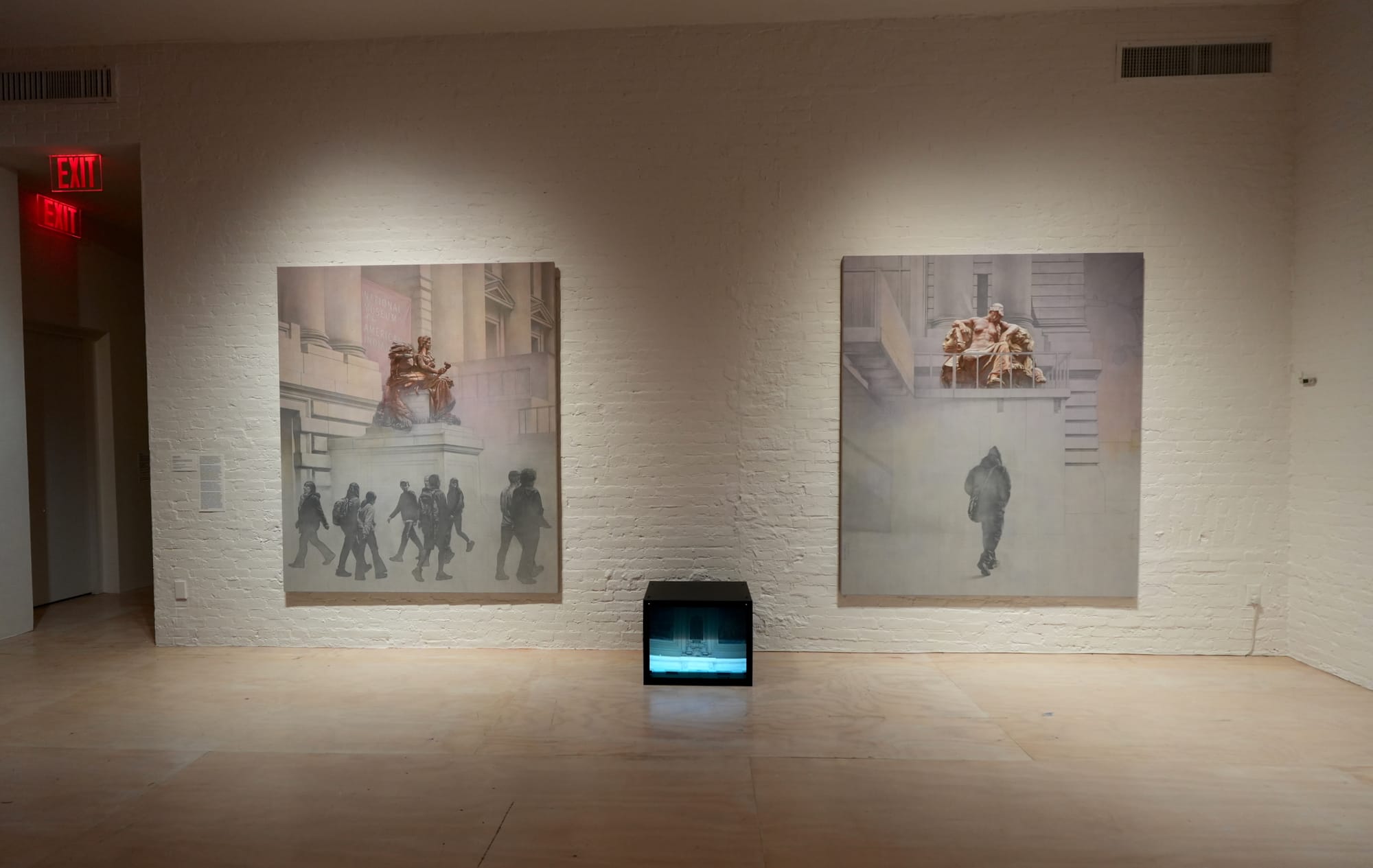
While the survey is praised for its breadth, several works have sparked debate among critics and visitors regarding their clarity and institutional fit. Kameelah Janan Rasheed’s "Escape Orbit," an associative installation of scraps of paper and video, was noted for its energy but criticized for its placement in a cramped hallway that hindered mental and physical access. Similarly, Esteban Jefferson’s paintings of public sculptures were seen by some as failing to fully realize their conceptual goal of challenging colonial legacies, with the subjects appearing "washed-out" rather than empowered.
A recurring critique of the 2026 survey is the perceived "MFA aesthetic" found in some galleries. Critics have pointed to an over-reliance on impenetrable "artspeak" and conceptual frameworks that may feel removed from the average viewer’s experience. Louis Osmosis’s sculptures, described by the artist as the "NPCs of modernism," and Ian Miyamura’s "postdigital painterly perspective" were cited as examples where the intellectual scaffolding threatened to overshadow the visual impact of the work.
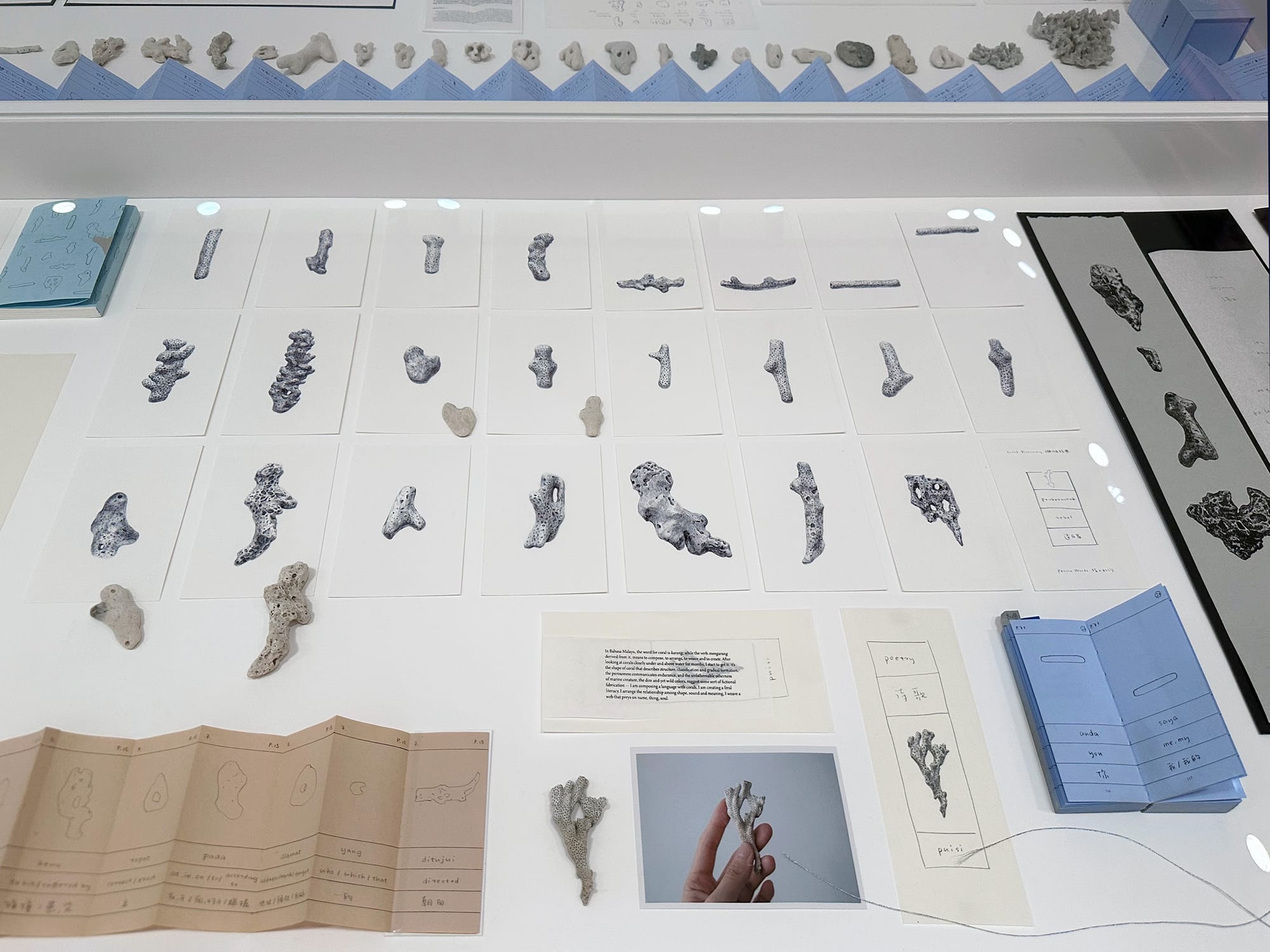
In the case of Cici Wu’s "Upon Leaving the White Dust," which pays homage to the late artist Theresa Hak Kyung Cha, some observers felt that while the work was beautiful and tender, it lacked a direct connection to the "here and now" of contemporary New York. This highlights the ongoing challenge for survey exhibitions: balancing the need to honor artistic lineages with the mandate to capture the current moment.
Works That Missed the Mark
Not all experiments in the survey were deemed successful. The Women’s History Museum’s installation, "Chez les heureux du monde," which attempted to link the 1911 Triangle Shirtwaist Factory fire with modern fashion and protest smocks, was criticized for being visually over-saturated and difficult to parse without heavy reliance on wall text. Critics described the work as "overworked" and "over-complicated," suggesting that the important message it sought to convey was lost in its execution.
Kristin Walsh’s "Engine no. 14," a kinetic sculpture involving aluminum and pennies, also left some viewers confused. Despite its mesmerizing mechanical movement, the lack of clear contextual information made it difficult for audiences to connect the sculpture’s form with its underlying themes of value and labor. Furthermore, Marc Kokopeli’s use of transparent LCD cabinets and references to South Park was viewed by some as "undercooked," suggesting that the work relied too heavily on external cultural artifacts rather than developing its own internal logic.
Broader Implications and the Future of the Survey
The 2026 Greater New York survey underscores the persistent tension between the institutionalization of art and the raw, often unclassifiable energy of the city’s creative output. The exhibition reveals a generation of artists born in the 1990s who are navigating a "postdigital" landscape while remaining deeply concerned with the physical realities of labor, identity, and history.
From a data perspective, the inclusion of more than 50 artists reflects a continued commitment to diversity, yet the challenges of installation and navigation within MoMA PS1 suggest that the survey may be reaching the limits of its current format. As the cost of living in New York continues to rise, the question of who can afford to be an artist in the city—and whose work gets seen in prestigious surveys—remains a central concern for the community.
Ultimately, Greater New York 2026 succeeds as a record of a city in flux. It captures the friction between different neighborhoods, the weight of historical memory, and the stubborn persistence of individual expression. While not every work resonates with every viewer, the disagreement and dialogue sparked by the exhibition are, in themselves, quintessentially New York. The survey remains a vital, if occasionally frustrating, mirror held up to one of the world’s most complex urban environments. As the exhibition continues its run, it will undoubtedly serve as a primary reference point for those seeking to understand the trajectory of American art in the mid-2020s.