The Global Energy Transition at a Crossroads as Middle East Conflict Meets the Dawn of the Age of Electricity

The outbreak of hostilities involving the United States, Israel, and Iran has triggered an unprecedented disruption in global energy markets, creating a critical bottleneck for approximately 20 percent of the world’s supply of oil and liquefied natural gas (LNG). While the long-term ramifications for the global fight against climate change remain uncertain, two landmark reports released this week provide a comprehensive analysis of the energy landscape immediately preceding this geopolitical shock. The data suggests that before the conflict sent oil prices soaring, the world was already pivoting toward a future where the fossil fuels currently under threat were becoming increasingly less central to meeting global energy demands.
According to the International Energy Agency (IEA) and the energy think tank Ember, the world is decisively entering what analysts call the "age of electricity." This transition is driven by a structural shift in core economic activities; sectors that have traditionally relied on the combustion of oil and gas—such as automotive transportation, residential heating, and heavy industrial processes like steel manufacturing—are rapidly transitioning to electric power. Crucially for global climate goals, an expanding share of this electricity is being generated from renewable sources, marking a fundamental change in the architecture of the global energy system.
The 2025 Turning Point: Renewables Overtake Coal
The year 2025 has been identified as a watershed moment for the global energy transition. For the first time in more than a century, renewable energy sources edged out coal in global electricity generation. This milestone was not merely a marginal shift but the result of a massive surge in solar and wind capacity. Solar power, in particular, emerged as the single largest source of new electricity, meeting the lion’s share of humanity’s growing energy appetite.
The reports indicate that the expansion of carbon-free sources—a category including solar, wind, nuclear, and hydropower—actually exceeded the total growth in global electricity demand. This surplus meant that renewables did not just supplement existing fossil fuel capacity but actively began to displace it. Daan Walter, a lead researcher at Ember, noted that even as the global economy expanded and electricity demand grew "healthily," the entirety of that growth was absorbed by renewable installations. This data suggests that the energy transition has moved beyond the realm of theoretical modeling into a tangible, structural reality.
Geopolitical Friction and the Energy Bottleneck
The current conflict involving the United States, Israel, and Iran has cast a shadow over this progress by targeting the traditional energy arteries of the world. With 20 percent of global oil and LNG supply concentrated in the Persian Gulf and the Strait of Hormuz, the "bottlenecking" of these resources has caused immediate volatility in Brent and West Texas Intermediate (WTI) crude prices.
Historically, such price spikes have led to two divergent outcomes: a short-term regression toward cheaper, dirtier fuels like coal to maintain grid stability, or an accelerated push toward energy independence via renewables. The IEA’s analysis suggests that while the immediate reaction to the conflict may be chaotic, the underlying momentum of the "age of electricity" provides a buffer that did not exist during the oil shocks of the 1970s or the early 2000s. The decreased reliance on oil for power generation means the global economy is more resilient to supply chain disruptions in the Middle East than it was two decades ago.
The Role of China and India in Decarbonization
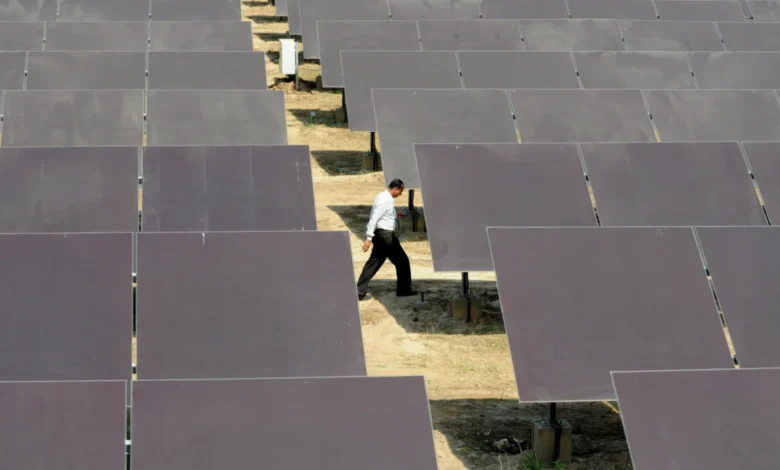
The shift away from fossil fuels is being driven largely by the world’s two most populous nations. China and India, which together account for 42 percent of global fossil fuel-based power generation, both recorded a decline in fossil-generated electricity in 2025. This marks the first time in the 21st century that both nations have seen a simultaneous drop in fossil fuel reliance for their power grids.
This progress is attributed to aggressive infrastructure projects. Both nations have invested hundreds of billions of dollars into solar and wind farms, supported by rapidly improving battery storage technology. The economic viability of these projects was bolstered by a 45 percent decline in the cost of batteries in 2025, a drop that followed a significant 20 percent decline in 2024. This steep reduction in costs has made the intermittent nature of renewable energy—once its primary drawback—a manageable challenge for national grid operators.
Economic Growth vs. Fossil Fuel Consumption
One of the most significant findings in the Ember report is that the current plateau in fossil fuel use is occurring during a period of "normal" global economic growth. In previous decades, a decline or plateau in oil and coal consumption was almost always the byproduct of a global recession or a significant economic slowdown.
The fact that fossil fuel use remained stagnant in 2025 while the global economy boomed indicates a decoupling of economic prosperity from carbon intensity. This structural trend suggests that renewable energy is no longer a luxury of high-growth periods but a core component of modern economic expansion. However, the IEA warns that this trend is currently limited to the electricity sector. In the broader energy economy—which includes aviation, maritime shipping, and heavy-duty trucking—the transition is moving more slowly. Because these sectors are difficult to electrify, total global carbon dioxide emissions still reached a record high last year, rising 0.4 percent from 2024 levels.
The United States and the Coal Resurgence
In a surprising reversal of long-term trends, the IEA report highlighted that emissions from advanced economies grew faster than those from developing countries in 2025, a phenomenon not seen since the 1990s. This was primarily driven by the United States, where coal demand rose by 10 percent.
Several factors contributed to this uptick in U.S. coal consumption:
- Natural Gas Prices: A spike in natural gas prices led power producers to switch back to coal-fired plants, which had previously been mothballed or underutilized.
- Climate Extremes: A particularly harsh winter across the Eastern United States drove a surge in heating demand that exceeded the capacity of local renewable and gas infrastructures.
- The AI Revolution: The rapid rollout of generative artificial intelligence has necessitated the construction of massive data centers. These facilities require immense, constant "baseload" power, which in some regions is still being met by coal and gas.
This increase in U.S. emissions underscores the volatility of the transition in developed nations, where aging infrastructure and shifting commodity prices can temporarily stall climate progress.
Leapfrogging in the Developing World
While the U.S. faced setbacks, many developing nations are "leapfrogging" traditional fossil fuel development. Indonesia serves as a primary example; electric vehicles (EVs) now account for more than 15 percent of new car sales in the country. This adoption rate is higher than that of the United States and represents a meteoric rise from near zero percent in the early 2020s.
In many developing markets, consumers are bypassing gasoline-powered vehicles entirely, choosing an EV as their first-ever automobile. This mirrors the way many developing nations bypassed landline telephones in favor of mobile cellular technology. Daan Walter of Ember noted that the old paradigm—where the developed world leads and the developing world follows—is being inverted. In many respects, developing economies are moving faster toward electrification because they are building new infrastructure from scratch rather than retrofitting 20th-century systems.
Analysis of Implications and Future Outlook
The convergence of the Middle East conflict and the findings of the IEA and Ember reports suggests a world in a state of high-stakes transition. The "age of electricity" is well underway, but it remains vulnerable to geopolitical instability and the massive energy requirements of new technologies like AI.
The disruption of 20 percent of the world’s oil and gas supply will likely accelerate the transition in the medium term as nations seek energy security. When fossil fuel prices are volatile and supply chains are at risk, the domestic production of wind and solar power becomes a matter of national security rather than just environmental policy.
However, the 0.4 percent rise in global emissions serves as a sobering reminder that the transition is not yet fast enough to meet the goals of the Paris Agreement. While the electricity sector is decarbonizing, the "hard-to-abate" sectors and the energy-hungry tech industry present new hurdles. The 2025 data confirms that the tools for a carbon-free future are now economically competitive; the challenge remains whether the world can deploy them fast enough to offset the dual pressures of war and rising industrial demand.
As the conflict in the Middle East continues to put pressure on global markets, the "age of electricity" offers a potential exit strategy from the cycle of energy-driven geopolitical crises. The structural shift identified by the IEA and Ember suggests that while the path is fraught with regional setbacks and economic complexities, the global trajectory is moving inexorably away from the fossil fuel era.
Related posts: