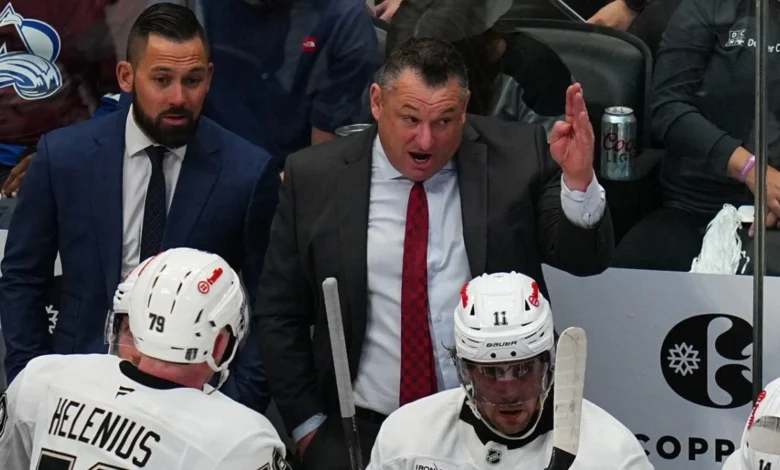
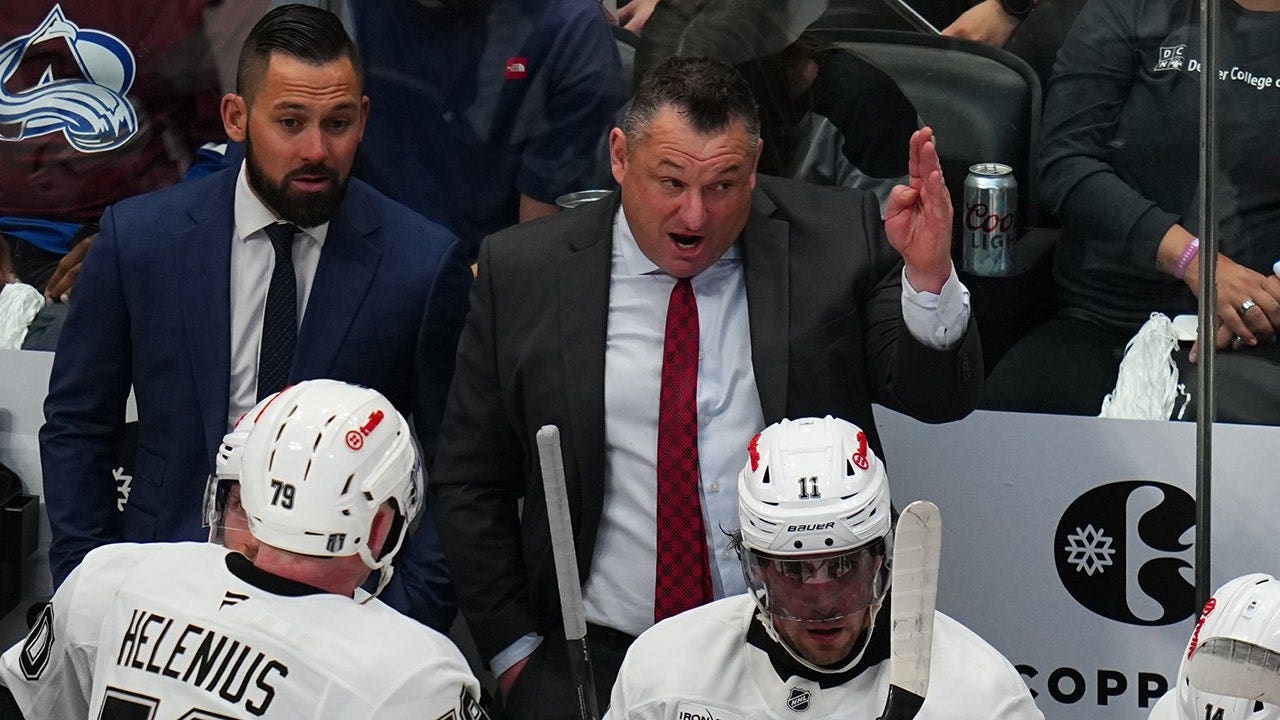
A routine hockey play during Game 2 of the Stanley Cup Playoffs between the Colorado Avalanche and the Los Angeles Kings on Tuesday night took a dramatic and potentially dangerous turn, as a section of the glass behind the Kings’ bench shattered due to the enthusiastic actions of Avalanche fans. Los Angeles Kings head coach D.J. Smith found himself narrowly avoiding injury when shards of glass rained down on him following a save by Colorado goaltender Scott Wedgewood. The incident, which brought the game to a halt and prompted a significant delay, underscored the intense atmosphere of playoff hockey and raised questions about fan conduct and arena safety protocols.
The dramatic moment occurred in the first period of Game 2, with the score deadlocked at 0-0. Following Wedgewood’s crucial save on Kings forward Quinton Byfield, the raucous crowd at the Ball Arena in Denver erupted in a frenzy of cheers and physical expressions of support. Fans, positioned directly behind the Kings’ bench, began banging on the plexiglass enclosure with a fervor that, in this instance, proved too much for the structural integrity of the arena’s barrier. The repeated impacts, amplified by the collective excitement, caused a significant pane of the glass to fracture and then shatter, sending pieces cascading onto the ice and narrowly missing Coach Smith.
Smith, caught off guard by the sudden shower of glass, instinctively covered his head and then quickly brushed himself off before exiting the bench to be checked by team medical personnel. The immediate concern was for his well-being, though thankfully, he appeared to escape serious harm. The incident immediately drew the attention of game officials and arena staff, who scrambled to assess the situation and ensure player and coach safety.
The delay, estimated to be around 15 minutes, allowed for the arena’s conversion crew to swiftly replace the damaged section of glass. This provided a stark visual reminder of the raw energy and passion that playoff hockey can ignite, sometimes leading to unforeseen consequences. The game eventually resumed, but the unusual interruption had undoubtedly added an extra layer of drama to an already high-stakes contest.
A Near Miss and a Collective Response
Following the game, Coach Smith himself addressed the incident, describing the intensity of the fan reactions. "Whoever the guy (was) just kept pushing and pushing and pushing," he recounted. "I looked back because it hit me a bunch of times, then it broke." His account highlights the persistent nature of the fan engagement that ultimately led to the glass failure. While Smith was able to return to the game and resume his coaching duties, the close call served as a significant talking point and a moment of concern for the Kings organization and the wider NHL community.
The Colorado Avalanche, riding the momentum of their home crowd and the dramatic pause, ultimately secured a 2-1 victory in overtime, thanks to a game-winning goal from Nicolas Roy. This win not only tied the series at 2-0 in favor of the Avalanche but also cemented the night’s events as a memorable, albeit unconventional, chapter in the playoff series.
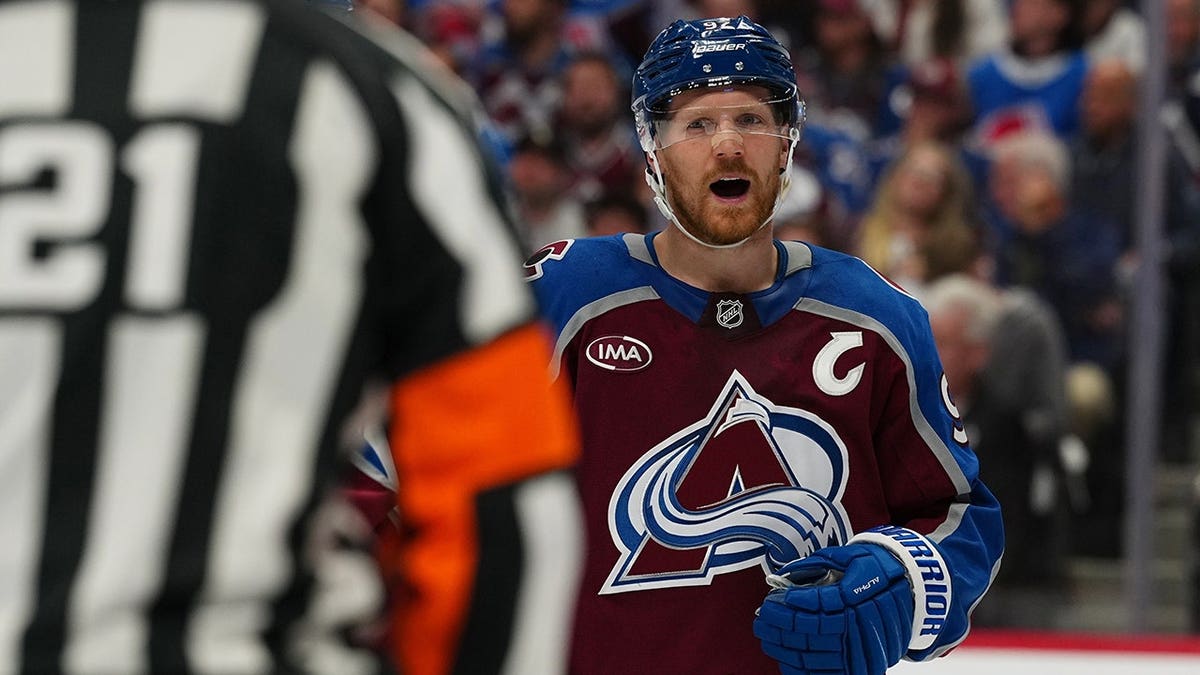
Avalanche star forward Gabriel Landeskog acknowledged the intensity of the fan response, admitting he was "loud" during Wedgewood’s save. He attributed the incident to the fans getting "a little too excited," a sentiment that resonated with the home team’s perspective. "There’s nothing you can do to control it. There’s nothing you can do about it, so you just deal with it," Landeskog stated regarding the delay. He also noted a potential, albeit minor, impact on the ice quality due to the multiple personnel on the ice for the cleanup and repair. "I think maybe the only thing was that there were so many bodies on the ice that it (wore) the ice out a little bit for the rest (of the period)," he mused, adding, "I thought the ice crew did a good job and they did their best to fix it as fast as possible. Doesn’t happen every day."
Colorado head coach Jared Bednar, a seasoned observer of the game, admitted the situation was unprecedented in his coaching career. "That’s a different one," Bednar commented. "But, I mean, stuff happens. Fans get excited. Our guys were excited, competing hard. There was a bunch of melees on the ice today. It felt like playoff hockey." His remarks underscored the perceived authenticity and intensity of the playoff atmosphere, suggesting that such passionate displays, while sometimes leading to unexpected occurrences, are a hallmark of the postseason.

Context of Playoff Intensity and Arena Safety
The Stanley Cup Playoffs are renowned for their heightened intensity, a palpable shift from the regular season where emotions can run high and fan engagement often reaches fever pitch. Arena environments, particularly in passionate hockey cities like Denver, are designed to amplify this excitement. The glass surrounding the rink serves not only as a safety barrier for spectators but also as a visual element that separates the controlled environment of the game from the passionate fervor of the crowd.
While arena glass is engineered to withstand significant impacts from pucks and players, the cumulative effect of repeated, forceful impacts from enthusiastic fans can, as demonstrated, pose a risk. The incident raises a broader discussion about the balance between allowing fans to express their passion and ensuring the safety of all participants, including coaches and players who are in close proximity to the boards.
This particular incident, while not resulting in serious injury, serves as a cautionary tale. The financial cost of replacing the damaged glass, while likely negligible for a major league arena, is secondary to the potential for injury. In the past, similar incidents, though less dramatic, have occasionally led to minor cuts or concussions for players or personnel who have been struck by debris. The proximity of Coach Smith to the shattering glass highlights the vulnerability of individuals positioned near the boards during moments of extreme crowd reaction.
Broader Implications and Future Considerations
The shattered glass incident in Denver is likely to prompt a review of fan engagement policies and the structural integrity of arena glass in high-intensity sporting events. While the NHL and its teams encourage passionate fan support, ensuring that this enthusiasm does not compromise safety is paramount. It’s possible that arena management might re-evaluate the placement and frequency of security personnel in sections with particularly boisterous fan sections, or implement subtle reminders to fans about responsible engagement.
The nature of the incident, directly linked to a specific game event – a save by the goaltender – suggests that such occurrences are intrinsically tied to the ebb and flow of the game and the emotional responses they elicit. The fact that the score was tied at zero at the time of the incident may have amplified the importance of the save in the minds of the fans, leading to an even more pronounced reaction.
Looking ahead, the focus for both the Avalanche and the Kings will shift to Game 3, scheduled for Thursday night in Los Angeles. The Avalanche will aim to extend their series lead on home ice, while the Kings will be looking to rebound and defend their home advantage. The memory of the shattered glass, however, will likely linger as a peculiar footnote to this intense playoff battle, a reminder that in the heat of competition, unexpected events can occur, and that the line between fervent support and potential hazard can sometimes be as thin as a pane of glass.
The underlying narrative of the game itself continued with the Avalanche taking a commanding 2-0 series lead. The victory, secured in overtime, was a testament to their resilience and ability to capitalize on crucial moments, even after the unexpected interruption. For the Los Angeles Kings, the loss compounded the disappointment of the playoff scare, leaving them with a significant deficit to overcome as the series heads to California. The outcome of Game 2, combined with the unusual glass-shattering incident, sets a dramatic stage for the remainder of this highly anticipated Stanley Cup playoff series.
The date of the incident, April 21, 2026, places it within the context of the modern NHL, where technology and player safety are increasingly scrutinized. While the source material notes the date, it’s important to recognize that such events, while rare, are part of the sport’s history and evolution. The immediate response by the arena crew, the quick return to play, and the relatively minor impact on the game’s progression speak to the preparedness of professional sports venues for such contingencies. However, the visual impact and the narrative it generated underscore the unpredictable nature of live sports and the potent connection between athletic performance and fan emotion. The "conversion crew" efficiently restoring the playing surface also highlights the professionalism and efficiency of NHL arena operations. The incident also provides an opportunity to reflect on the physical demands placed on players and coaches, and the ways in which the environment itself can become a factor in the game.