From the Green New Deal to Green Economic Populism: The Rise of a Working-Class Climate Agenda


The environmental movement in the United States is undergoing a fundamental rhetorical and strategic shift, moving away from the broad, aspirational language of the "Green New Deal" toward a more targeted, pocketbook-focused framework known as "green economic populism." This transition, catalyzed by a new climate agenda released by the Climate and Community Institute, seeks to address the dual crises of climate change and the rising cost of living by prioritizing immediate financial relief for the working class. By framing climate action through the lens of affordability—specifically targeting home insurance rates, utility costs, and housing—progressives are attempting to build a more durable political coalition that can withstand the volatile shifts of American federal policy.
The Evolution of Progressive Climate Strategy
The origins of this shift date back nearly a decade. Eight years ago, the "Green New Deal" emerged as a dominant slogan and political philosophy, drawing inspiration from President Franklin D. Roosevelt’s 1930s-era public investment programs. It was a sweeping vision that linked job creation and social justice with aggressive carbon reduction. The movement gained significant traction in 2018 and 2019, eventually forcing then-candidate Joe Biden to incorporate more ambitious climate goals into his 2020 platform.
However, the legislative reality proved more constrained. The Biden administration’s primary climate achievement, the Inflation Reduction Act (IRA), was a compromise that relied heavily on tax credits and market incentives rather than the massive public works projects envisioned by the Green New Deal’s original proponents. While the IRA represented the nation’s first comprehensive climate policy, its impact on the average voter’s daily expenses remained largely indirect.
The political landscape shifted further as national policy wins faced aggressive dismantling during the subsequent administration. Under President Donald Trump, many of the environmental regulations and international commitments established during the previous four years were reversed. This period of "soul-searching" for the Democratic party has led to the current consensus: for climate policy to survive political transitions, it must be perceived as an essential tool for economic survival rather than an abstract environmental goal.
Defining Green Economic Populism
The "working-class climate agenda" introduced by the Climate and Community Institute represents a tactical pivot. Unlike previous iterations of environmentalism that focused on carbon taxes or cap-and-trade systems—mechanisms that can inadvertently raise costs for consumers—green economic populism focuses on "downward redistribution."
Key pillars of this new agenda include:
- Regulatory Interventions: Implementing home insurance rate caps and bans on utility shutoffs to protect households from the rising costs of extreme weather.
- Public Services: Promoting free transit and a moratorium on energy-intensive data centers that strain the electrical grid and drive up prices for residential consumers.
- Direct Benefits: Expanding access to heat pumps, induction stoves, and electric vehicles (EVs) specifically for lower-income households, addressing criticisms that previous EV tax credits primarily benefited the wealthy.
- Housing Stability: Implementing rent caps or freezes, which advocates argue is a climate solution because affordable urban housing reduces the necessity for long-distance, carbon-heavy commutes.
Patrick Bigger, research director at the Climate and Community Institute, notes that while the Green New Deal remains an inspiration, the current economic climate requires a more grounded approach. "We recognize that we’re in a radically different place, politically, socially, economically now than we were eight years ago," Bigger stated, emphasizing the need for policies that provide "tangible results" quickly.
The Economic Data: Connecting Climate to the Pocketbook
The pivot toward affordability is supported by a growing body of economic data linking environmental degradation to household expenses. American voters consistently rank the cost of food, housing, and healthcare as their primary concerns. Climate advocates are now "connecting the dots" between these costs and a warming planet.
A 2023 analysis by the Brookings Institution revealed that the hidden costs of climate inaction are already burdening the average American family. The study found that wildfire smoke, flooding, and heat-related health issues cost the average household between $219 and $571 annually. Furthermore, "heatflation"—a term used by economists to describe how extreme heat diminishes agricultural yields—has been a significant driver of rising food prices globally.

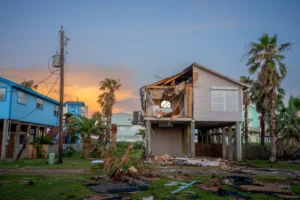
The insurance market provides perhaps the most visceral example of this economic link. In states like Florida and California, extreme weather risks have led major insurers to spike rates or withdraw from the market entirely, leaving homeowners with soaring premiums. By proposing insurance rate caps as a "climate policy," progressives are attempting to address the financial symptoms of the climate crisis in a way that resonates with suburban and rural voters alike.
A Chronology of U.S. Climate Policy Shifts (2016–Present)
To understand the current rise of green economic populism, it is necessary to examine the timeline of federal climate action over the last decade:
- 2016–2017: The U.S. withdraws from the Paris Agreement under the Trump administration, signaling a retreat from federal climate leadership and a focus on fossil fuel expansion.
- 2018–2019: The "Green New Deal" resolution is introduced by Representative Alexandria Ocasio-Cortez and Senator Ed Markey, shifting the national conversation toward large-scale public investment.
- 2021: The Biden administration rejoins the Paris Agreement and proposes the "Build Back Better" framework, which includes significant climate provisions.
- 2022: The Inflation Reduction Act (IRA) is signed into law. While a landmark achievement, critics argue its benefits are too slow to reach the working class.
- 2023–2024: Political shifts lead to the dismantling of key IRA components and environmental regulations. The "working-class climate agenda" is developed as a response to this vulnerability.
- 2025 (Present): The Climate and Community Institute releases its agenda, officially codifying the "Green Economic Populism" framework.
Geopolitical Catalysts and Energy Independence
The current global landscape has provided a unique opening for this populist framing. Geopolitical instability, particularly conflicts in the Middle East affecting oil supplies, has highlighted the economic fragility of fossil fuel dependence. Daniel Aldana Cohen, a sociologist at the University of California, Berkeley, argues that this creates a rhetorical advantage for clean energy advocates.
"Fossil fuels are unreliable. They drive up your cost of living. They cause wars and people die," Cohen said. The populist argument posits that a transition to green energy is not just about saving the planet, but about achieving a "stability" that fossil fuels can no longer provide. By framing heat pumps and electric transit as tools for energy independence, advocates hope to bypass traditional partisan divides.
Local Implementation and Political Viability
The agenda draws heavily from recent local successes. In Seattle, Mayor Katie Wilson won her election on a populist platform that explicitly linked housing density to carbon reduction. Wilson argues that building affordable housing near transit hubs is the most effective way to eliminate the "one-hour commute," which remains the leading source of emissions in many American cities. Similarly, in New York City, Zohran Mamdani’s campaign focused on "public power" and the regulation of utility companies as a central tenet of environmental justice.
Despite these local wins, the agenda faces skepticism from center-left thinkers. Emily Becker of the think tank Third Way characterized the plan as "Biden on steroids," questioning whether its focus on populist regulation might alienate moderate voters or lack the "pragmatism" of the IRA. Becker suggests that advocates should focus on the inherent affordability of clean energy rather than trying to overhaul the entire economic system through populist rhetoric.
Broader Impact and Future Implications
The success of green economic populism will likely depend on its ability to rebuild trust in public institutions. Grace Adcox, a strategist at Data for Progress, points out that while 70 percent of voters believe economic policy can simultaneously lower costs and emissions, there is deep-seated skepticism regarding who will ultimately bear the financial burden of new infrastructure.
The agenda’s "North Star" is a world where climate policy is indistinguishable from economic policy. However, some analysts, like Advait Arun of the Center for Public Enterprise, warn that focusing too narrowly on individual utility bills could limit the "imagination" required for broader structural changes. There is a risk that by pitching climate solutions as mere cost-cutting measures, advocates might fail to build the political will necessary for the massive recovery costs associated with future weather disasters.
As the 2026 midterm elections approach, the "working-class climate agenda" will serve as a litmus test for the progressive movement. If framing climate action as a solution to the cost-of-living crisis succeeds in mobilizing voters, it could provide a durable blueprint for environmental policy that survives even the most radical shifts in the American political landscape. For now, the architects of this plan remain confident that in an era of high inflation and climate volatility, the most effective way to save the environment is to first save the household budget.
Related posts: