UK Government Unveils Strategic Plan to Decouple Electricity Prices from Volatile Gas Markets Amid Global Energy Crisis

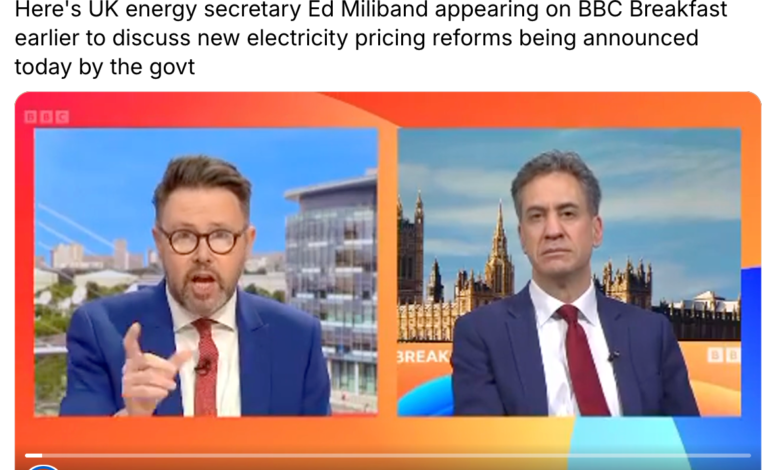
The United Kingdom government has officially launched a comprehensive suite of policy interventions designed to "double down on clean power" and insulate the national economy from the extreme price volatility of the global fossil fuel market. This move comes as a direct response to the escalating energy crisis triggered by the conflict involving Iran, which has sent shockwaves through international commodity exchanges. With gas prices reaching historic highs, the government has signaled a fundamental shift in how the nation’s electricity market operates, aiming to dismantle the decades-old mechanism that allows the cost of natural gas to dictate the price of electricity for households and businesses alike.
The conflict in the Middle East has resulted in a significant spike in fossil fuel costs, a phenomenon that has disproportionately affected countries like the UK, where gas-fired power plants still play a critical role in balancing the grid. In a statement released by the Department for Energy Security and Net Zero (DESNZ), officials confirmed that the government would take "decisive action" to break the link between gas and electricity prices. While there was significant industry speculation regarding more radical market overhauls, such as the total segregation of renewable and fossil fuel markets, the administration has opted for a measured, two-step approach designed to weaken the influence of gas without destabilizing the broader investment climate.
The Chronology of Market Vulnerability
The UK’s current energy predicament is the culmination of several years of external geopolitical shocks. The vulnerability of the British electricity market was first starkly exposed in 2022 following the Russian invasion of Ukraine, which led to a record-breaking surge in wholesale gas prices. At that time, the government introduced temporary measures to mitigate the impact on consumers, but the structural link between gas and power remained intact.
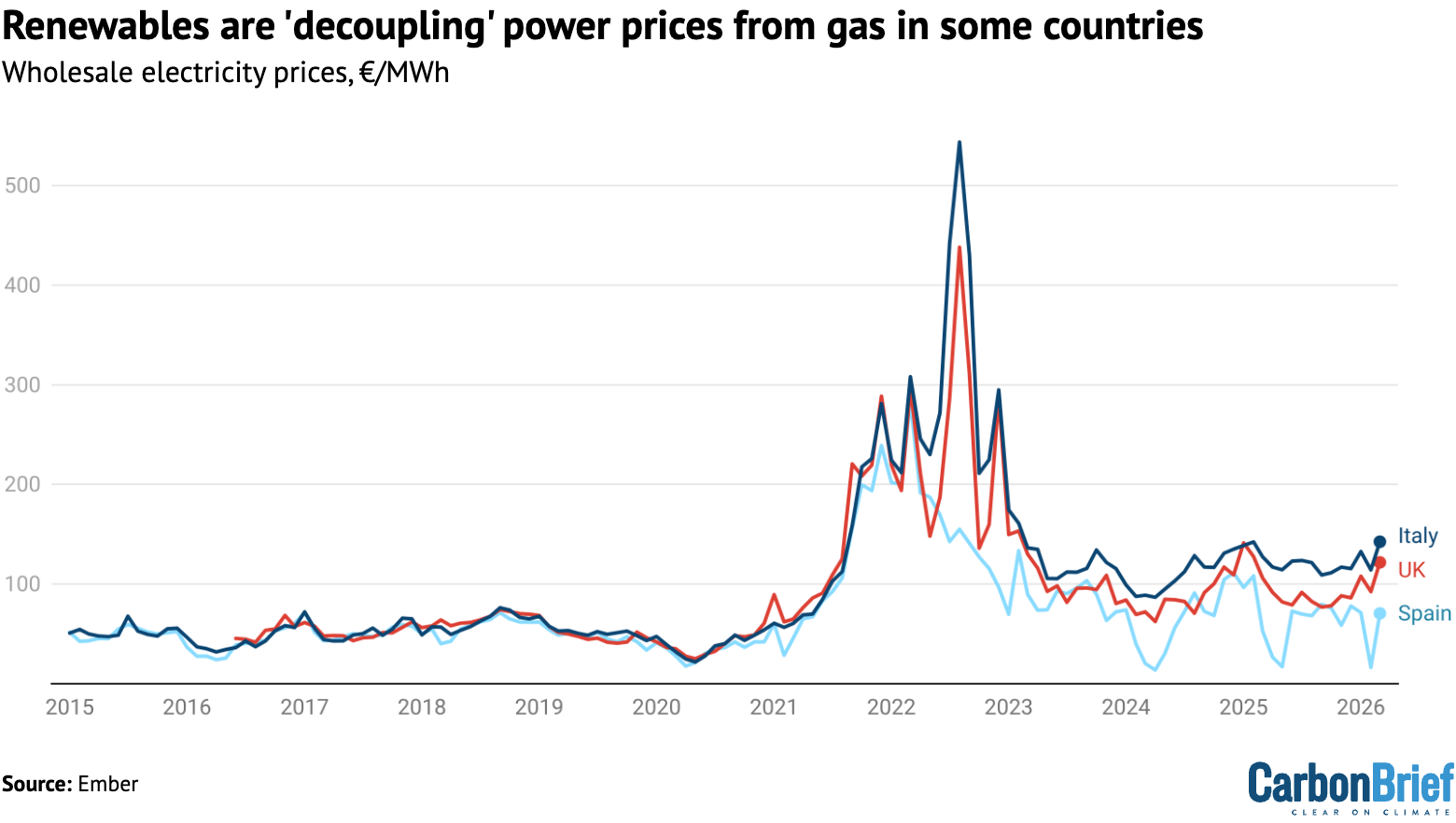
The situation reached a new breaking point in February 2026, following the escalation of military actions involving the United States, Israel, and Iran. This conflict disrupted key supply routes and heightened fears of a long-term shortage of liquefied natural gas (LNG). As global gas prices soared, the UK’s wholesale electricity prices followed suit, despite the fact that a growing percentage of the nation’s power is generated by low-cost wind and solar installations. This disconnect—where cheap renewable energy is sold at the price of expensive gas—has become the primary target of the government’s new reform package.
Understanding the Marginal Pricing Mechanism
To understand the government’s intervention, it is necessary to examine the "marginal pricing" system that has governed the UK electricity market for years. In this system, all generators are paid the price of the final, most expensive unit of power needed to meet demand at any given moment. Because gas-fired power stations are often the "marginal" generator—the last ones called upon to ensure the lights stay on—they effectively set the price for the entire market.
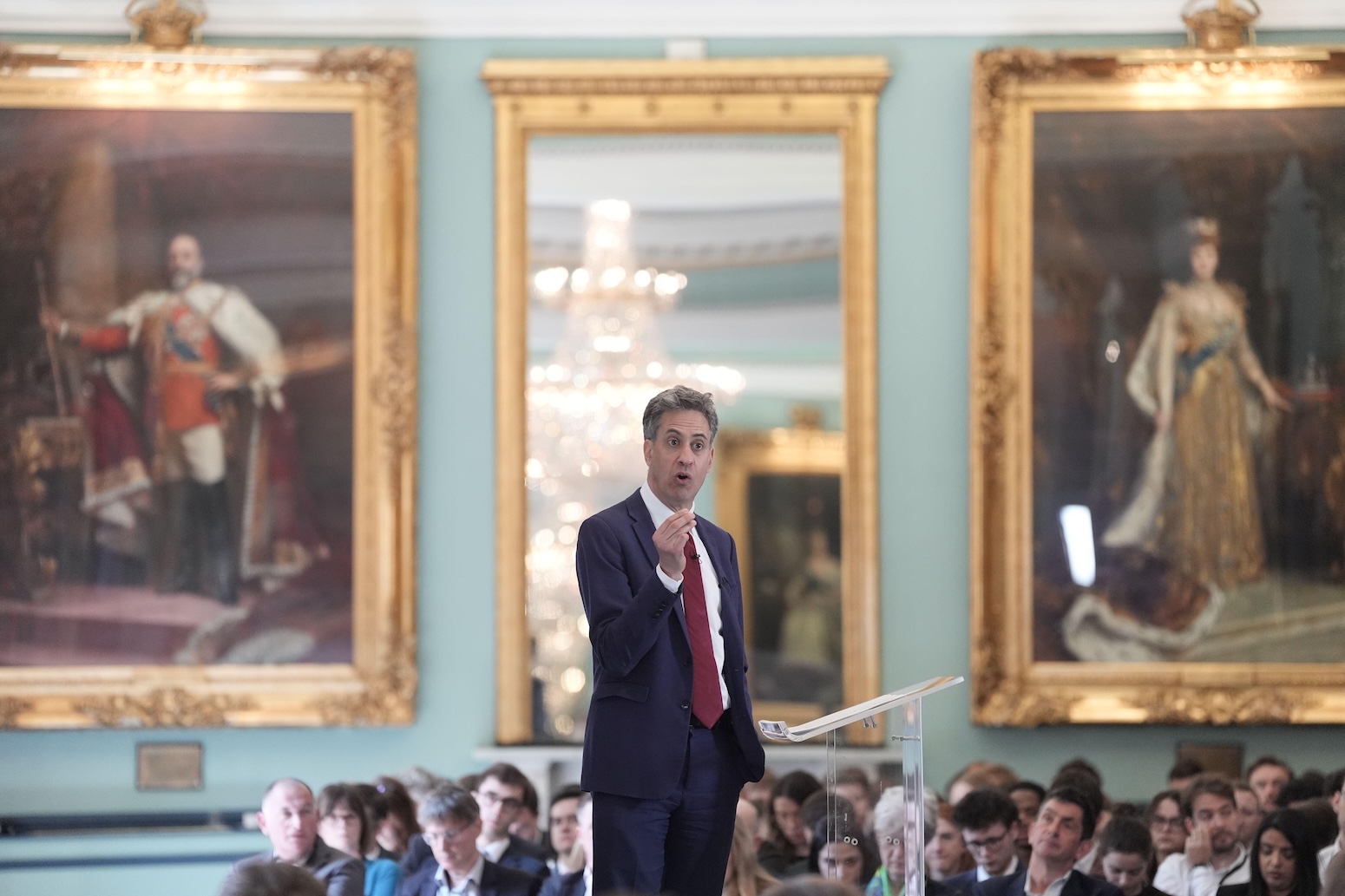
According to data from DESNZ, the share of hours where gas sets the price of power in Great Britain has declined from over 90% in 2021 to approximately 60% in 2024. However, despite the expansion of the renewable sector, gas still exerts a dominant influence over the wholesale market. The National Energy System Operator (NESO) has estimated that to reach the government’s 2030 clean power targets, the share of hours where gas sets the price must fall to just 15%. The current reforms are viewed as a bridge to that future, targeting the "windfall" profits currently being enjoyed by older renewable projects that still operate under legacy market rules.
The Two Pillars of the Government’s Strategy
The government’s plan rests on two primary policy levers: an increase in the windfall tax on electricity generators and a voluntary transition for older renewable projects toward fixed-price contracts.
1. Expansion of the Electricity Generator Levy (EGL)
The government has announced a significant hike in the Electricity Generator Levy (EGL), a windfall tax originally introduced by the Conservative administration in 2022. Under the new rules, the tax rate will increase from 45% to 55%, effective July 1, 2026. Furthermore, the levy, which was initially set to expire in 2028, has been extended indefinitely to ensure that "exceptional revenues" resulting from geopolitical crises are recaptured by the state.
Chancellor Rachel Reeves defended the move in the House of Commons, stating that the additional revenue would be used to support businesses and families struggling with the cost-of-living crisis. "This ensures that a larger proportion of any exceptional revenues from high gas prices are passed back to the government," Reeves said. "It provides a vital revenue stream so that money is available to support those most impacted by the conflict in the Middle East."
2. The Move Toward Fixed-Price Contracts
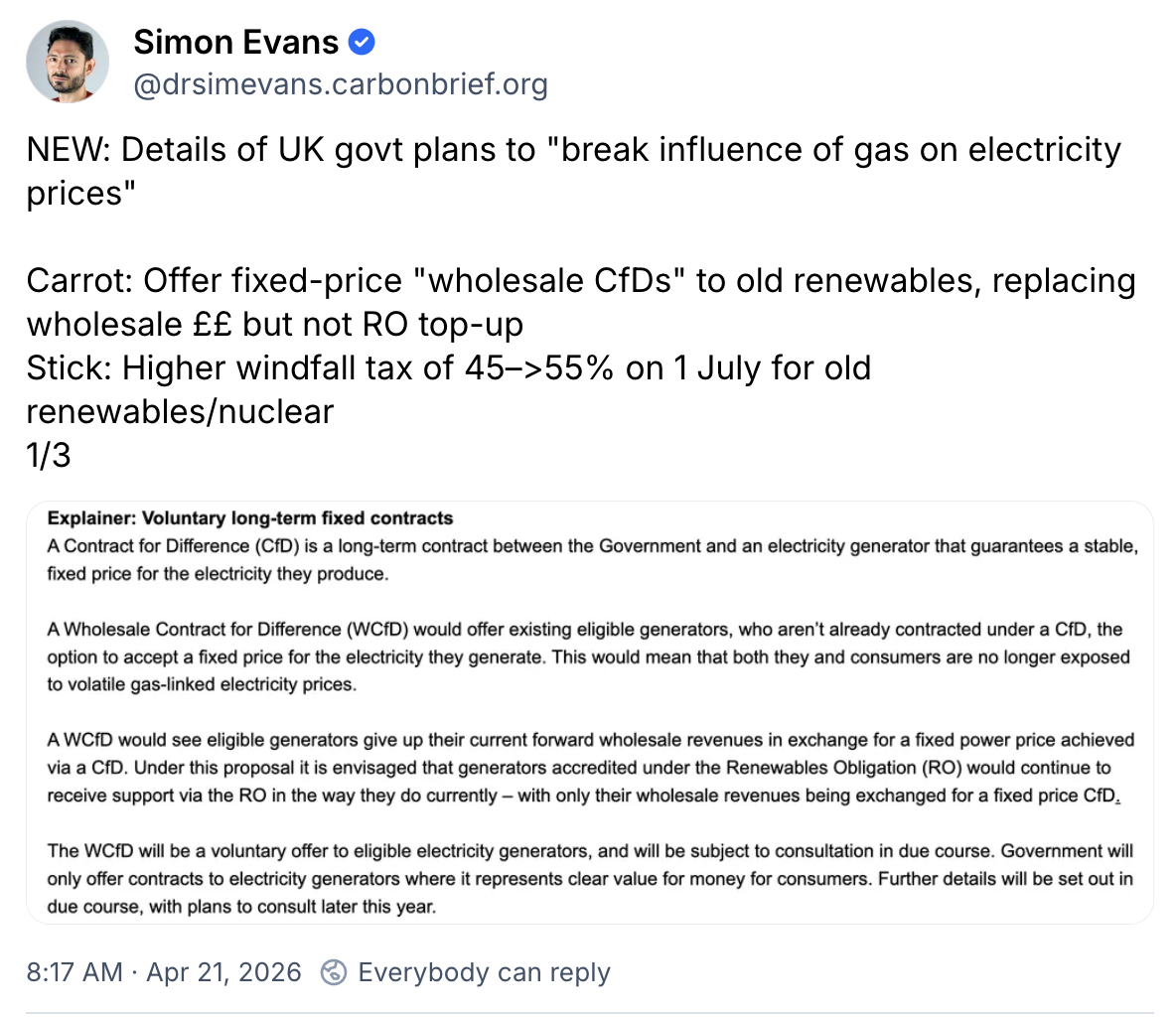
The second, and perhaps more structurally significant, pillar of the plan is the push to move older renewable energy projects onto fixed-price "Contracts for Difference" (CfDs). Currently, about one-third of the UK’s electricity generation comes from projects built under the older "Renewables Obligation" (RO) scheme. These projects receive a subsidy but still sell their electricity at the prevailing wholesale market price, meaning they benefit financially when gas prices drive up electricity costs.
The government intends to offer these generators a voluntary "wholesale CfD." Under this arrangement, generators would receive a guaranteed, fixed price for their electricity, exempting them from the 55% windfall tax. This move is designed to replicate the "Pot Zero" proposal long advocated by the UK Energy Research Centre (UKERC). By moving these generators to fixed prices, the government effectively "delinks" their output from the fluctuations of the gas market.
Industry Reactions and Economic Analysis
The reaction from the energy sector and academic community has been one of cautious optimism, tempered by concerns over the scale of the immediate impact on consumer bills.
Callum McIver, a research fellow at the University of Strathclyde and a member of the UKERC, described the proposals as a "big step in the right direction." However, he noted that the impact on household bills might be "relatively modest" in the short term. The UKERC’s original "Pot Zero" proposal suggested that a full-scale reform could save consumers up to £10 billion a year—approximately £120 per household—but the government’s voluntary and incremental approach may yield lower figures initially.
Marc Hedin, head of research for Western Europe at Aurora Energy Research, observed that while the government’s rhetoric suggests a "decisive shift," the reality is more "incremental." He warned that the success of the plan depends heavily on the "strike price" offered in the new contracts. "Poorly calibrated prices would transfer value to generators at consumers’ expense, while overly aggressive pricing could result in low participation," Hedin explained.
There are also concerns regarding investor confidence. Johnny Gowdy, a director at the thinktank Regen, noted that a higher windfall tax could "spook investors" at a time when the UK needs massive capital injections to meet its 2030 net-zero targets. "The challenge for policymakers is that while the EGL carries an investment risk downside, the tax revenue could be quite modest unless there is a very significant increase in wholesale prices," Gowdy wrote.
Rejected Alternatives and Strategic Reserves
Notably, the government has chosen to ignore several more radical proposals that had been circulating in policy circles. This includes the "Green Power Pool" concept, which would have created a separate market for renewable energy, and "Pay-as-Bid" pricing, where generators are paid only what they bid rather than the marginal market price. Analysts had previously warned that "Pay-as-Bid" would likely lead to "strategic bidding," where generators simply guess the marginal price, resulting in little to no savings for consumers.
Furthermore, the administration declined to move gas-fired power stations into a "strategic reserve." This proposal, championed by Greenpeace and the consultancy Stonehaven, suggested that keeping gas plants outside the daily market could save consumers £6 billion annually. However, critics argued that this would distort the market and remove the incentive for companies to invest in battery storage and demand-side flexibility—technologies essential for a weather-dependent grid.
Long-Term Implications for the UK Energy Mix
As the UK navigates the fallout of the Iran war, the government’s strategy represents a clear commitment to the energy transition as a matter of national security. By incentivizing a move toward fixed-price contracts, the UK is attempting to build an electricity system where the cost of power is determined by the capital costs of wind turbines and solar panels rather than the geopolitical whims of oil and gas-producing nations.
The Department for Energy Security and Net Zero will begin a formal consultation on the details of the new fixed-price contracts later this year, with the first auctions expected in 2027. In the meantime, the increase in the windfall tax serves as both a fiscal tool to fund consumer support and a "nudge" to encourage generators to opt into the more stable CfD framework.
While the "decoupling" of gas and electricity prices will not happen overnight, the measures announced this week mark the beginning of the end for the marginal pricing era in the United Kingdom. If successful, the reforms will create a more predictable pricing environment, protecting the British economy from future energy shocks and solidifying the role of clean energy as the backbone of the nation’s power grid. For now, however, the immediate relief for households will depend on the speed of implementation and the willingness of the energy industry to embrace a new, less volatile era of power generation.
Related posts: