The Abrupt Halt of Federal Solar Incentives Leaves American Farmers and Rural Energy Developers in Limbo

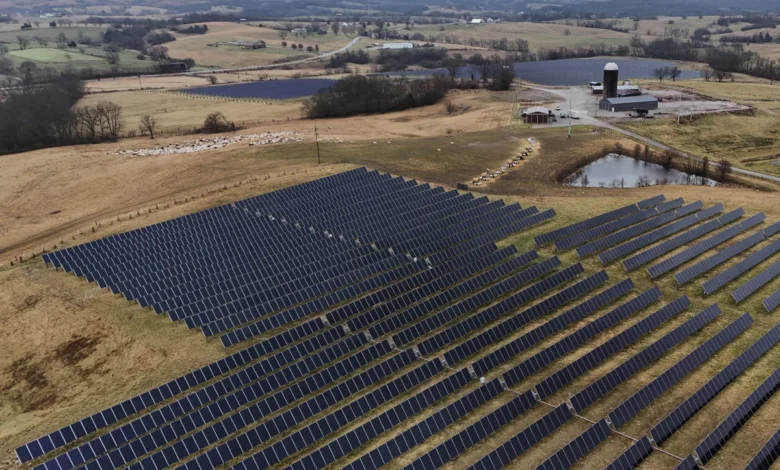
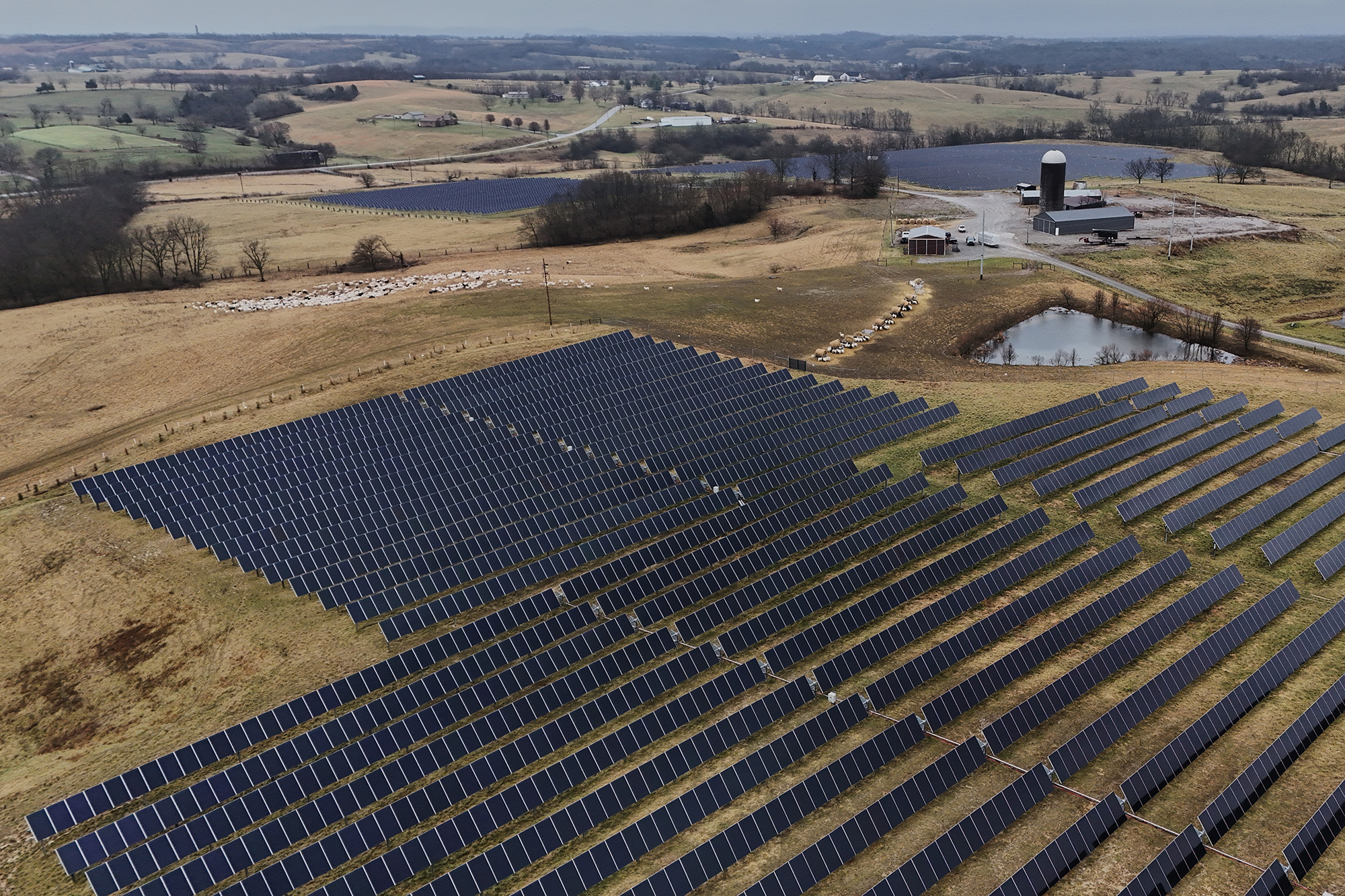
Over the past several years, Daniel Bell, a sheep farmer in Lancaster, Kentucky, has focused on a singular goal: expanding his flock to ensure the long-term viability of his family business. As his operations grew, so did the necessity for infrastructure, specifically a new barn to house his livestock and equipment. However, Bell’s land is situated far from existing municipal power lines, making the cost of connecting to the traditional electrical grid prohibitively expensive. For Bell, the solution was clear: rooftop solar panels. This technology offered the promise of energy independence and a way to mitigate the rising costs of utilities that often squeeze the thin profit margins of American agriculture.
To finance the project, Bell intended to apply for a grant through the U.S. Department of Agriculture’s (USDA) Rural Energy for America Program, commonly known as REAP. This long-standing federal initiative was designed specifically to help farmers and rural small businesses transition to renewable energy. However, Bell’s plans were derailed when he discovered that the administration had effectively halted the issuance of grants through the program. The sudden lack of federal support made the installation of solar on his own land a financial impossibility. For Bell, the issue transcends simple economics; it is a matter of autonomy. "For me, it’s just been about freedom," Bell said. "Freedom to lower bills, freedom to control my own assets."
Bell’s situation is far from unique. Across the United States, farmers are increasingly turning to renewable energy as a dual-purpose strategy to lower overhead and create secondary income streams. Some install small-scale arrays on barns and grain elevators to power their own operations, while others lease fallow or less-productive land to commercial solar developers. Yet, a comprehensive analysis by The Associated Press and Grist reveals that the federal support systems underpinning this transition have been significantly curtailed. Within the first year of the current administration’s second term, two pillars of rural renewable growth—the REAP program and the federal clean energy tax credit—have been rolled back or suspended, creating a wave of uncertainty that stretches from small family farms to multi-million-dollar energy corporations.
The Collapse of Federal Support: A Data-Driven Analysis
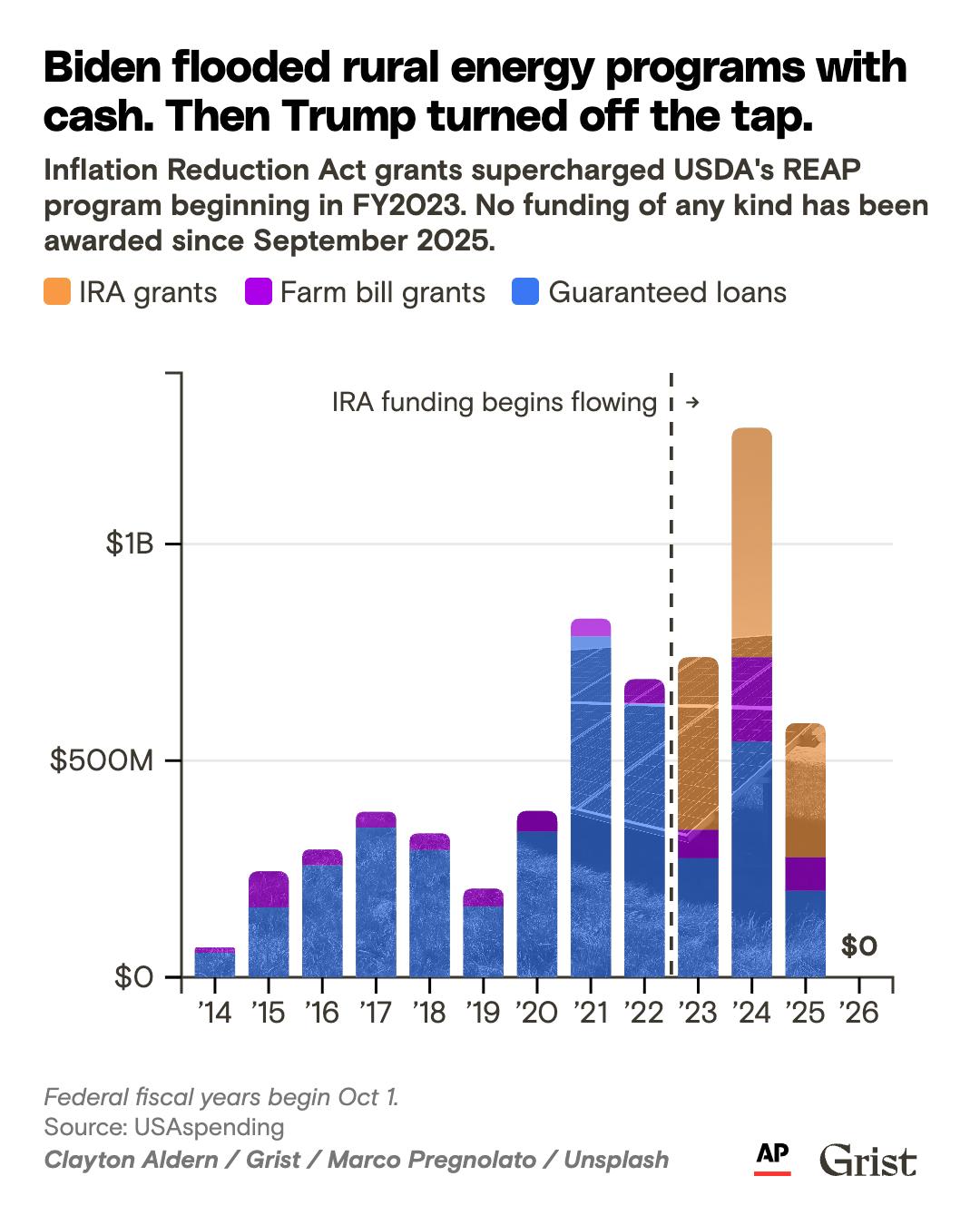
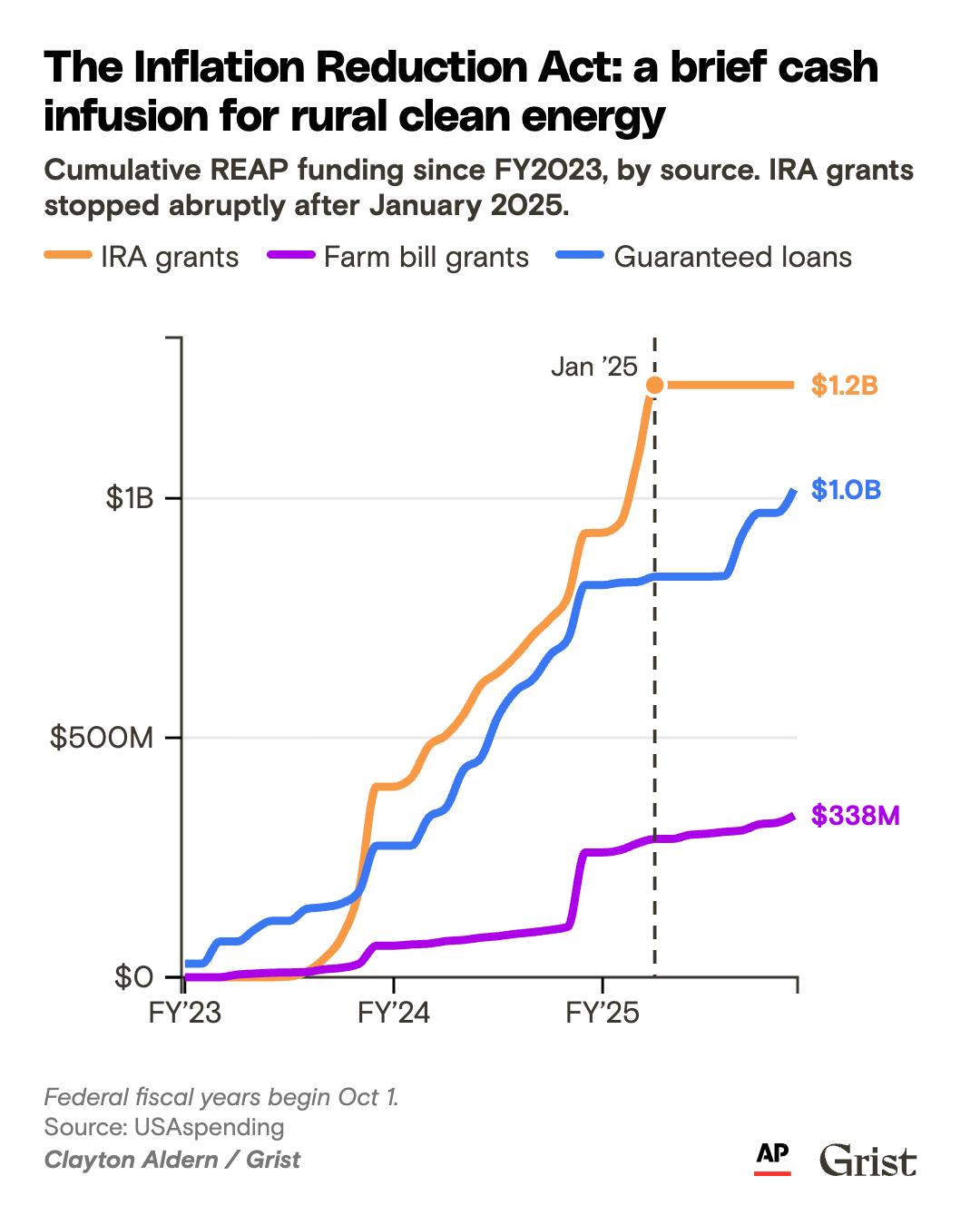
The shift in federal policy has had an immediate and measurable impact on the ground. According to data analyzed from the USDA and the Energy Information Administration (EIA), the federal government has not awarded a single dollar in rural energy grants or loan guarantees so far this fiscal year. This marks a stark departure from the previous three years, during which the Inflation Reduction Act (IRA) of 2022 flooded the USDA with billions of dollars to supercharge rural clean energy initiatives.
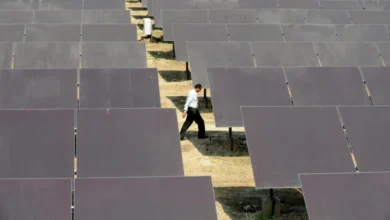
Reporters contacted approximately 75 of the nearly 300 developers who have proposed solar projects on agricultural land over the last 24 months. The findings indicate a sector in retreat. Many developers are now scrambling to restructure their business models to survive without federal subsidies, while others have already reported losses totaling millions of dollars in sunk investment costs. The analysis of EIA data identified at least 126 solar projects proposed since early 2024 that are currently awaiting regulatory approval. These projects, often located on or near agricultural land, represent approximately 20 gigawatts of potential electricity—enough to power roughly 4.5 million homes. Without the stability of federal tax credits and grants, the future of this 20-gigawatt pipeline remains in jeopardy.
A Chronology of Renewable Energy Policy
To understand the current state of rural solar, one must look at the legislative history of the last two decades. The foundation for the modern solar industry was laid with the Energy Policy Act of 2005, signed by President George W. Bush. This legislation enacted a 30 percent investment tax credit (ITC) for large-scale clean energy projects, providing the financial certainty needed for the industry to scale. This credit saw bipartisan support for years, receiving extensions under both President Barack Obama and during the first term of President Donald Trump in 2020.
The landscape changed dramatically in 2022 with the passage of the Inflation Reduction Act. The Biden administration extended the ITC through 2032 and significantly increased funding for the REAP program, transitioning it from a modest grant pool into a major engine of rural economic development. However, the legislative pendulum swung back in July 2024 with the passage of a new tax bill. This legislation retroactively moved the deadlines for clean energy eligibility. Under the current rules, commercial solar projects must be under construction by July 2026 or fully operational by the end of 2027 to remain eligible for the 30 percent credit. For many developers, this compressed timeline is impossible to meet due to the slow pace of local permitting and grid interconnection.
The REAP Program: From Growth to Suspension
The Rural Energy for America Program has historically been one of the USDA’s most popular initiatives. Since its inception nearly 20 years ago, it has funded more than 19,000 grants totaling over $1.8 billion. According to Richa Patel, a policy specialist at the National Sustainable Agriculture Coalition, REAP has been essential in helping farmers weather economic downturns by permanently lowering one of their highest fixed costs: electricity.
However, the program has become a focal point of the current administration’s efforts to roll back Biden-era climate mandates. In early 2025, the USDA froze existing REAP grants, including a $30,576 award promised to Elisa Lane, a flower and fruit farmer in Hampstead, Maryland. Lane had already contracted a solar company and was facing the prospect of being "on the hook" for the full $70,000 cost of her installation.
"Man, was that so stressful," Lane recalled. "I just want to have a farm and be able to focus on my business."
While the USDA eventually released Lane’s funds after a seven-month delay, the agency invited all grantees to "voluntarily revise" their proposals to eliminate language related to climate change and Diversity, Equity, Inclusion, and Accessibility (DEIA). On March 31, 2026, the USDA took the further step of announcing a total suspension of all REAP grant awards. The agency stated that the pause is necessary to update regulations to comply with a July executive order. While the USDA spokesperson described the suspension as "temporary," no timeline was provided for when applications might reopen.
The Commercial Fallout: A Race Against Time
For large-scale developers, the shifting federal landscape has triggered a "sprint to the finish" for existing projects and a total halt on new developments. Bogdan Micu, CEO of Alpin Sun, a German solar developer with a significant U.S. presence, reported that his company had to abandon projects representing $6 million in investment in the Northeast alone. The projects would have generated 1,000 megawatts of power, but the new tax credit cutoff made them financially unviable.
"Well, we lost our projects," Micu said. "There was no way for us to speed up that process."
Similarly, RIC Energy North America, based in New York City, is racing to advance 150 projects in its pipeline. Jon Rappe, the company’s CEO, noted that while they are pushing to meet the 2026 construction deadline for current sites, the "next generation" of solar projects is effectively dead in the water. One of these projects is located on the land of Tim Covert, a former dairy farmer in Sheridan, New York. Covert, who has spent the last year battling cancer, views the lease payments from the 15-acre solar array as a critical part of his retirement and recovery plan.

"I don’t think they’re going to stop now, because they have quite a bit of time and money invested in this thing already," Covert said. "So I don’t see them pulling the plug."
Broader Implications for Rural Prosperity
The pullback of federal support for rural solar has sparked a debate about the future of the American farm. Critics of the rollback, including former USDA Undersecretary Robert Bonnie, argue that these programs are about more than just climate change; they are about rural economic survival. "In places like Iowa and Texas, renewables matter—not just for additional power and lower power bills and clean energy, but also for farmers’ pocketbooks," Bonnie said. "Anything you do to pull back on that is hugely problematic."
Conversely, some large-scale developers suggest that the new, more restrictive environment may lead to industry consolidation. Nick Cohen, CEO of Doral LLC, noted that while small developers are struggling, large firms with deep pockets may benefit from the lack of competition. "All the new rules really favor the big guys like us," Cohen said.
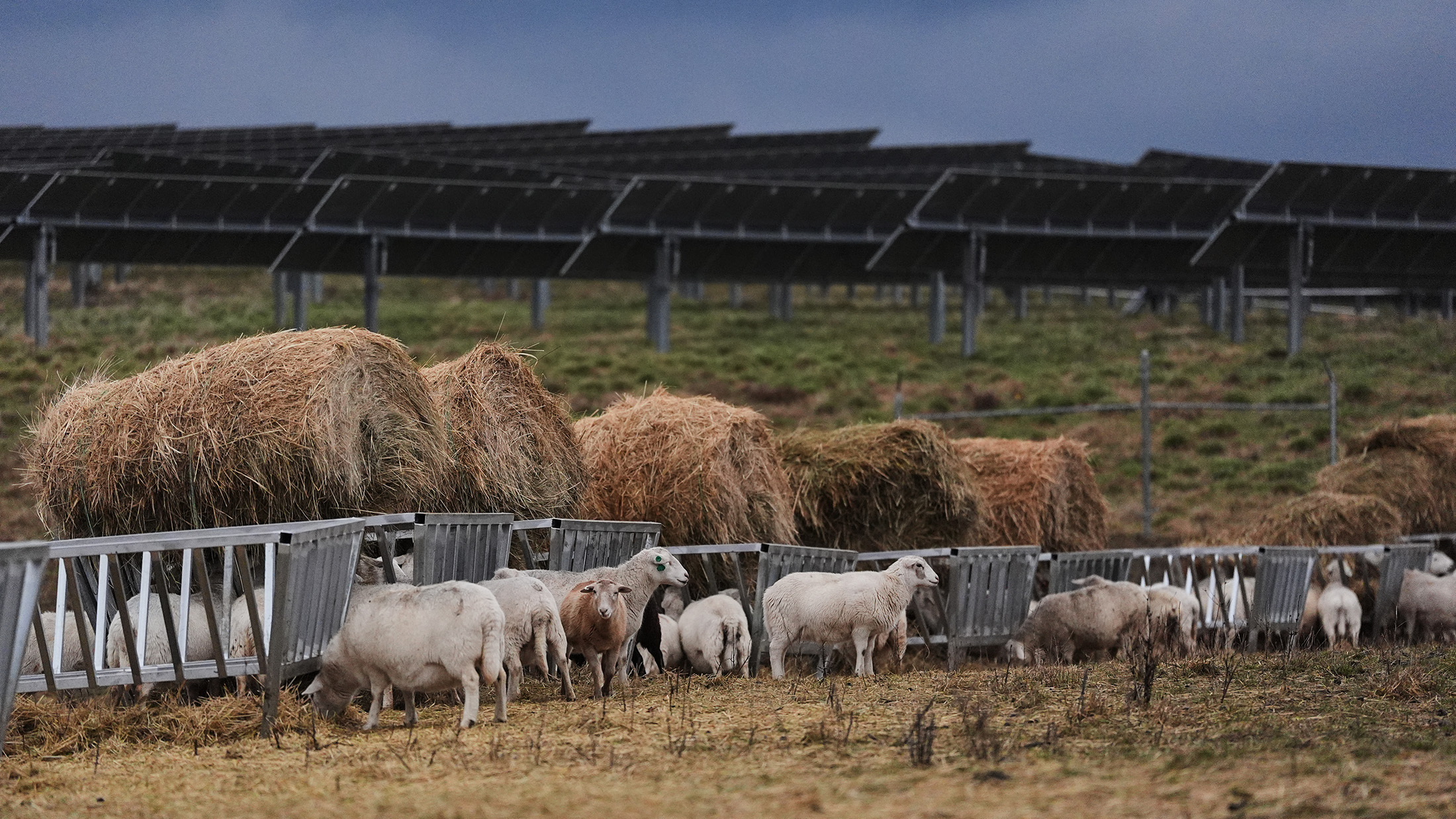
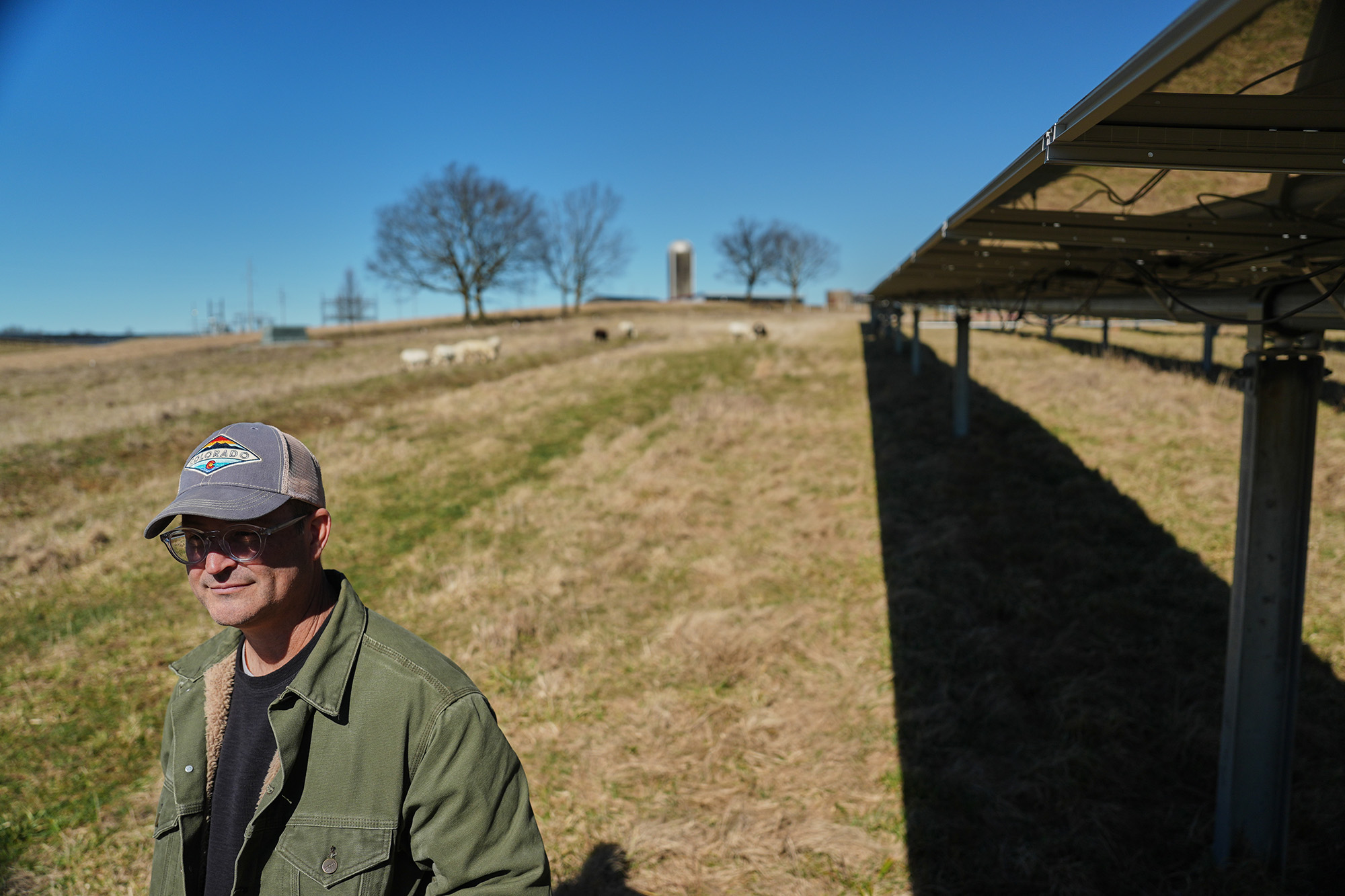
For farmers like Daniel Bell, the solution has been to adapt through "agrivoltaics"—the practice of using land for both solar energy and agriculture. Bell now grazes his sheep beneath solar panels owned by a commercial operation, where the animals keep the grass down, and he avoids the high cost of traditional land management. While this partnership provides him a path forward, it highlights a growing reality in rural America: the "freedom" to control one’s energy future is increasingly dependent on the whims of federal policy and the capacity to navigate a rapidly changing regulatory landscape. As the 2026 deadline approaches, the agricultural sector remains caught between the promise of renewable innovation and the reality of a sudden federal retreat.
Related posts: