
South Africa S Genocide Case Against Israel Rallies Global South Support
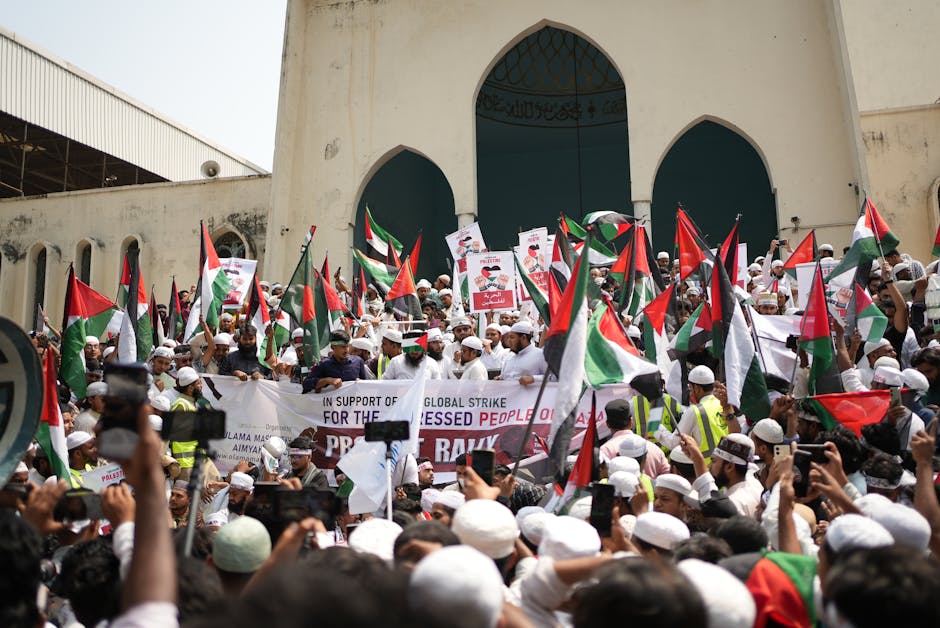
South Africa’s Genocide Case Against Israel Rallies Global South Support
South Africa’s groundbreaking legal action against Israel at the International Court of Justice (ICJ) concerning alleged violations of the Genocide Convention in Gaza has ignited a significant wave of solidarity from nations within the Global South. This legal challenge, filed in December 2023, has transcended regional boundaries, resonating deeply with countries that have historically experienced or continue to face oppression, colonialism, and systemic injustice. The case, formally titled The Gambia v. Myanmar but referring to the situation in Gaza, accuses Israel of committing genocidal acts against Palestinians, a charge Israel vehemently denies. The Global South’s response, characterized by vocal endorsements, direct participation as amici curiae (friends of the court), and diplomatic maneuvers, underscores a collective identity forged through shared experiences and a perceived need to uphold international law against perceived powerful actors.
The core of South Africa’s argument rests on establishing genocidal intent, a notoriously difficult threshold to meet in international law. Pretoria meticulously presented evidence, including statements by Israeli officials, the scale of civilian casualties and destruction in Gaza, and the humanitarian crisis, arguing these elements point towards an intent to destroy Palestinians in Gaza, in whole or in part. The court’s preliminary ruling in January 2024, which ordered provisional measures to prevent genocidal acts and ensure humanitarian aid, was hailed as a significant victory by South Africa and its supporters, even though it did not rule on the ultimate question of genocide itself. This ruling, however, served as a powerful catalyst, galvanizing support from Global South nations who viewed it as a crucial step in holding a powerful state accountable under international law.
The Global South’s alignment with South Africa’s case is multifaceted. Many nations in Africa, Asia, and Latin America share a history of colonial subjugation and struggle for self-determination. They often view the Palestinian struggle as a continuation of these historical narratives, a fight against occupation and dispossession by a state with significant backing from Western powers. This shared historical consciousness creates an inherent empathy and a sense of solidarity with the Palestinian people and, by extension, with South Africa’s legal initiative. For these nations, the ICJ case represents an opportunity to challenge the perceived double standards in international justice, where powerful states, particularly those aligned with Western blocs, often appear to operate with impunity.
Furthermore, the concept of collective responsibility and the sanctity of international law are central to the Global South’s perspective. Many countries in this bloc have been instrumental in the development and ratification of international human rights and humanitarian law conventions, including the Genocide Convention. They see upholding these legal frameworks as crucial for maintaining global peace and security and for protecting vulnerable populations. The perceived erosion of these principles, particularly when seemingly disregarded by powerful nations, is a grave concern. South Africa’s case, therefore, is not just about the specific situation in Gaza; it’s about reinforcing the very foundations of international law and ensuring its equitable application.
Several countries have actively demonstrated their support. Malaysia, for instance, has been a vocal proponent, participating in diplomatic discussions and offering political backing. Turkey, though sometimes considered a bridge between the Global South and other blocs, has also been a strong critic of Israel’s actions and has expressed solidarity with South Africa’s legal efforts. Many Organization of Islamic Cooperation (OIC) member states, representing a significant portion of the Global South, have echoed these sentiments, calling for accountability and justice for Palestinians. The African Union (AU) has also reiterated its support for the Palestinian cause and has engaged in diplomatic efforts to address the ongoing conflict.
Beyond overt political statements, the Global South’s support manifests in more nuanced ways. There’s an increased willingness to challenge narratives that are dominant in Western media and political discourse. This involves amplifying alternative perspectives, highlighting Palestinian voices, and questioning the geopolitical motivations behind certain international responses. The case has fostered a sense of shared purpose and a platform for these nations to collectively voice their concerns on the global stage, often operating outside the traditional power centers of the West.
The legal ramifications of South Africa’s case, regardless of the final outcome, are already profound. It has brought the issue of alleged Israeli violations to the forefront of international legal discourse. The ICJ’s provisional measures order has placed significant pressure on Israel to alter its conduct and has increased scrutiny of its military operations. For the Global South, this legal strategy offers a viable, albeit challenging, pathway to pursue justice and accountability when traditional diplomatic channels have proven insufficient. It demonstrates a growing assertiveness by these nations in shaping international norms and challenging established power dynamics.
However, the road ahead is fraught with challenges. Israel, supported by key allies, has criticized the case as politically motivated and lacking legal merit. The ICJ process is inherently lengthy and complex, and a final ruling on the merits of the genocide charge could take years. The political will of the international community to enforce any adverse ruling against Israel remains a significant question, particularly given the geopolitical interests at play. Western powers, while not directly involved in the case, have often expressed reservations about its premise, creating a clear divide in international perspectives.
Despite these hurdles, the solidarity from the Global South represents a significant development. It highlights a growing multilateralism driven by shared values and a desire for a more equitable international order. The case has also spurred discussions about reform within international institutions, including the UN Security Council, where the veto power of permanent members has often been criticized for hindering action on critical issues. The Global South’s collective voice, amplified by South Africa’s legal initiative, is becoming increasingly difficult to ignore.
Moreover, the symbolic impact of the case cannot be overstated. For millions in the Global South, it represents a moment of hope and validation. It signifies that even against formidable opposition, there are avenues for challenging perceived injustices and demanding accountability. This can have a ripple effect, empowering other nations and movements to utilize international legal mechanisms and to advocate for their rights on the global stage. The case is a testament to the enduring relevance of international law as a tool for promoting justice, even in the face of immense political and military power.
The engagement from the Global South is not merely about expressing sympathy; it’s about actively participating in the legal and diplomatic architecture designed to prevent atrocities. It’s about challenging a narrative that often marginalizes their perspectives and prioritizes the interests of a select few. South Africa’s courageous legal stand has provided a focal point for these aspirations, transforming a bilateral dispute into a global conversation about justice, accountability, and the future of international law. The sustained and growing support from the Global South underscores a fundamental shift in global power dynamics and a re-assertion of the principles of self-determination and equitable treatment for all nations.
