
Defiant French Farmers Stick To Barricades
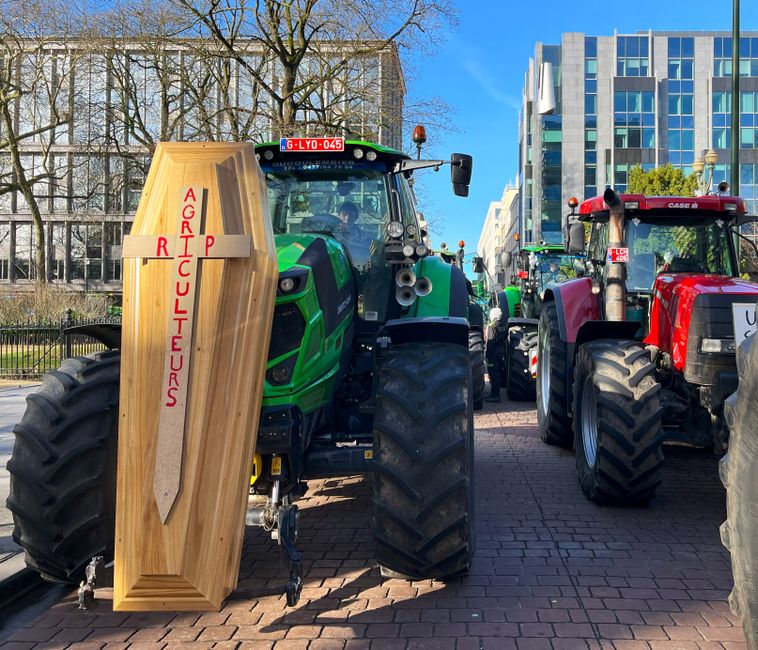
Defiant French Farmers Stick to Barricades: A Nation Gripped by Agri-Protest
French farmers, their tractors forming formidable barricades on national roads, remain steadfast in their protest, escalating a standoff that has brought significant parts of the country to a standstill. This isn’t a fleeting moment of discontent; it’s a deeply rooted agricultural crisis manifesting in a powerful, visible, and disruptive manner. The core of their anger is multifaceted, encompassing a complex web of grievances that have simmered for years and are now boiling over. Central to their demands is the issue of fair prices for their produce. For too long, farmers have argued that they are forced to sell their goods below the cost of production, a scenario that is economically unsustainable and is driving many out of the profession. This unfair pricing is exacerbated by intense competition from imports, often produced under less stringent regulations and with lower labor costs, which further undercuts domestic producers. The farmers are demanding a more robust regulatory framework that prioritizes French and European agricultural output, ensuring a level playing field and protecting their livelihoods.
The burden of bureaucratic red tape and environmental regulations also weighs heavily on the agricultural sector. While acknowledging the importance of sustainability and environmental protection, farmers contend that the current regulatory landscape is overly prescriptive, costly, and often impractical to implement without adequate support or financial assistance. They feel unfairly targeted, bearing the brunt of policies designed to address broader societal goals without sufficient compensation or consideration for the immediate economic impact. This includes stringent rules on pesticide use, land management, and animal welfare, which, while well-intentioned, often translate into increased operational costs and reduced yields. The lack of accessible and effective support mechanisms to navigate these complex regulations fuels their frustration, pushing them to demand more realistic and supportive policy interventions.
The specter of international trade deals looms large in the minds of these protesting farmers. Agreements that allow for the influx of agricultural products from countries with lower production standards and cheaper labor are seen as a direct threat to their ability to compete. They fear that these deals, often negotiated with a focus on consumer prices and global trade, fail to adequately safeguard the interests of their domestic agricultural sector. The perceived imbalance in these agreements, where French farmers feel they are disadvantaged by adhering to higher European standards while competing with produce from regions with less stringent regulations, is a significant driver of their anger. Calls for greater protectionism and a re-evaluation of trade policies that prioritize food sovereignty and the sustainability of European agriculture are at the forefront of their demands.
The geographical spread of the protests underscores the widespread nature of the discontent. From the fertile plains of Beauce to the wine regions of Bordeaux, and the dairy farms of Brittany, tractors have converged on key arteries, disrupting supply chains and impacting daily life. Major highways, including sections of the A1, A6, A7, A10, and A13, have been blocked, leading to widespread traffic congestion and economic disruption. The symbolic act of parking tractors on these routes is a powerful visual statement, a deliberate disruption designed to capture national and international attention and exert maximum pressure on the government. This strategic placement of barricades ensures that the farmers’ message cannot be ignored, forcing policymakers to confront the reality of their plight.
The government’s response has been a delicate balancing act. While acknowledging the legitimacy of some of the farmers’ grievances, officials have also expressed concerns about the disruption caused by the protests. Initial concessions, such as promises of financial aid and a review of certain regulations, have been met with skepticism by the protesting farmers. They have heard such promises before, and the implementation and effectiveness of these measures remain uncertain. The demand for concrete, lasting solutions, rather than temporary fixes, is paramount. They are looking for a fundamental shift in agricultural policy that recognizes the vital role of farming in national security, environmental stewardship, and rural economies.
The long-term sustainability of French agriculture is at the heart of this movement. Farmers are not just fighting for immediate financial relief; they are fighting for the future of their profession and the preservation of a way of life that is deeply intertwined with the French identity and landscape. The exodus of young farmers from the sector, coupled with an aging workforce, poses a serious demographic challenge. Without a viable economic future, the continuity of French food production is threatened. The protests are a stark warning that the current trajectory is unsustainable and that urgent, decisive action is needed to revitalize and support the agricultural sector.
The current wave of protests also highlights a broader societal disconnect between consumers and producers. While consumers often benefit from low food prices, they may not fully appreciate the complex and often precarious realities faced by those who produce their food. The farmers’ actions serve as a powerful reminder of the essential nature of their work and the need for a more equitable distribution of value within the food chain. There’s a growing recognition that true sustainability encompasses not only environmental considerations but also economic viability for farmers and fair prices for consumers.
The role of agricultural unions in coordinating and leading these protests is crucial. Organizations like the FNSEA (Fédération Nationale des Syndicats d’Exploitants Agricoles) and its younger counterpart, Jeunes Agriculteurs, have been instrumental in mobilizing farmers and articulating their demands. These unions provide a platform for collective bargaining and advocacy, ensuring that the voices of individual farmers are amplified and heard by policymakers. Their strategic planning and communication efforts have been key to maintaining the momentum of the protest.
The international dimension of this crisis cannot be overlooked. Similar agricultural protests have erupted across Europe, from Germany to the Netherlands and Spain, indicating a shared set of challenges faced by farmers throughout the continent. Issues such as the European Union’s Common Agricultural Policy (CAP), trade deals, and environmental regulations are common threads uniting these disparate movements. The French protests, being among the most visible and disruptive, have become a focal point for this broader European agricultural discontent, potentially influencing policy debates at the EU level.
The economic impact of the protests extends beyond the agricultural sector. Supply chain disruptions are affecting supermarkets, restaurants, and other food-related businesses. The transportation of goods is hampered, leading to delays and potential shortages. The financial losses incurred by these disruptions are significant, further demonstrating the interconnectedness of the economy and the far-reaching consequences of the farmers’ grievances.
Looking ahead, the resolution of this crisis hinges on the ability of the French government to deliver on substantive, long-term solutions. Farmers are demanding not just temporary aid but a fundamental reassessment of agricultural policy. This includes ensuring fair prices, simplifying regulations, providing greater support for ecological transition, and establishing a more robust defense of European agriculture against unfair international competition. The current barricades are not just a demonstration of frustration; they are a powerful plea for a future where French agriculture can thrive, not merely survive. The defiance of French farmers, their unwavering commitment to their cause, signals a critical juncture for the nation’s agricultural sector and its enduring place in the global food landscape. The ongoing standoff represents a profound challenge to the status quo, forcing a national conversation about the true value of food and the indispensable role of those who produce it. The eyes of France, and indeed Europe, remain fixed on these defiant farmers, waiting to see if their resolute stand will yield the transformative change they so desperately seek. The persistence of these barricades signifies a deep-seated commitment that transcends mere inconvenience; it is a fight for survival, for dignity, and for the future of French farming.
