
Sudan Fighting Spreads To World Heritage Site
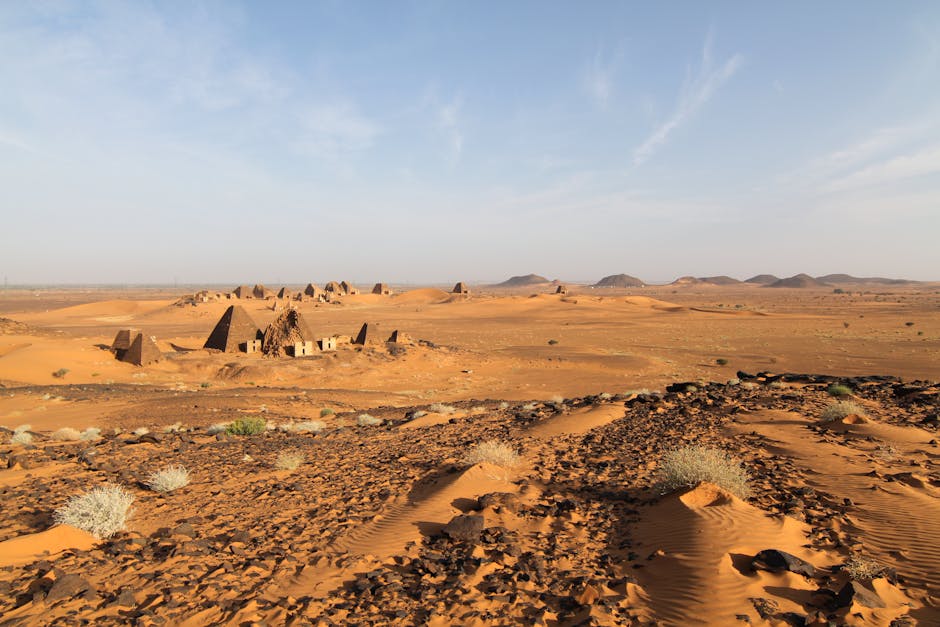
Sudan Fighting Spreads to World Heritage Site: The Devastating Impact on Ancient Sites and Cultural Heritage
The escalating conflict in Sudan, primarily between the Sudanese Armed Forces (SAF) and the Rapid Support Forces (RSF), has tragically expanded to engulf areas of immense historical and cultural significance. The ancient city of Meroë, a UNESCO World Heritage Site renowned for its pyramids and temples, has become a battleground, raising grave concerns about the irreversible damage being inflicted upon one of Africa’s most important archaeological treasures. This devastating development underscores the broader implications of armed conflict on cultural heritage, highlighting not only the loss of irreplaceable artifacts and structures but also the erosion of collective memory and national identity. The deliberate or collateral damage to such sites is not merely an aesthetic or historical tragedy; it represents a profound severing of a nation’s connection to its past and a diminished legacy for future generations.
The significance of Meroë cannot be overstated. Once the capital of the Kingdom of Kush, a powerful ancient Nubian civilization, Meroë flourished for centuries, leaving behind a monumental legacy of architectural and artistic achievements. Its iconic pyramids, though smaller than their Egyptian counterparts, are remarkably well-preserved and represent a unique style of royal burial. Beyond the pyramids, the site boasts extensive temple complexes, royal baths, and residential areas, offering invaluable insights into the religious, social, and political life of this sophisticated African civilization. The inscriptions and artifacts unearthed at Meroë provide a rich tapestry of its history, documenting trade routes, interactions with neighboring empires, and the development of its distinct culture. The site’s inclusion on the UNESCO World Heritage List in 2011 recognized its "outstanding universal value" and the critical need for its protection. Now, this testament to human ingenuity and historical depth is directly threatened by the very forces that should be safeguarding it.
The fighting in and around Meroë, reported since April 2023, signifies a critical escalation in the conflict’s destructive reach. Initial reports indicated the presence of RSF fighters near the archaeological site, with subsequent accounts detailing clashes that have encroached upon the ancient city itself. The proximity of military operations to such a delicate and irreplaceable heritage site raises immediate and profound concerns. Even indirect impacts, such as vibrations from artillery fire or the movement of heavy vehicles, can cause structural damage to ancient masonry that has withstood millennia. Direct combat, involving the use of heavy weaponry or the establishment of military positions within or adjacent to historical structures, poses an existential threat. The sheer lack of consideration for the preservation of such an internationally recognized treasure by the warring factions is a stark indictment of the disregard for cultural heritage in contemporary conflicts.
The consequences of this cultural desecration extend far beyond the physical destruction of stone and mortar. World Heritage Sites are not merely collections of old buildings; they are living embodiments of human history, scientific achievement, and artistic expression. They serve as educational resources, tourist attractions that contribute to local economies, and powerful symbols of national pride. The damage to Meroë erodes Sudan’s historical narrative, weakening its claims to a rich and ancient past. It also deprives the world of a crucial window into one of Africa’s most significant pre-colonial civilizations. The loss of artifacts, whether through looting or destruction, further impoverishes our understanding of this period and its contributions to global history. Furthermore, the destruction of cultural heritage can have long-lasting psychological impacts on local populations, severing their connection to ancestral lands and traditions.
This tragic situation in Meroë is not an isolated incident; it is part of a disturbing pattern of cultural heritage being targeted or inadvertently damaged during armed conflicts worldwide. From the ancient ruins of Palmyra in Syria, deliberately destroyed by extremist groups, to the damage inflicted on historical sites in Yemen and Iraq, the deliberate weaponization of cultural heritage or its collateral destruction has become a grim reality of modern warfare. International conventions, such as the Hague Convention for the Protection of Cultural Property in the Event of Armed Conflict, aim to prevent such devastation, but their enforcement often falters in the face of determined aggression or widespread instability. The international community’s response to such violations is frequently a combination of condemnation and limited aid, often insufficient to counteract the scale of the destruction.
The legal and ethical ramifications of damaging World Heritage Sites are severe. Under international law, the deliberate destruction of cultural property of great importance to the cultural heritage of mankind is considered a war crime. The Rome Statute of the International Criminal Court (ICC) explicitly lists the intentional directing of attacks against buildings dedicated to religion, education, art, science or charitable purposes, or historic monuments, as well as against hospitals, as war crimes. The deliberate targeting or reckless endangerment of Meroë by the SAF and RSF could therefore constitute a violation of these statutes, though holding individuals accountable in active conflict zones is a complex and often protracted process. The international outcry and potential for future prosecution serve as a deterrent, but this deterrent has clearly proven ineffective in preventing the current crisis.
The immediate priority, beyond the cessation of hostilities, is to conduct thorough damage assessments. This will require the expertise of archaeologists, conservationists, and heritage professionals who can meticulously document the extent of the destruction and identify areas requiring urgent stabilization and restoration. However, the ongoing conflict makes such assessments incredibly difficult, if not impossible, to conduct safely and comprehensively. Once access is secured, a long-term plan for the preservation and eventual restoration of Meroë will be essential. This will undoubtedly be a monumental undertaking, requiring significant financial resources, specialized skills, and international cooperation. It will also necessitate the involvement of local communities, who are the custodians of this heritage and whose participation is crucial for its long-term survival.
The role of international organizations, such as UNESCO, is critical in coordinating these efforts. UNESCO, in collaboration with national authorities and other international partners, can provide technical expertise, mobilize funding, and advocate for the protection of cultural heritage in conflict zones. Their presence can also offer a degree of protection and deter further damage through the visibility and international scrutiny they bring. However, the effectiveness of these organizations is ultimately dependent on the cooperation of the warring parties and the political will of the international community to prioritize the preservation of cultural heritage.
The fighting at Meroë serves as a stark reminder of the interconnectedness of conflict, culture, and identity. The destruction of such a significant historical site is not just a loss for Sudan but for the entire world. It underscores the urgent need for greater adherence to international humanitarian law, increased international pressure on warring factions to respect cultural heritage, and robust mechanisms for accountability when these laws are violated. The preservation of our shared past is a collective responsibility, and the current events in Sudan highlight the devastating consequences when that responsibility is abdicated in the pursuit of political or military objectives. The echoes of ancient kingdoms, once vibrantly preserved in the sands of Meroë, are now being drowned out by the clamor of modern warfare, leaving a scar on human history that may never fully heal. The international community must redouble its efforts to ensure that such irreplaceable treasures are not lost forever to the ravages of conflict. The future of Meroë, and indeed of countless other sites at risk, depends on it.